
An overnight hydrogel mask formulated for extended wear is the right pick for anyone masking while they sleep. It stays put, keeps skin hydrated for hours without drying out, and does it safely when the formula skips fragrance and alcohol. Vervex builds its hydrogel masks around this exact use case, and a six-week study of repeated hydrogel use backs the payoff of sticking with it.
TL;DR:
- Hydrogel masks designed for overnight wear must include explicit labeling indicating “overnight” or “extended wear” to be safe for long-term use.
- Masks with multi-weight hyaluronic acid, ceramides, and ectoine support prolonged hydration and barrier reinforcement during extended use.
- Sensitive skin should avoid fragrances, alcohol, high-concentration acids, and retinoids in overnight masks to minimize irritation risks.
- Repeated use over six weeks has shown to improve skin hydration and firmness without causing irritation, provided the routine is consistent.
- Patch testing before full application and avoiding concurrent use of strong actives help ensure safety during overnight hydrogel masking.
Table of Contents
- What to Look for in a Sleeping Mask Buying Guide
- How Do You Apply and Remove a Hydrogel Sleeping Mask?
- Which Ingredients Should Sensitive Skin Seek or Avoid?
- Is It Safe to Wear a Hydrogel Mask Overnight?
- How Does Vervex Fit the Buying Criteria Above?
- Fitting Overnight Masking Into a Busy Routine
- Ready to Add an Overnight Mask to Your Routine?
- Sources
What to Look for in a Sleeping Mask Buying Guide
Not every sheet mask belongs on your face overnight. Cotton and cellulose sheets dry out within an hour or two, and once they dry, they start pulling moisture back out of your skin instead of feeding it in. Hydrogel masks work differently: the jelly-like polymer matrix holds water and keeps releasing it, forming a seal that locks moisture in rather than letting it evaporate. That difference is why hydrogel is the material to check for first.
Here is what actually separates an overnight-ready mask from one you should take off after 20 minutes:
- Explicit wear-time labeling. The packaging should state “overnight” or “extended wear,” not just “hydrating.” If it does not say it, assume it was not tested for it.
- Multi-weight hyaluronic acid and glycerin. These humectants pull and hold water at different skin depths, which sustains hydration over hours instead of minutes.
- Barrier-supporting ingredients. Ceramides and ectoine reinforce the skin barrier while the mask works, which matters more the longer the mask stays on.
- No fragrance, no alcohol denat. Both are common irritants, and eight hours of contact time makes any sensitizer more likely to cause a reaction.
- Contoured, two-piece fit. A mask shaped for the under-eye and jawline stays adhered through a night of movement instead of sliding off by 2 a.m.
Pro Tip: Check the ingredient list for peptides or ectoine near the top. Their presence usually signals the brand formulated specifically for firming, not just a quick glow.
How Do You Apply and Remove a Hydrogel Sleeping Mask?
Application technique matters almost as much as the formula itself. A mask applied with air gaps under the nose or jaw will not deliver actives evenly, no matter how good the ingredient list looks.
- Cleanse first. Skip anything oily right before application. A lightweight humectant serum underneath is fine; a retinoid or strong acid is not.
- Align, then press. Start at the center of the face and smooth outward, pressing firmly along the under-eye and jawline to remove air pockets.
- Check the seal. Run a finger along the edges. If it lifts easily, press again before you settle in for the night.
- Track your wear time. Twenty minutes gives a quick glow. Four to six hours is where most users see peak hydrogel benefit. Overnight wear is fine only if the label says so.
- Peel gently on waking. Pull from the edges toward the center rather than yanking from one spot.
- Pat in the residue. The leftover essence on your skin is still active. Pat it in instead of rinsing it away, then follow with a light moisturizer if your skin feels tight.
Pro Tip: If you’re new to overnight masking, start with two nights a week rather than nightly. A short nightly course makes sense only if you’re actively repairing a compromised barrier, then dial back to maintenance.
For a fuller sense of where an overnight mask fits into a broader routine, this Korean skincare layering guide walks through order, texture, and timing in more detail.
Which Ingredients Should Sensitive Skin Seek or Avoid?
Sensitive skin needs a stricter ingredient checklist for overnight wear than it does for a 15-minute mask, and the reason is simple: occlusion multiplies exposure time, so anything irritating gets more chance to cause a problem.
Ingredients to prioritize:
- Multi-weight hyaluronic acid, glycerin, and polyglutamic acid for layered humectant coverage
- Ceramides and squalane to reinforce the skin barrier while the mask stays sealed
- Panthenol, allantoin, and centella asiatica to calm reactive skin
- Peptides, when firming is a goal alongside hydration
Ingredients to avoid in an overnight formula:
- Added fragrance, along with common sensitizing compounds like limonene, linalool, and geraniol
- Alcohol denat., which dries skin rather than hydrating it
- High-concentration AHAs or BHAs, and retinoids, which are formulated for short contact windows, not eight hours
One study of the hydrogel format itself found something worth noting: the tested mask combined three hydrophilic polymers, PVP, PEG-400, and agar, with hyaluronic acid, ectoine, allantoin, and tocopherol, a combination that lines up closely with the “prioritize” list above. If you have oily or acne-prone skin, look for a non-comedogenic claim on the label too, since occlusion that suits dry skin can feel heavy on breakout-prone areas.
Is It Safe to Wear a Hydrogel Mask Overnight?
The strongest evidence available on repeated hydrogel use comes from a six-week study of sensitive-skin volunteers who applied a hydrogel mask three times a week for 20 minutes per session. By the end of the six weeks, hydration and firmness had improved cumulatively, with no irritation and no change to sebum or pH.
The gains weren’t instant. They built over six weeks of consistent, three-times-weekly use, which is the real lesson here: one mask gives you a temporary plump. A repeated routine is what changes the skin’s baseline hydration.
That distinction, single-use glow versus cumulative improvement, is worth sitting with before you judge a mask by one night’s results.
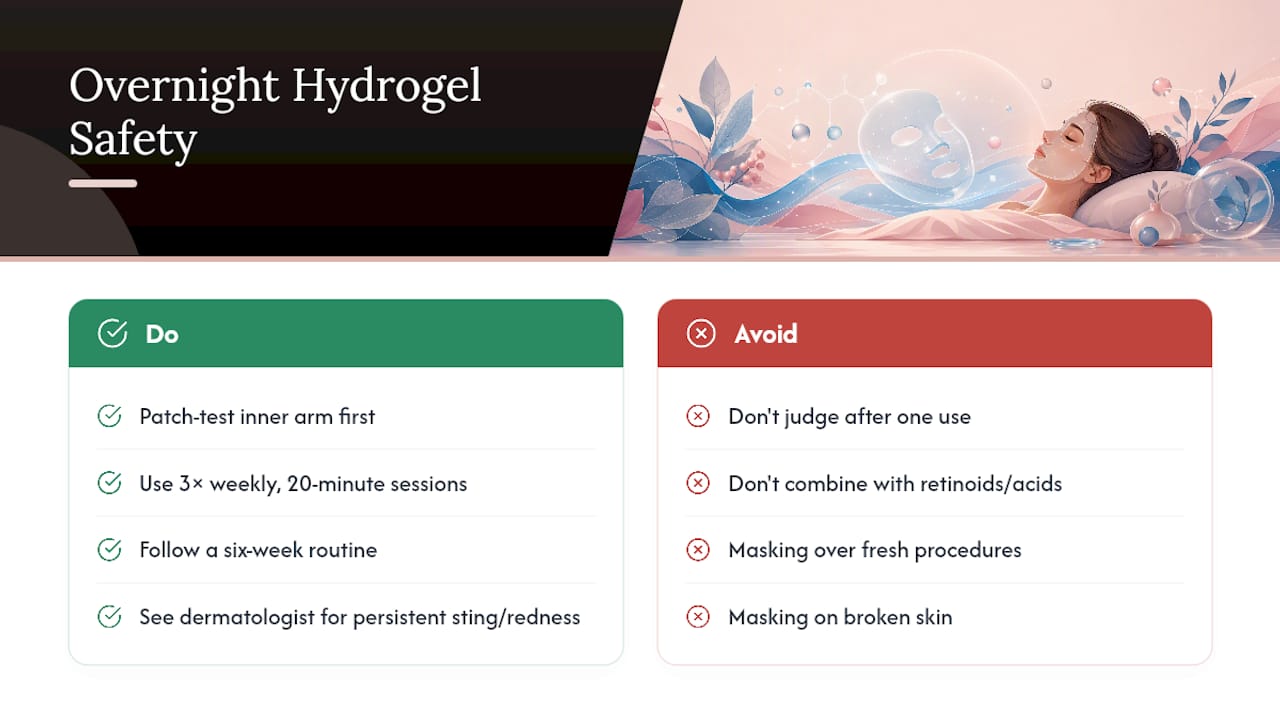
A few safety rules apply regardless of how good the formula looks. Patch test on your inner arm before a first full-face application. Skip pairing the mask with retinoids or strong acids the same night, since stacking actives raises irritation risk. Avoid masking over freshly done procedures or broken skin, and if you notice persistent redness or stinging, stop and check with a dermatologist rather than pushing through it.
How Does Vervex Fit the Buying Criteria Above?
Some hydrogel masks are built around the profile this guide has laid out: hypoallergenic, designed for overnight wear, and formulated without the fragrance and alcohol that make prolonged contact risky for sensitive skin. These masks turn transparent as they absorb, which gives a visual cue that the nutrients are actually penetrating rather than sitting on the surface.
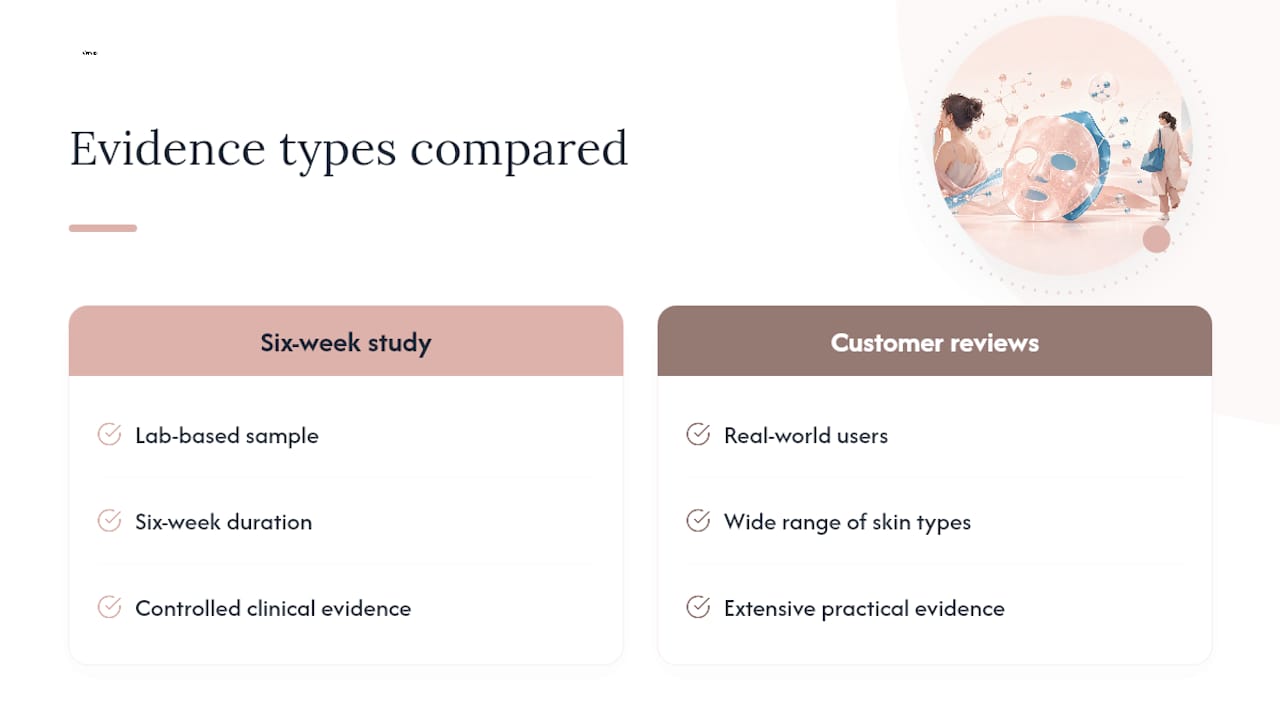
Some brands have collected extensive customer reviews, with many users reporting noticeably better hydration after use. Those numbers reflect real-world use across a wide range of skin types, not a lab sample of a handful of volunteers, which is a different kind of evidence than the six-week study cited above, but a relevant one for anyone deciding whether a hydrogel mask fits into a regular routine. The Biodance mask and its pack option both carry the hypoallergenic, minimal-fragrance formulation that overnight wear calls for.
Fitting Overnight Masking Into a Busy Routine
A workable routine looks like this: cleanse, apply a lightweight serum if your skin wants it, mask a few nights a week, then follow up in the morning with a normal moisturizer. Start slow if you’re new to it, one night the first week, adding a second once your skin shows no reaction. The payoff is not a single dramatic night. It’s the cumulative hydration and firmer, smoother texture that shows up after weeks of consistency, closer to that “glass skin” look than anything a one-time mask delivers.
— Vervex
Ready to Add an Overnight Mask to Your Routine?
Vervex gives you a hydrogel mask built specifically for the overnight use this guide recommends, not a fabric sheet stretched past its intended wear time. The Biodance mask works as a single try, and the pack of four sets you up for the three-times-weekly frequency the six-week study used to show cumulative hydration gains.

Patch test on your inner arm before your first full application, and follow the wear-time instructions on the pack rather than guessing. Browse the full lineup at Vervex to find the formula that matches your skin’s needs.