
Press a cool, damp cloth against your face for two minutes, then massage gently outward from your nose toward your ears, and stand up and walk around. That combination moves stagnant fluid and tightens blood vessels fast. Most morning puffiness fades within minutes this way. If swelling is one-sided, painful, or won’t quit, that’s a different problem, and it deserves a doctor’s attention, not a face roller.
TL;DR:
- Cold water or a damp cloth can constrict blood vessels and reduce puffiness within the first few minutes of waking.
- Using caffeine-infused or chilled hydrogel patches enhances vessel constriction and boosts hydration temporarily.
- Gentle massage and movement help redistribute pooled fluid and improve lymphatic drainage, supporting faster de-puffing.
- Habit changes like increasing daytime hydration, reducing salt and alcohol intake, sleeping on your back, and managing allergies can prevent morning puffiness long-term.
- Persistent or painful swelling, especially if one-sided or worsening, requires medical evaluation rather than home remedies.
Table of Contents
- What Causes a Puffy Face in the Morning?
- How to De-Puff Your Face in Under 10 Minutes
- How Do I Stop Waking Up Puffy in the First Place?
- When Should You Worry About Facial Swelling?
- Does Overnight Hydration Actually Help With Puffiness?
- A Realistic Take on Quick Fixes
- A Simple Nightly Add-On Worth Trying
- Sources
- FAQ
What Causes a Puffy Face in the Morning?
Gravity stops working while you sleep. During the day, fluid drains downward through your lymphatic system. Lying flat for seven or eight hours lets that fluid settle in your face instead, which is why morning puffiness ties directly to overnight fluid shifts, sleep position, and what you ate or drank the night before.
Salt is a major driver. It pulls water into your tissues, and a salty dinner shows up on your face by sunrise. Alcohol does something similar, dehydrating you while also disrupting normal fluid balance. Refined carbs spike blood sugar and trigger water retention in a similar way.
Allergies and sinus congestion add another layer. Inflamed sinus tissue and nasal swelling push outward into the surrounding face, especially around the eyes. Dehydration, oddly enough, makes things worse too, because your body holds onto water when it doesn’t get enough.

Most of this is harmless and temporary. Watch for red flags: puffiness that’s isolated to one side, gets worse instead of better, comes with pain, or shows up alongside fever or a rash. Those patterns point toward something beyond a rough night’s sleep.
How to De-Puff Your Face in Under 10 Minutes
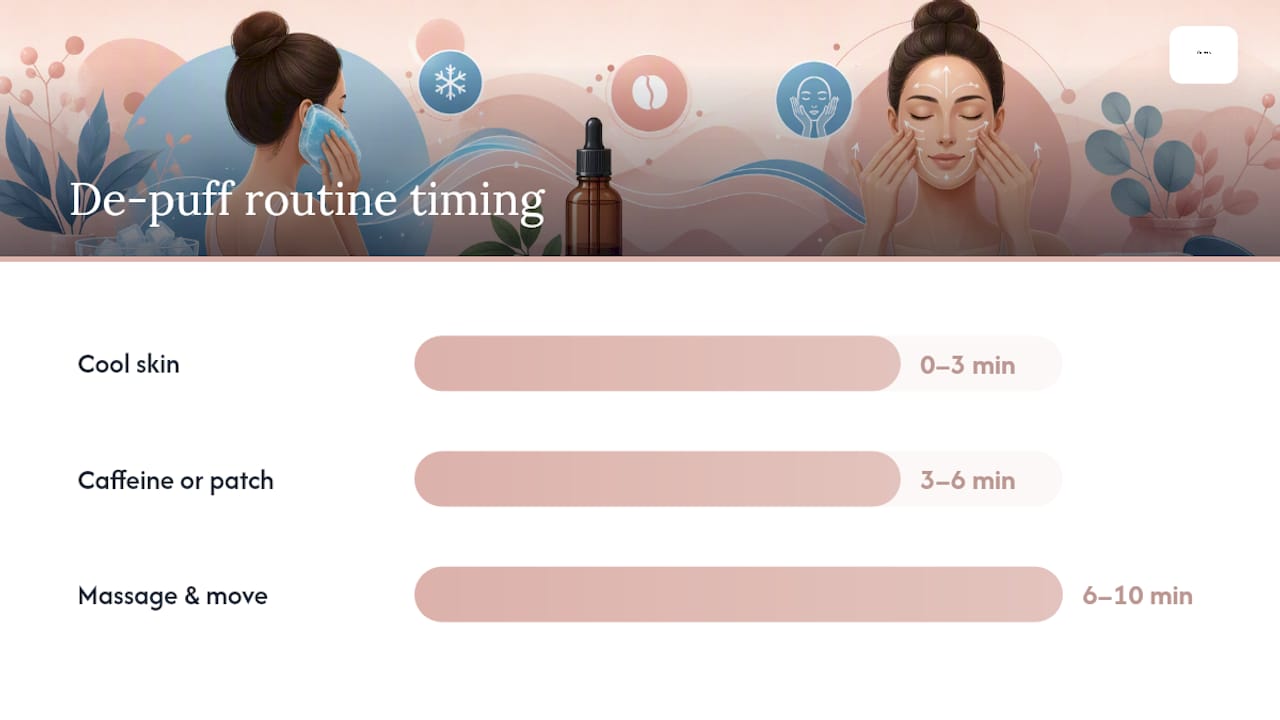
Here’s the routine, broken into three-minute stages so you’re not guessing what to do next.
- Minutes 0 to 3: Cool it down. Splash cold water on your face or press a cool, damp washcloth against your cheeks, forehead, and under-eye area. Cold temperatures constrict blood vessels near the skin’s surface, which physically reduces swelling. Never press ice directly onto eyelid skin. It’s thin enough to risk cold injury, so always use a cloth barrier and keep exposure brief.
- Minutes 3 to 6: Add caffeine or a chilled hydrogel patch. A caffeine-infused eye product tightens skin temporarily by constricting surface vessels further. A refrigerated hydrogel patch does double duty: cold plus hydration.
- Minutes 6 to 10: Massage and move. Use two fingers to press gently along your jawline, up toward your ears, then down your neck, mimicking the direction lymph naturally drains. No aggressive pressure. This is a light sweep, not a deep-tissue session. Finish by standing up and taking a short walk. Movement alone helps redistribute fluid that pooled overnight.
Safe tools include cold eye masks kept in the fridge overnight, chilled jade or steel face rollers, and cooling gel patches. Skip the ice cubes straight to the face and skip aggressive slapping or pinching. Neither speeds things up, and both risk irritating skin that’s already sensitive first thing in the morning.
Pro Tip: Keep your under-eye product in the refrigerator, not the medicine cabinet. The cold temperature does as much work as the formula itself.
Dermatologists confirm that cold, massage, and caffeine are the three techniques with real backing, though every one of them offers temporary relief rather than a permanent fix.
How Do I Stop Waking Up Puffy in the First Place?
Fast fixes handle the emergency. Habits handle the pattern. If you’re doing the cold compress routine every single morning, something upstream needs adjusting.
- Drink water consistently through the day. It sounds backward, but proper hydration signals your body to release stored fluid instead of hoarding it.
- Skip the salty takeout and the second glass of wine within three hours of bedtime.
- Sleep on your back with your head slightly elevated on an extra pillow. Side sleeping compresses one side of your face against the pillow, which is why some people wake up lopsided.
- If allergies are a factor, try a saline nasal rinse before bed and talk to a pharmacist about an OTC antihistamine that fits your routine.
- Prioritize consistent sleep and manage stress. Poor sleep quality and elevated cortisol both interfere with normal fluid regulation.
When Should You Worry About Facial Swelling?
Most puffiness resolves on its own within an hour of waking. It should not be one-sided, painful, or accompanied by other symptoms.
Seek medical care if swelling is sudden, worsening over several days, or limited to one side of your face. The same goes for swelling paired with fever, vision changes, difficulty breathing, or puffiness spreading beyond your face into your hands or legs. These patterns can signal infection, an allergic reaction, or another underlying condition that needs evaluation.
When you call a clinician, be ready to describe when the swelling started, whether it’s constant or comes and goes, and any other symptoms you’ve noticed. That detail helps them narrow down the cause faster. A clinical guide to under-eye changes is also useful if you’re trying to tell the difference between temporary morning puffiness and persistent under-eye bags that don’t respond to sleep or hydration.
Does Overnight Hydration Actually Help With Puffiness?
Sustained hydration overnight supports your skin barrier, and a stronger barrier tends to look calmer and less puffy by morning. That’s the working theory behind a hydrogel mask worn overnight instead of a quick five-minute sheet mask.
Fit one into your nighttime routine after cleansing and before bed, on skin free of active irritants like retinoids applied that same night. Patch test any new product on your inner arm first, especially if your skin reacts easily. This is a cosmetic and preventive step, not a treatment for medical swelling. It works alongside the habits above, not instead of them.
A Realistic Take on Quick Fixes
Cold compresses and lymphatic massage genuinely work, but they buy you an hour, not a cure. If you’re reaching for the same tricks every morning, the fix belongs in your evening routine, not your bathroom mirror. Don’t overdo the cooling or press too hard during massage. Skin is delicate first thing in the morning. And if puffiness keeps showing up in a pattern that feels off, a quick call to a doctor beats another week of guessing.
— Vervex
A Simple Nightly Add-On Worth Trying
Between managing salt, sleep position, and allergies, adding one more step to your routine should be easy, not complicated. The Vervex biodance mask is a hydrogel overnight mask that turns transparent as it absorbs, so you can actually see the hydration sink in before you fall asleep.

It’s designed for people dealing with morning puffiness who want a simple and effective skincare option suitable for sensitive skin. Apply it after cleansing, before bed, and let it work overnight. Patch test first if your skin tends to react, and follow the directions on the pack.
If you want more coverage for a full week of nightly use, the Biodance Bio-Collagen Real Deep Mask 4-pack gives you a stretch of consistent hydration to pair with the habit changes above. Either option is a low-effort way to support your skin barrier while you work on the bigger prevention picture.
Sources
For deeper reading, Medical News Today, Cleveland Clinic, and Mayo Clinic all cover causes, home remedies, and warning signs in more clinical detail.
- Puffy face in the morning: Causes, treatments, and prevention — Medical News Today
- Quick Home Remedies for Puffy Face and Body — WebMD
- Facial swelling – facial puffiness causes & treatments — Cleveland Clinic
- Can ice baths, gua shas and caffeine cream really depuff your face? — BBC
- Help with puffy eyes in the morning — Mayo Clinic
FAQ
How Do I Stop a Puffy Face When I Wake Up?
Cool your skin with a damp cloth or cold water, massage gently outward toward your ears, and get moving. Most puffiness fades within minutes.
Why Is My Face Only Puffy in the Morning?
Fluid that would normally drain during the day pools in your face while you sleep flat, and evening salt, alcohol, or allergies make it worse.
How Do I Cure a Swollen Face in the Morning?
There’s no instant cure, but cooling, light massage, and standing up to move fluid along typically bring visible improvement within minutes. Persistent or one-sided swelling needs a doctor’s evaluation, not a home remedy.
How Do I De-Puff Fast in the Morning?
Follow the three-stage routine: cold compress first, chilled caffeine product or hydrogel patch next, then gentle massage and movement. The full sequence takes about 10 minutes.
Can an Overnight Mask Really Help With Morning Puffiness?
An overnight hydrogel mask supports your skin barrier with sustained hydration, which can make skin look calmer by morning, though it works best paired with the habit changes covered above, not as a replacement for them.