
A hydrogel mask is a water-rich polymer “second skin” saturated with concentrated serum, so the ingredient list splits into two jobs: the substrate that holds its shape (biocellulose, carrageenan, gums, or synthetic hydrogel) and the serum locked inside it (humectants like hyaluronic acid and glycerin, actives like niacinamide or peptides, plus preservatives and pH adjusters that keep it stable on the shelf).
TL;DR:
- Most hydrogel masks contain high concentrations of water (90-99%) and gelling agents like carrageenan or biocellulose, which impact fit, occlusion, and biodegradability.
- Active ingredients such as hyaluronic acid, niacinamide, and peptides are present in small amounts but can provide temporary hydration, brightening, or firming effects during the 15 to 20-minute wear period.
- Labels reveal that formulations with fewer ingredients, especially those focusing on humectants like glycerin and barrier support agents like panthenol, often outperform complex panels with trace extracts.
- For sensitive skin, avoid masks with fragrance, denatured alcohol, or high concentrations of exfoliating acids, and always patch test before full application.
- A well-crafted hydrogel mask’s effectiveness depends heavily on its ingredient order and formulation, not just on marketing claims or substrate material.
Table of Contents
- Hydrogel mask ingredients at a glance
- Key active ingredients explained: what they actually do
- The hydrogel substrate: how the mask material shapes performance
- The supporting ingredients that keep a mask stable and safe
- Safety, common irritants, and how to patch test a hydrogel mask
- How to read the INCI list on a hydrogel mask
- Getting the most out of a hydrogel mask
- What the research and Vervexofficial’s data actually show
- Why ingredient literacy beats brand loyalty
- Try a hydrogel mask built around ingredient transparency
- Sources
Hydrogel mask ingredients at a glance
Every hydrogel mask ingredients panel is really two lists stitched together: what forms the gel and what the gel delivers. Scan a product’s INCI panel with these five roles in mind, and the wall of text stops looking random.
- Matrix or substrate materials: biocellulose, carrageenan (often listed as Chondrus crispus), locust bean gum, xanthan gum, or synthetic polymers like PVA and acrylates. These form the physical gel structure.
- Humectants: hyaluronic acid, sodium hyaluronate, glycerin, butylene glycol, and propanediol pull water into the skin and keep the gel itself from drying out.
- Emollients and occlusives: esters like cetyl ethylhexanoate soften the skin surface and help the mask sit flush against contours.
- Targeted actives: niacinamide for brightening, peptides or adenosine for firming, centella asiatica or green tea extract for calming.
- Stabilizers, preservatives, and pH adjusters: phenoxyethanol, chlorphenesin, citric acid, and EDTA, which control shelf life and skin compatibility rather than deliver visible results.
Order matters. INCI lists rank ingredients by concentration, so water and gelling agents almost always lead, with actives and fragrance trailing near the bottom. A patent covering hydrogel mask composition lists purified water at 90 to 99% of the formula by weight, with carrageenan, locust bean gum, and xanthan gum each contributing between 0.1% and 2%. That’s not filler math. It’s the actual physics of how these masks hold their shape and stay saturated for a typical 15 to 20 minute use.
Key active ingredients explained: what they actually do
The substrate gets the mask onto your face. The actives inside it decide whether the 20 minutes you spend wearing it produces a visible result. Here’s what shows up most often and why.
Hyaluronic acid appears in two forms worth distinguishing. High molecular weight hyaluronic acid sits on the skin surface and forms a hydrating film; low molecular weight and sodium hyaluronate penetrate more effectively into the upper skin layers. Masks that list both forms are generally aiming for a layered hydration effect rather than a single surface coat.
Glycerin and other polyols (butylene glycol, propanediol) do double duty. They pull moisture from the air and deeper skin layers while also keeping the hydrogel itself from drying out during storage. One product ingredient breakdown reported glycerin at a concentration commonly seen in effective formulations, a reminder that glycerin often carries more formulation weight than showier actives listed further down the panel.
Niacinamide shows up for brightening and barrier support, typically at concentrations low enough to avoid the flushing some people report at 10% in leave-on serums. That same product breakdown cited niacinamide at a concentration generally well tolerated even on reactive skin.
Peptides, collagen fragments, and adenosine target firmness and fine lines. Adenosine has more consistent research behind it than most marketing peptides, though masks worn for 20 minutes a few times a week won’t replicate results from daily leave-on treatments. Realistic expectation: a temporary plumping effect and, with consistent use, gradual improvement in skin texture.
Antioxidants and botanical extracts like green tea and centella asiatica vary widely in actual concentration since brands rarely disclose exact percentages for plant extracts. Their presence supports a calming, anti-oxidative claim, but treat them as a bonus rather than the mask’s main event.
Ceramides and panthenol reinforce the skin barrier rather than actively changing its appearance. They matter most for people who find hydrogel masks generally hydrating but occasionally tight or reactive afterward.
The hydrogel substrate: how the mask material shapes performance
The substrate isn’t inert packaging. It determines how long the mask stays cool, how tightly it hugs your face, and how effectively it releases the serum trapped inside.
Biocellulose is grown, not manufactured from scratch, typically fermented from bacteria that produce an extremely fine cellulose network. It molds tightly to facial contours and tends to be biodegradable, though full compostability depends on the finishing treatment applied. Carrageenan and seaweed-derived gums form softer, more flexible gels and appear frequently in patent formulations alongside locust bean gum and xanthan gum for texture control. Synthetic hydrogels built on PVA or acrylate polymers offer more manufacturing consistency and lower cost, but they generally aren’t home-compostable and often require industrial composting conditions to break down.
Chitosan deserves particular attention. Derived from crustacean shells or fungal sources, it’s increasingly blended into biomass-based substrates for its natural antibacterial properties and film-forming strength. A 2026 study on chitosan-reinforced hydrogel composites found that optimized formulations improved tensile strength up to 79.01 N and water absorbency up to 298.76%, meaningful gains for a mask material that needs to stay intact while saturated and stretched across a moving face.
Gel strength itself depends on a supporting cast of gums working together rather than any single ingredient. Locust bean gum, xanthan gum, and tamarind seed gum each contribute different textural properties, from elasticity to viscosity, and formulators typically blend two or three rather than relying on one.
- Biocellulose delivers the tightest facial contour fit and generally the best biodegradability profile.
- Seaweed-derived gels (carrageenan-based) balance flexibility with lower manufacturing cost.
- Synthetic hydrogels offer consistency and shelf stability but weaker environmental credentials.
- Chitosan-reinforced composites add antimicrobial function and improved water retention.
The substrate also governs occlusion. A thicker, water-dense gel like biocellulose creates a more semi-occlusive seal than a thin fabric sheet ever could, which is why hydrogel masks are often described as forming a “second skin” that prevents evaporation far more effectively than cotton or fiber sheet masks. That occlusion is also the reason lower concentrations of potent actives can still feel effective. The substrate holds them against skin longer than a quick-drying sheet mask ever allows.
The supporting ingredients that keep a mask stable and safe
Not every ingredient on a hydrogel mask ingredients panel is there to deliver a visible benefit. Some exist purely to keep the product safe, stable, and pleasant to use, and understanding their role helps you separate marketing claims from formulation necessity.
Humectants beyond glycerin, like butylene glycol, propanediol, and dipropylene glycol, behave similarly but differ in texture and how much water they can bind. Propanediol tends to feel lighter on skin than glycerin, which is why brands targeting an oily-skin audience often swap one for the other.
Emollients and film-formers such as cetyl ethylhexanoate add slip and a subtle occlusive layer once the mask comes off, helping lock in whatever hydration the gel just delivered.
Preservatives like phenoxyethanol and chlorphenesin prevent microbial growth in a product that’s mostly water, and at the low concentrations typically used (generally under 1%), they carry a well-established safety record. Masks without any preservative system are actually a bigger red flag than the presence of one, since a water-heavy product with zero antimicrobial protection is a contamination risk.
Solvents and penetration enhancers like methylpropanediol and propylene glycol help actives move into the skin more effectively, but they’re also among the more common triggers of mild stinging on compromised or very reactive skin.
pH adjusters and chelators, typically citric acid and EDTA, keep the formula stable and prevent the gel from breaking down or shifting pH during storage.
- Butylene glycol and propanediol: lighter-feeling humectants than glycerin
- Cetyl ethylhexanoate: emollient ester for slip and post-mask softness
- Phenoxyethanol/chlorphenesin: standard low-concentration preservative systems
- Methylpropanediol: solvent and penetration enhancer, occasional irritant
- Citric acid/EDTA: pH stabilization and metal-ion chelation
Pro Tip: If your skin stings within the first two minutes of applying a hydrogel mask, it’s more often the solvent or penetration enhancer than the “active” ingredient getting blamed on packaging.
Safety, common irritants, and how to patch test a hydrogel mask
Hydrogel masks are generally gentler than fabric sheet masks soaked in high-alcohol essence, but “hydrogel” isn’t automatically synonymous with “sensitive-skin safe.” A handful of ingredient categories deserve a second look before you commit to a full face.
- Fragrance and parfum are the single most common trigger for reactive skin, even in tiny amounts, and they add nothing to the mask’s actual performance.
- Denatured alcohol, listed as alcohol denat., can appear in gel formulas for a cooling sensory effect but dries and irritates thin or compromised barriers.
- High concentrations of AHAs or BHAs occasionally show up in “exfoliating” hydrogel variants; anything above a mild percentage risks over-exfoliation when combined with the mask’s occlusive hold time.
- Preservative sensitivity is rare but real. People with a known reaction to phenoxyethanol should scan ingredient lists specifically, since it’s one of the most widely used systems in this category.
- Extract-heavy panels with vague names (“botanical complex,” “fruit extract blend”) sometimes mask allergenic plant material behind non-specific marketing terms.
Editorial skincare guides consistently recommend fragrance-free, alcohol-free formulas for sensitive skin, pairing hyaluronic acid or ceramide-focused masks with centella or aloe for anyone prone to redness. For frequency, sensitive and dry skin generally does best with two to three sessions weekly; oily or resilient skin can typically handle daily use without issue.
Patch testing takes five minutes and saves a week of irritation. Apply a small piece of the mask (or a dab of the gel) to your inner forearm, wait 24 hours, and check for redness, itching, or bumps before applying anything to your face.
How to read the INCI list on a hydrogel mask
INCI panels follow one hard rule: ingredients are listed in descending order of concentration, down to about 1%, after which order becomes less reliable and brands can list minor ingredients in any sequence. That single fact tells you almost everything you need to know before reading a single active ingredient name.
- Water (Aqua) leads almost every hydrogel mask panel, often followed immediately by gelling agents like carrageenan or xanthan gum, confirming the substrate comes first, not the serum.
- Marketing names rarely match INCI names. “Vitamin B3” is niacinamide. “Pro-vitamin B5” is panthenol. “Sea kelp extract” might appear as Chondrus crispus or another algae-specific Latin name.
- Extracts listed near the bottom, after preservatives, are almost certainly present at trace levels. Treat them as marketing flourish rather than a meaningful dose.
- Repeated humectants (glycerin, butylene glycol, propanediol appearing together) signal a formula built around hydration layering rather than one being padded to seem more complex.
- A short INCI list isn’t automatically a red flag. A tight, well-chosen formula with five real actives often outperforms a fifteen-ingredient panel where most entries sit below 0.5%.
Getting the most out of a hydrogel mask
Ingredients only work if the application matches what they’re designed for. A few adjustments make a measurable difference in results.
- Stick to about 15 to 20 minutes per session. Longer wear doesn’t proportionally increase absorption and can occasionally lead to over-hydration or mild irritation from prolonged occlusion.
- Apply before, not after, actives like retinoids. A hydrogel mask works best as a hydration step; layering it under a retinol used the same night can intensify irritation.
- Follow a two to three times weekly rhythm for sensitive or dry skin, consistent with the improvement window seen in a small six-week study on hydrogel mask use, where multiple sessions weekly produced cumulative hydration and firmness gains without barrier disruption.
- Refrigerate before use for a cooling, de-puffing effect, and check the product’s stated shelf life after opening since preservative systems are formulated for a specific open-jar window.
- Seal with a moisturizer immediately after removing the mask to lock in the hydration gradient before it evaporates from the skin surface.
What the research and Vervexofficial’s data actually show
That brand claim sits alongside independent research pointing the same direction. A six-week clinical study tracking 15 adults with self-reported sensitive skin found that hydrogel masks worn three times weekly for 20 minutes produced cumulative improvements in hydration and firmness, with no measurable barrier damage or pH disruption.
Fifteen participants, six weeks, three sessions a week: a small study, but a clean signal. Hydration and firmness both improved, and nothing about the skin barrier got worse.
The sample size is modest and skewed toward women aged 33 to 55, so treat it as a promising early signal rather than definitive proof. Anyone evaluating a specific mask’s ingredient list, like Vervex’s biodance formulation, should still read the full panel rather than relying on marketing language alone.
Why ingredient literacy beats brand loyalty
Most hydrogel mask marketing leans on the substrate story: transparency, cooling, “second skin” delivery. That’s real, but it’s only half the formula. The ingredient panel underneath decides whether a mask actually does something for your skin or just feels nice for 20 minutes.
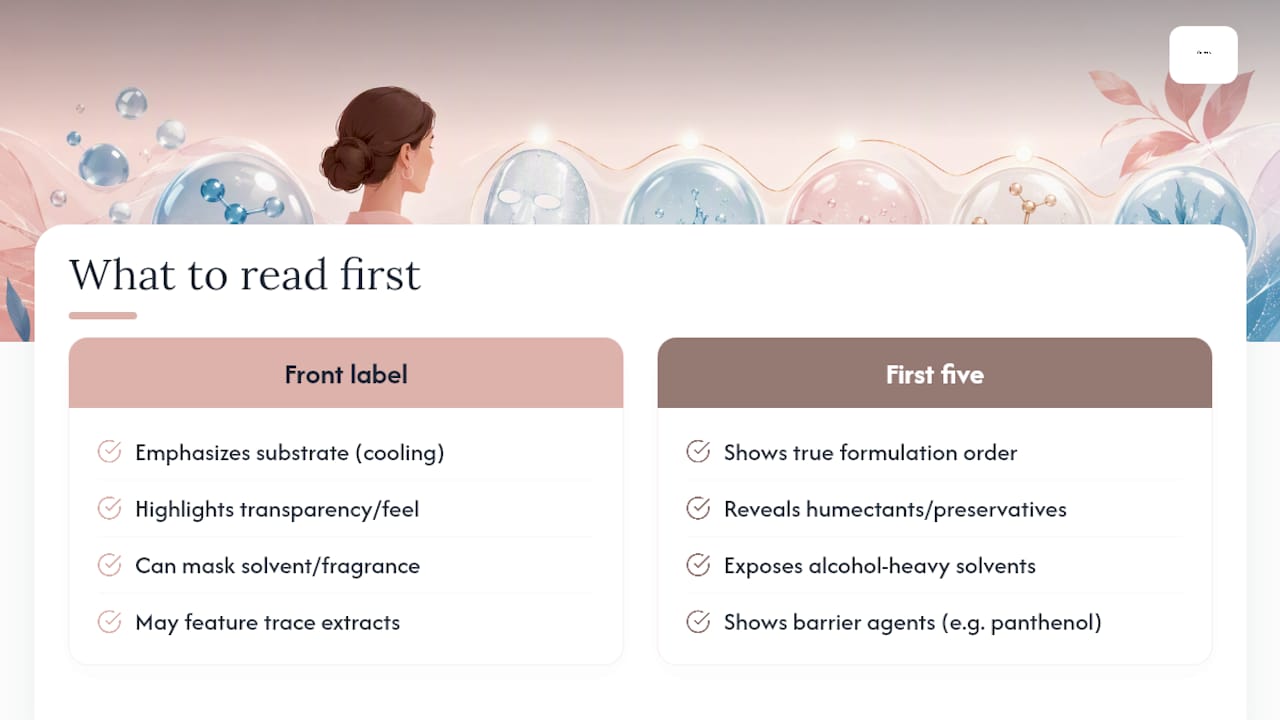
The conventional advice, “look for hyaluronic acid and you’re set,” undersells how much the supporting cast matters. A hydrogel mask with strong humectants but a fragrant, alcohol-heavy solvent system can still leave sensitive skin worse off. Conversely, a shorter ingredient list built around glycerin, a barrier-supporting agent like panthenol, and a clean preservative system often outperforms a flashier panel stacked with trace-level extracts.
If you read one thing on a hydrogel mask box before buying, make it the order of the first five ingredients, not the front-label claim. That’s where the real formulation truth lives, and it’s the fastest way to tell a genuinely well-built mask from one riding on packaging alone.
— Vervex
Try a hydrogel mask built around ingredient transparency
Most masks ask you to trust the label. Vervexofficial’s hydrogel formula lets you watch the serum actually absorb, turning transparent as the hyaluronic acid, niacinamide, and peptide blend work into skin overnight, so you’re not guessing whether the ingredients on the panel are doing anything.

That visible-absorption design pairs with a hypoallergenic formulation built for sensitive skin, addressing the exact irritant concerns covered above: no denatured alcohol, no heavy fragrance load, a preservative system dosed for safety rather than shelf appeal. It’s suited to anyone who wants overnight hydration and firmness without spending 20 minutes second-guessing an ingredient panel. If you’re weighing professional treatments like a hydrafacial against an at-home routine, a hydrogel mask fills the gap between the two: more concentrated than a leave-on serum, far less costly than a spa visit. Check out the Biodance Bio-Collagen Real Deep Mask four-pack and see the ingredient panel for yourself before your next order.
Sources
- PubMed: 2026 hydrogel mask six-week study
- Scientific Reports: Biomass-derived chitosan hydrogel composite for facial masks (2026)
- Patent WO2016076575A1: hydrogel mask composition