
Sleeping with a face mask is safe only when the product is explicitly labeled for overnight or sleeping use. Rinse-off masks, clay masks, peel-off formulas, and DIY blends should come off before you get into bed. Dermatologists generally recommend occasional use of overnight masks with frequency depending on your formula and skin type. If you’re not sure whether your current mask qualifies, take it off tonight and patch-test a dedicated sleeping pack first.
- Safe overnight: Products labeled “sleeping pack,” “overnight mask,” or “no-rinse” with clear leave-on instructions
- Not safe overnight: Clay, mud, peel-off, rinse-off, or any mask whose label says to wash off after 10–20 minutes
- When in doubt: Remove it, rinse with lukewarm water, and start fresh with a product made for overnight use
Key takeaways
Sleeping with a face mask is safe when the product is labeled for overnight use — and a real risk when it isn’t.
| Point | Details |
|---|---|
| Label check is non-negotiable | Only sleep in masks labeled “overnight,” “sleeping pack,” or “no-rinse” — rinse-off means rinse off. |
| Frequency matters by skin type | Dry skin can use overnight masks up to nightly; oily or acne-prone skin should limit use to 1–2 times per week. |
| Avoid risky ingredients overnight | Skip high-concentration AHAs, BHAs, alcohol denat, clay, and heavy retinol combinations under occlusion. |
| Patch-test before first overnight use | Apply to the jawline or behind the ear, wait 24 hours, and check for redness before a full-face application. |
| Vervexofficial hydrogel masks | The Biodance Bio-Collagen Real Deep Mask is labeled for overnight use, turns transparent on absorption, and is hypoallergenic. |
Table of Contents
- Can you sleep with a face mask on? Types that are safe vs. not
- What overnight masks actually do for your skin
- Risks and clear red flags: when sleeping with a mask is a bad idea
- Step-by-step safe overnight masking routine
- Ingredients to avoid leaving on overnight and safe alternatives
- If you accidentally slept in a sheet, clay, or rinse-off mask
- Why hydrogel overnight masks work: Vervexofficial’s approach
- How to choose the right overnight mask for your skin
- Clear signs it’s time to stop and see a dermatologist
- Overnight masks work best as an occasional treatment, not a nightly ritual
- Try Vervexofficial hydrogel overnight masks safely
- Sources
Can you sleep with a face mask on? Types that are safe vs. not
Not all masks are built the same, and the category tells you almost everything you need to know about overnight safety.
Sleeping packs / overnight masks are gel or cream formulas designed to stay on skin for hours. They work by forming a breathable occlusive layer that prevents transepidermal water loss (TEWL) while active ingredients absorb slowly. Texture is typically light to medium, non-tacky, and leaves minimal residue on your pillow.
Hydrogel overnight masks are a step up in wearability. The gel matrix provides occlusion without the heaviness of a cream, stays breathable, and tends to absorb cleanly rather than transferring to linens. The Biodance Bio-Collagen Real Deep Mask is a hydrogel-style overnight option that turns transparent as it absorbs, giving you a visible signal that the formula has penetrated.
Here’s a quick breakdown of the main types:
- Sleeping packs / cream overnight masks: Leave-on, no rinse needed, formulated for 6–8 hours of absorption
- Sheet masks: Typically 15–20 minutes, then removed. Leaving one on overnight can dry out and irritate skin as the sheet desiccates
- Clay and mud masks: Rinse-off only; drying by design and will over-dry skin if left on all night
- Hydrogel masks: Often suitable for overnight use when labeled as such; breathable and low-residue
- Eye masks (light-blocking): A separate category entirely — fabric or foam masks worn over closed eyes to block light, not a skincare product
Always check the label. The FDA’s cosmetics labeling regulations require that rinse-off products carry clear instructions to rinse. If your mask says “rinse off,” that instruction is there for a reason.
What overnight masks actually do for your skin
The core benefit is hydration retention. Overnight masks work primarily by reducing TEWL, the natural process by which water evaporates from skin into the air. An occlusive layer slows that loss, keeping skin plumper and more supple by morning. Ingredients like hyaluronic acid and ceramides, common in sleeping packs, reinforce the skin barrier while the mask holds them in place.
Dermatologists describe overnight masks as concentrated occlusive treatments rather than daily moisturizers, recommending targeted, occasional use. — Allure
Nighttime is also when skin shifts into repair mode. Cell turnover accelerates during sleep, and an occlusive mask can support that process by maintaining a stable, hydrated environment. The practical results most users notice:
- Plumper, more hydrated skin by morning
- Reduced appearance of fine lines from overnight moisture retention
- Brighter, more even tone with consistent use
- Better absorption of serums applied underneath the mask
Light-blocking eye masks operate on a different mechanism but deliver their own measurable benefit. A randomized controlled trial published in BMC Nursing found that an eye mask-based blackout protocol significantly improved subjective sleep quality and increased urinary melatonin metabolite levels. Better sleep itself supports skin recovery, so the two mask types can complement each other.
Benefits depend on formula and frequency. A rich overnight mask used twice a week on dry skin will deliver noticeably different results than the same product used nightly on oily, acne-prone skin.
Risks and clear red flags: when sleeping with a mask is a bad idea
The rule is simple: if the label says rinse off, rinse it off. Clay, mud, peel-off, and DIY masks are not formulated for extended contact. Leaving them on overnight causes over-drying, potential irritation, and in some cases, clogged pores from ingredients that were never meant to sit on skin for eight hours.
Risks of sleeping in the wrong mask type:
- Over-drying: Clay and charcoal masks absorb oil aggressively; overnight contact strips the skin barrier
- Irritation and redness: Prolonged contact with active ingredients (high-concentration AHAs, BHAs, retinol) under occlusion amplifies penetration and irritation risk
- Clogged pores: Heavy, non-breathable formulas can trap debris and contribute to breakouts
- Allergic reaction: Extended contact time increases the window for sensitization, especially with fragrance or preservatives
- Linen damage: Some formulas stain pillowcases or transfer product that re-contacts skin throughout the night
Stop immediately and remove the mask if you notice:
- Burning or intense stinging that doesn’t subside within a minute of application
- Visible swelling, hives, or blistering
- Eye irritation or difficulty breathing
Quick “do not sleep in this” checklist:
- [ ] Label says “rinse off” or “wash off after X minutes”
- [ ] Clay, kaolin, bentonite, or charcoal is a primary ingredient
- [ ] Formula contains alcohol denat
- [ ] It’s a peel-off or exfoliating mask
- [ ] It’s a DIY or homemade blend
- [ ] You haven’t patch-tested it yet
Step-by-step safe overnight masking routine
Overnight masking works best as the final step in your routine, applied after serums and moisturizers so the mask acts as a seal rather than a barrier to absorption. Byrdie editors confirm this application order: serums first, moisturizer second, overnight mask last.
Your overnight masking checklist:
- Cleanse thoroughly. Start with a clean face. Residual SPF, makeup, or pollution particles under an occlusive mask can cause breakouts.
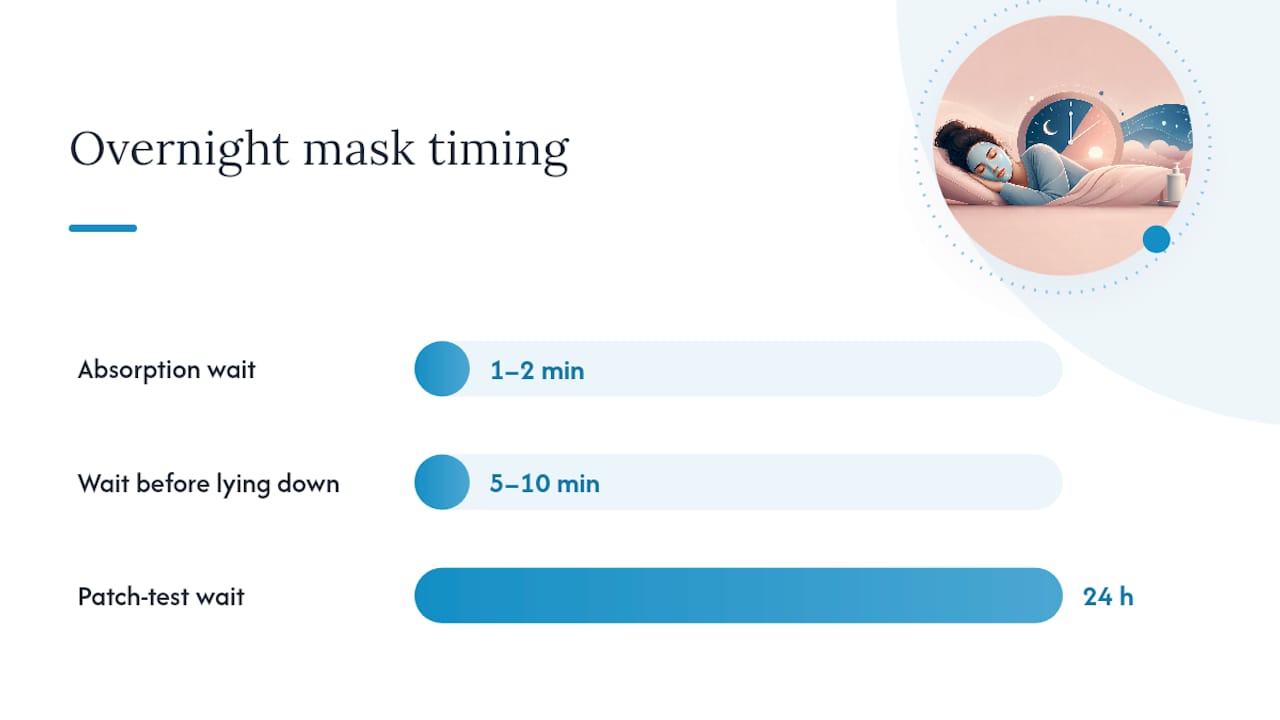
- Patch-test before first use. Apply a small amount to your jawline or behind your ear and wait 24 hours. This catches most allergic or irritant reactions before you commit to a full-face overnight application.
- Apply serums and moisturizer first. Let each layer absorb for 1–2 minutes before the next.
- Apply a thin, even layer of the overnight mask. More is not better. A thin, even coat is enough for the occlusive effect to work.
- Wait 5–10 minutes before lying down. This reduces transfer to your pillow.
- Protect your linens. Use an old pillowcase or a silk pillowcase that’s easy to wash. Some formulas transfer even when dry.
- Morning removal. Rinse gently with lukewarm water or follow the product’s specific instructions. Pat dry and apply your morning moisturizer and SPF.
Pro Tip: If you’re also using a retinol or AHA serum in your routine, alternate nights rather than layering them under an overnight mask. Occlusion amplifies penetration, and stacking actives increases irritation risk significantly.
Recommended frequency by skin type:
Ingredients to avoid leaving on overnight and safe alternatives
Some ingredients are effective in short-contact formulas but become problematic under hours of occlusion. The issue isn’t the ingredient itself — it’s the extended contact time combined with the sealed environment an overnight mask creates.
Avoid leaving these on overnight (unless directed by a dermatologist):
- High-concentration AHAs (glycolic, lactic acid above 5%): Prolonged contact increases exfoliation beyond what skin can recover from overnight; use low-strength formulas or rinse-off treatments instead
- BHAs (salicylic acid above 2%): Same logic; better suited to targeted, rinse-off spot treatments
- Alcohol denat: Drying at any contact duration; overnight exposure compounds the effect
- Clay or charcoal as a primary ingredient: Designed to absorb and draw out; they’ll over-dry skin in extended contact
- High-dose retinol under heavy occlusion: Occlusion amplifies retinol penetration, which can tip from effective to irritating; if you use retinol, apply it before a lightweight moisturizer and skip the overnight mask on those nights
- Fragrance-heavy formulas: Sensitization risk increases with contact time, especially for reactive skin
Safe alternatives and substitutions:
- Swap high-acid rinse-off masks for a low-strength lactic acid sleeping pack (under 3%) if your skin tolerates it
- Replace clay masks with a non-comedogenic hydrogel or cream sleeping pack for overnight hydration
- Use a ceramide or peptide-based overnight mask on retinol nights as a gentler barrier option
- For sensitive skin, look for fragrance-free, hypoallergenic formulas with simple ingredient lists
Patch-testing applies here too. Even “safe” overnight ingredients can trigger reactions in sensitive skin, and a 24-hour patch test before first use is the simplest way to avoid a problem.
If you accidentally slept in a sheet, clay, or rinse-off mask
It happens. Here’s what to do the morning after.
Immediate steps:
- Rinse your face gently with lukewarm water. Avoid scrubbing or using a washcloth, which adds friction to already-stressed skin.
- Skip all active ingredients (retinol, AHAs, BHAs, vitamin C) for at least 48 hours.
- Apply a simple, fragrance-free barrier moisturizer with ceramides or petrolatum to support skin recovery.
- Avoid exfoliants, toners with alcohol, and any new products for the next two days.
- Stay out of direct sun or apply a high-SPF sunscreen if you go outside, since compromised skin is more UV-sensitive.
Seek medical attention if you notice:
- Severe swelling, especially around the eyes or lips
- Blistering or open skin
- Difficulty breathing or throat tightness
- Eye involvement (redness, pain, vision changes)
For your linens: Rinse the pillowcase in cold water before laundering to prevent setting the stain. Most mask residues come out with a standard detergent wash, but hot water can set pigment or oils permanently.
Pro Tip: If your skin feels tight and dry after an accidental overnight clay mask, resist the urge to layer on heavy products immediately. A single, simple moisturizer is enough for the first 24 hours. Let the barrier recover before reintroducing actives.
Why hydrogel overnight masks work: Vervexofficial’s approach
Hydrogel masks are formulated differently from cream sleeping packs. The gel matrix provides a breathable occlusive layer that holds moisture against the skin without the heaviness or residue that can clog pores or transfer excessively to linens. That breathability matters overnight, when skin needs to regulate temperature and continue its natural repair cycle.
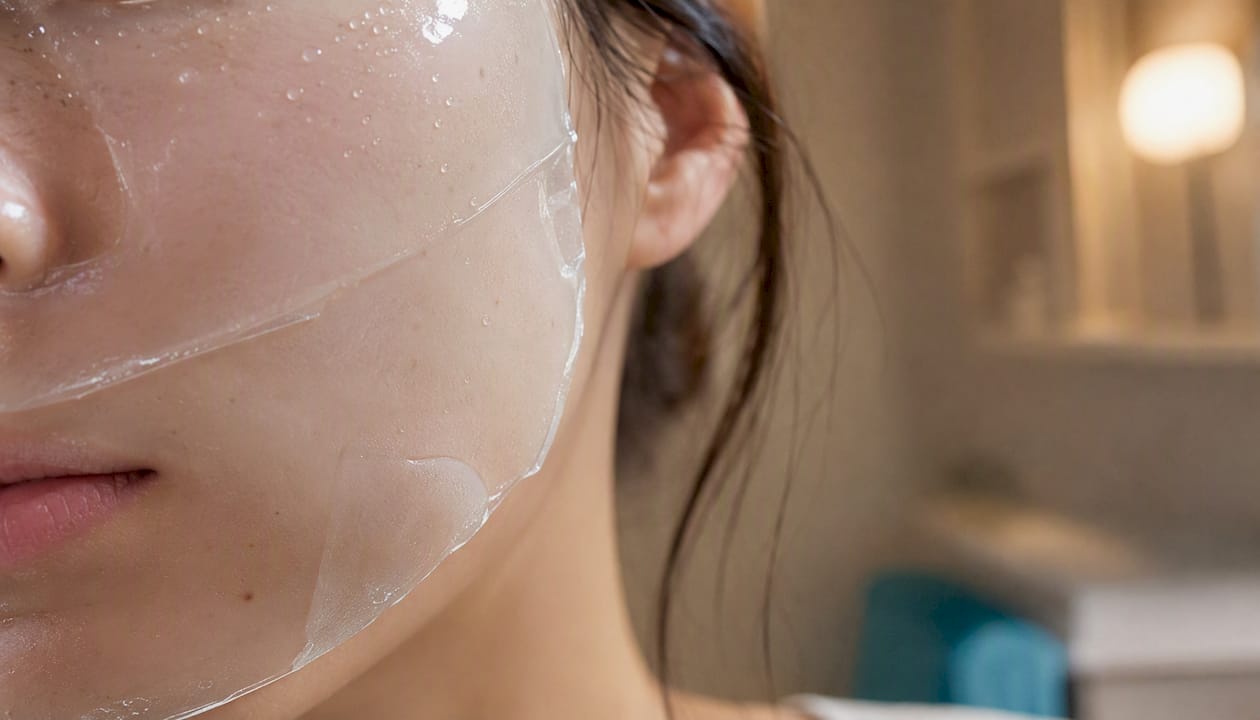
Vervexofficial builds on this with a specific design feature: the hydrogel mask turns transparent as it absorbs, giving you a visible indicator that the formula has penetrated rather than sitting on the surface. That’s a practical signal most overnight masks don’t offer.
Key proof points for overnight safety:
- Hypoallergenic formulation: Suitable for sensitive skin and free from ingredients flagged as common irritants
- Targeted variants: Formulas for firming, soothing, and brightening, so you can match the mask to your skin’s current need
- Designed for overnight absorption: Not a rinse-off product; formulated to work across a full sleep cycle
- Pore size reduction and elasticity support: Claimed benefits backed by the brand’s formulation approach
The Biodance Bio-Collagen Real Deep Mask is a hydrogel overnight mask available through Vervexofficial that fits the overnight-safe category. It’s a practical starting point for readers who want a ready-to-use option that checks the label-reading boxes covered in this article.
As Allure’s dermatologist editors note, overnight masks are treatments, not daily moisturizers. Use them with intention, not habit.
How to choose the right overnight mask for your skin
Start with three questions before you buy:
- Is it labeled for overnight use? If the label says “rinse off,” it’s not an overnight mask, regardless of texture or marketing language.
- What is the texture? Gel and lightweight cream formulas suit most skin types overnight. Heavy balms can be too occlusive for oily or acne-prone skin.
- Which active ingredients does it contain? Check for the avoid list above (high-concentration acids, alcohol denat, clay) before buying.
Full selection checklist:
- [ ] Labeled “overnight,” “sleeping pack,” or “no-rinse”
- [ ] Texture matches your skin type (gel for oily/combination, cream for dry)
- [ ] Free from high-concentration AHAs, BHAs, alcohol denat, and clay as primary ingredients
- [ ] Fragrance-free or low-fragrance if your skin is reactive
- [ ] Packaging is hygienic (pump or spatula, not open jar that requires fingers)
- [ ] Frequency guidance is on the label or brand website
- [ ] You’ve patch-tested it before first overnight use
Label red flags:
- “Rinse off after 10–20 minutes” anywhere on the packaging
- Alcohol denat in the first five ingredients
- No recommended frequency or duration listed
- “For all skin types” with no ingredient specifics — too vague to trust for overnight use
- Strong fragrance without a sensitivity disclaimer
When in doubt, a dermatologist-prescribed regimen is the safest route, especially if you have active acne, eczema, rosacea, or a compromised skin barrier. A board-certified dermatologist can recommend specific formulas and frequencies tailored to your skin condition.
Clear signs it’s time to stop and see a dermatologist
Most mild reactions from an overnight mask, slight redness, minor tightness, resolve within 24–48 hours with simple barrier support. These do not.
See a dermatologist if:
- Redness or irritation persists beyond 48–72 hours after stopping the product
- You develop new breakouts or pustules in areas where you applied the mask
- Skin feels raw, painful, or unusually sensitive to water or air
- You notice hyperpigmentation or darkening in the application area
- Itching or hives appear hours after removal
Go to urgent care or an emergency room immediately if:
- Severe swelling, especially around the eyes, lips, or throat
- Blistering or skin that breaks open
- Difficulty breathing or swallowing
- Eye pain, redness, or vision changes
What to bring to your dermatologist appointment:
- The product name, brand, and full ingredient list (photograph the label)
- Photos of the reaction taken at different stages
- A timeline: when you applied it, how long you wore it, when the reaction appeared
- A list of other products you used in the same routine that night
Overnight masks work best as an occasional treatment, not a nightly ritual
The most common mistake with overnight masks is treating them like a moisturizer. They’re not. They’re a treatment step, and that distinction changes how you use them.
Used two or three times a week on the right skin type, an overnight mask delivers real, visible results: plumper skin by morning, a more even tone over time, and a stronger barrier with consistent use. Used every night on oily or acne-prone skin, the same product can clog pores and overwhelm the barrier it was meant to support.
The label-reading habit is the single most useful thing you can build. A product that says “rinse off” is not an overnight mask, no matter how gentle it looks or how much your skin loves it in a 15-minute session. That’s not a limitation of the product — it’s just the wrong tool for the job.
The easy win here is real: pick a product labeled for overnight use, patch-test it, apply it as the final step after your serums, and wake up to noticeably hydrated skin. That’s the whole routine. No complicated stacking, no guessing about timing.
Try Vervexofficial hydrogel overnight masks safely
If you’re ready to add an overnight mask to your routine, the Biodance Bio-Collagen Real Deep Mask from Vervexofficial is a practical first choice. It’s a hydrogel overnight mask that turns transparent as it absorbs, so you can see it working rather than guessing.

Start with a patch test on your jawline. Wait 24 hours. If your skin is clear, apply a thin, even layer as the last step in your evening routine, two to three times in your first week. The formula is hypoallergenic and free from common irritants, which makes it a lower-risk starting point for sensitive skin. Vervexofficial offers variants for firming, soothing, and brightening, so you can match the mask to what your skin actually needs right now. Shop the Biodance mask to see the full range and find your fit.
Sources
- Sleeping with a Face Mask: Do’s and Don’ts of an Overnight Facial Routine
- 8 Best Overnight Face Masks for Brighter Skin While You Sleep | Allure
This article is general information, not a substitute for advice from a qualified doctor. Consult a qualified healthcare professional about your own circumstances before acting on anything here.