
If your mask or moisturizer is pilling, the fastest fixes are to remove the pills, use less product, and wait 30 to 90 seconds between layers. Pilling almost always comes down to one of three things: layering order, not enough wait time, or a formulation mismatch between two products. All three are fixable tonight.
Start here:
- Gently rub off the pills with a soft cloth or your fingertip, don’t scrub.
- Apply a thinner layer of your next product instead of piling on more.
- Wait at least half a minute before adding the next step, and watch how tacky your skin feels before moving on.
If pilling keeps happening after you’ve tried these three fixes, the problem is likely one specific product, not your routine. Patch-test it alone on the back of your hand before you blame your technique.
TL;DR:
- Dry skin with low sebum levels significantly increases pilling due to higher surface friction, especially when layering heavy or film-forming products.
- Applying too much product, not waiting enough time, or layering heavy formulas before lighter ones are common causes that can be fixed by reducing product amounts and increasing wait times.
- Testing each product individually over several nights helps identify formulation incompatibilities that cause pilling, especially in heavy creams and occlusives.
- Switching to lighter textures like gels or hydrogel masks can eliminate pilling by reducing surface film and improving absorption.
- If pilling persists after simple fixes, changing to a formulation with fewer film-formers or incompatible ingredients often provides a more durable solution than technique adjustments alone.
Table of Contents
- How to Stop Mask Pilling With Moisturizer, Step by Step
- Why Does Pilling Happen in the First Place?
- Finding the Exact Product Causing the Pilling
- Daily Habits That Keep Pilling From Coming Back
- Is It You or the Product? Spotting a Bad Formula
- Why a Hydrogel Mask Skips the Pilling Problem Entirely
- What Actually Matters Here
- Key Takeaways
- Sources
How to Stop Mask Pilling With Moisturizer, Step by Step
Run through this order before you touch anything else in your routine.
- Remove existing pills. Use a damp cotton pad or soft cloth and pat, don’t drag, across the pilled area.
- Cut your product amount roughly in half. Over-application is one of the most common reasons product balls up instead of absorbing, according to Allure’s reporting on pilling.
- Wait 30 to 90 seconds before your next layer. Press your fingertip on your skin. If it still feels tacky or wet, wait longer.
- Still pilling? Stop layering and test each product alone, one at a time, for a few nights.
Pro Tip: Keep a small dry washcloth by your sink. A quick blot before your next layer removes surface moisture that causes the next product to skid instead of absorb.
Why Does Pilling Happen in the First Place?
Pilling is friction made visible. When a product film can’t bind to your skin or to the layer beneath it, it balls up and rolls off instead of soaking in. Three things drive that.
Your skin’s baseline hydration matters more than people think. Research on skin physiology found that volunteers with drier skin and lower sebum levels experienced pilling more often, with a statistically significant difference compared to well-hydrated skin, according to a study published on PMC. Dry skin creates more surface friction, and friction is what breaks a product film into little rolled-up bits.
Formulation can work against you too. Certain polymers, film-formers, and carbomer-based gels pill when they aren’t fully neutralized or when they meet an incompatible ingredient in the next layer, per Allure’s product pilling guide.
Technique is the third variable, and it’s the easiest to fix.
- Rubbing (instead of pressing or patting) mechanically breaks down product film and speeds up pilling, a pattern identified in research on skincare pilling causes published via Ovid.
- Applying products out of order, heavy before light, forces a thinner formula to try to absorb through a thicker one.
- Skipping wait time doesn’t give the first layer a chance to set before the next one arrives.
Sunscreen shows up constantly in pilling complaints for a reason: its film-forming ingredients are built to sit on skin, not sink into it, which makes it one of the most common last straws in a layered routine.
Finding the Exact Product Causing the Pilling
Guessing wastes product and patience. Isolating the actual culprit takes a few nights, but it’s the only way to stop swapping products at random.
- Strip your routine to essentials. Cleanser and one moisturizer only, for two nights. Confirm pilling stops.
- Reintroduce one product every three to five days. Add your serum back first, then wait. Add your next step after that. This shows you exactly which addition brings the pilling back.
- Run a hand-mix test on the two suspect products. Dab your serum and moisturizer on the back of your hand, mix them with a fingertip, and watch for 30 seconds. If it clumps there, it will clump on your face, a method recommended by The Ordinary’s product pilling guide.
- Test on a small zone first, like your jaw or the side of your neck, rather than your whole face, so a bad reaction or pilling event is easy to clean up.
While testing, use less product than usual and lean toward gel or lightweight textures. Heavy creams make it harder to tell whether the pilling is from the ingredient combination or simply from too much product sitting on the surface. Product incompatibility, not clumsy application, is often the real issue, which is exactly why single-product testing beats guessing.
Daily Habits That Keep Pilling From Coming Back
Once you’ve found the culprit, a few standing habits keep it from happening again.
- Layer lightest to heaviest. Water-based serum, then treatment products, then moisturizer, then sunscreen last.
- Give each layer time to set. 30 seconds for light serums, up to 90 seconds for richer creams or treatment layers.
- Swap textures if pilling keeps recurring. A gel cream or hydrogel format lays down less surface film than a heavy occlusive cream, which lowers your pilling risk from the start.
- Watch your sunscreen specifically. If it pills over your moisturizer, avoid stacking it with another silicone-heavy product, and give it extra wait time before applying, per research on pilling mechanics.
Pro Tip: If you’re always in a rush in the morning, do your treatment steps at night instead. Fewer layers to stack before sunscreen means fewer chances for pilling before you walk out the door.
Is It You or the Product? Spotting a Bad Formula
Sometimes the fix isn’t technique. It’s the moisturizer or mask itself.

Apply the product alone, with clean, dry skin, and nothing else layered on top or underneath. If it still balls up or leaves visible residue with no other product involved, the formula itself is unstable. That’s not a technique problem you can wait or pat your way out of.
Common formulation red flags include:
- Carbomer-based gels that weren’t fully neutralized during manufacturing
- Heavy concentrations of film-forming polymers
- Silicone blends that don’t play well with other silicones layered nearby
- Thick occlusive bases that sit on the surface rather than absorbing
| Signal | What it means |
|---|---|
| Pills alone, no layering involved | Formulation issue, not user error |
| Only pills under specific other products | Ingredient incompatibility |
| Pills every time regardless of amount used | Consider discontinuing the product |
If a product fails the alone-test, stop using it, and consider a lighter gel or hydrogel format instead of another heavy cream.
Why a Hydrogel Mask Skips the Pilling Problem Entirely
Heavy night creams are often the biggest pilling offenders because they rely on occlusive, film-forming bases to lock in moisture. Vervexofficial’s hydrogel masks work differently.
- The hydrogel turns transparent as it absorbs, so you can actually see the product sink in instead of guessing whether it’s finished absorbing.
- Because it isn’t built around heavy occlusive agents, it doesn’t leave behind the thick surface film that causes rolling and clumping under other products.
- Vervex reports over 100,000 positive reviews and a hypoallergenic formulation, details worth knowing if pilling has been a recurring problem for you.
A simple way to use it: apply your serum first, let it fully absorb, then use the Biodance mask as your deep-hydration step in place of a heavy night cream. If you want a supply on hand for regular use, the Biodance Bio-Collagen Real Deep Mask four-pack covers close to a month of overnight use.
What Actually Matters Here
Most pilling advice treats it as a technique problem, wait longer, use less, rub gently. That’s true as far as it goes, but it skips the more useful question: why does one product pill on your skin and not someone else’s? The physiology research is clear that drier, lower-sebum skin creates more surface friction, which means the same moisturizer can behave completely differently on two people.
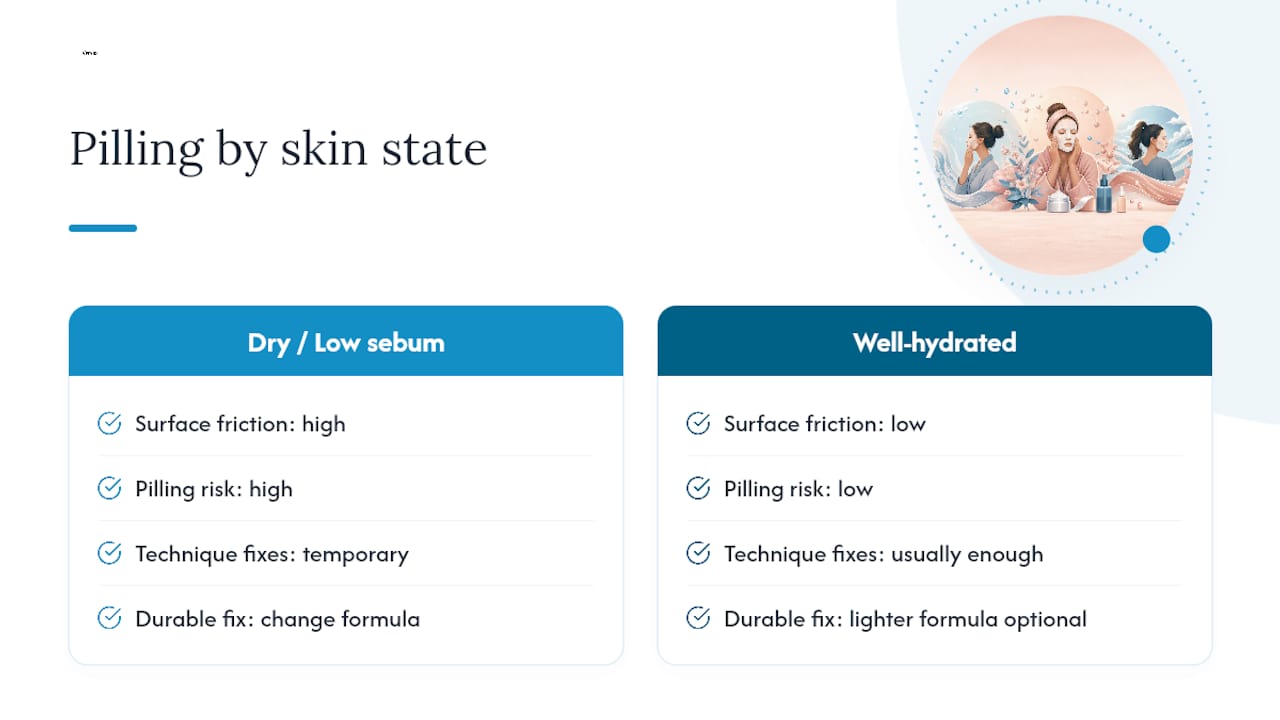
That’s the piece the standard advice underweights. Technique fixes buy you time. They don’t fix a skin barrier that’s fighting a heavy occlusive formula every night. If you’ve patch-tested, adjusted your layering, and you’re still fighting pilling, the more durable fix is often changing the formula itself, not your patience with it.
Start with the free fixes: less product, more wait time, better order. If pilling persists after that, don’t keep forcing a heavy cream to work. A lighter, gel-based format solves the friction problem at its source instead of asking you to out-technique it every single night.
— Vervex
Key Takeaways
Pilling is caused by layering order, insufficient wait time, or formula incompatibility, and isolating the exact cause takes a few nights of simple testing.
| Point | Details |
|---|---|
| Fix it tonight | Remove pills gently, use less product, and wait 30 to 90 seconds between layers. |
| Dry skin pills more | Lower hydration and sebum increase friction, making pilling more likely on dry skin. |
| Test one product at a time | Strip your routine to essentials, then reintroduce one product every three to five days. |
| Watch formulation flags | Carbomers, heavy polymers, and silicone blends are common pilling culprits. |
| Consider a texture swap | Gel or hydrogel formats leave less surface film than heavy occlusive creams. |
Sources
- PMC11294729 — research on skin physiology and pilling
- How to Prevent and Solve for Product Pilling | Allure
- Understanding the causes of skincare product pilling (Skin Research & Technology / Ovid)