
A sleeping mask is a leave-on, overnight hydration layer applied as the final step of your evening routine. Apply a thin, even layer after your moisturizer, leave it on while you sleep, and rinse it off in the morning. That’s the core of it. Most people get the best results using one 1–3 nights per week, though very dry skin can handle more frequent use. One rule that never changes: always patch-test a new product before wearing it overnight, because a reaction that develops while you sleep is harder to catch early.
- Final step: Apply after moisturizer as the last layer in your evening routine.
- Leave-on vs. rinse-off: Use as directed on the label. Overnight masks stay on until morning; rinse-off masks come off after 10–30 minutes.
- Frequency: 1–3 nights per week for most skin types; bump it up during travel, winter, or post-procedure recovery.
- Safety: Skip masks with clay, charcoal, strong AHAs/BHAs, or high-strength retinol for overnight wear unless the label explicitly says otherwise.
Pro Tip: If you’re new to sleeping masks, start with one night per week and see how your skin looks in the morning before committing to a full routine.
Key Takeaways
A sleeping mask works best as a consistent, final overnight layer applied after moisturizer 1–3 nights per week, using only formulas labeled for overnight wear.
| Point | Details |
|---|---|
| Application order | Apply sleeping mask as the very last step, after cleanser, serum, and moisturizer. |
| Frequency | Use 1–3 nights per week; increase for dry seasons or travel, reduce for oily or acne-prone skin. |
| Ingredient safety | Avoid overnight use of clay, charcoal, strong AHAs/BHAs, or high-strength retinol unless the label says otherwise. |
| Patch-test first | Apply to your inner forearm and wait 24–48 hours before full-face overnight use with any new product. |
| Vervexofficial | The hydrogel overnight masks turn transparent on absorption and suit sensitive skin with a hypoallergenic formulation. |
Table of Contents
- How to use a sleeping mask in your evening routine
- When to leave a mask on overnight vs. rinse it off
- Ingredients to check before leaving a mask on overnight
- How to adjust use by skin type
- Other ways to use a sleeping mask
- Common problems and how to fix them
- Why hydrogel overnight masks work differently from creams
- How to store your sleeping mask
- Gel, cream, and sheet sleeping masks: what’s different
- How to choose a sleeping mask for your skin concern
- How to layer sleeping masks with other overnight treatments
- What a sleeping mask actually delivers overnight
- Vervexofficial hydrogel overnight masks
- Sources
How to use a sleeping mask in your evening routine
A sleeping mask works as a leave-on overnight treatment, sealing in everything you applied before it. The order matters. Here’s the exact sequence to follow:
- Cleanse. Start with a clean face. Double-cleanse if you wore sunscreen or makeup. Vinmec’s clinical guidance stresses that clean skin before application is non-negotiable for a treatment mask to work properly.
- Toner or essence (optional). Pat in a hydrating toner or essence and let it absorb for 30 seconds.
- Serum or treatment. Apply any active serums (vitamin C, niacinamide, peptides) and wait 1–2 minutes for full absorption before moving on.
- Moisturizer. Apply your regular moisturizer. Skip this step only if the sleeping mask is specifically formulated to replace moisturizer, which some lightweight gel masks for oily skin are.
- Sleeping mask as the final layer. Scoop a small amount with a clean spatula, warm it between your fingertips, and press it gently onto your face in a thin, even layer. A little goes a long way.
How much to use: A pea-to-almond-sized amount covers the full face. More product does not mean more hydration. A thick layer increases pillow transfer and can cause pilling.
Where to apply: Cover cheeks, forehead, chin, and nose. Avoid the immediate eye area unless the label confirms it’s safe there. You can extend to the neck and chest if the formula is gentle enough.
Timing: Apply the mask about 15 minutes before you lie down. That short window lets the product settle so it doesn’t transfer straight onto your pillowcase.
Pro Tip: Always use a spatula or clean scoop when working from a jar. Fingers introduce bacteria that shorten the product’s shelf life and can trigger breakouts.
A few quick checks before you sleep:
- Skin should feel comfortable, not tight or stinging.
- No visible white residue sitting on top of the skin after a few minutes means the formula is absorbing well.
- If the product feels sticky after 10 minutes, you’ve applied too much. Blot gently with a clean tissue.
When to leave a mask on overnight vs. rinse it off
Not every sleeping mask works the same way. Some are formulated strictly for overnight wear; others double as a quick 10–30 minute rinse-off treatment. Checking the label first saves you from either under-using or over-exposing your skin.
| Use Method | Best For | Frequency | Notes |
|---|---|---|---|
| Leave-on overnight | Dry, normal, or combination skin needing deep hydration | 2–3×/week (dry skin); 1–2×/week (oily/acne-prone) | Must be labeled “overnight” or “leave-on” |
| Rinse-off (10–30 min) | Oily, acne-prone, or sensitive skin; first-time users | 1–2×/week | Good way to test a new formula before committing to overnight use |
| Dual-use | Any skin type wanting flexibility | As needed | Some formulas work both ways; follow label guidance |
Frequency guidance by situation:
- Maintenance: 2–3 nights per week covers most people’s hydration needs without overloading skin.
- Seasonal dryness or winter: Increase to 4–5 nights per week if your skin is visibly flaking or feels tight every morning.
- Travel: Airplane cabins drop humidity significantly. Using a sleeping mask the night before and after a long flight helps skin recover faster.
- Post-procedure recovery: After in-office treatments like chemical peels or microneedling, pause sleeping masks until your provider clears you. Applying an occlusive layer too soon can trap irritants and slow healing. Check guidance on pausing treatments after procedures before resuming your mask routine.
- Sensitive or acne-prone skin: Start with rinse-off use once a week. Move to overnight only after confirming the formula doesn’t cause congestion.
Ingredients to check before leaving a mask on overnight
The ingredient list tells you whether a mask is safe for 8 hours of contact. Most hydrating sleeping masks use a core set of skin-friendly actives that stay gentle over long wear.
Generally safe for overnight use:
- Hyaluronic acid (draws moisture into skin)
- Ceramides (reinforce the skin barrier)
- Glycerin (humectant, holds water in the upper layers)
- Peptides (support collagen signaling over time)
- Low-concentration botanical extracts (aloe, centella asiatica, green tea)
Avoid leaving on overnight unless explicitly labeled safe:
- Clay and charcoal (designed to absorb oil; left on too long, they dry out skin)
- Alcohol-heavy formulas (evaporates quickly and strips moisture)
- Strong AHAs and BHAs (glycolic acid, salicylic acid at high concentrations)
- High-strength retinol or peeling agents
Healthline’s guidance on overnight mask safety specifically flags clay, charcoal, and high-strength acids as problematic for 8+ hours of contact because they continue working past the point of benefit.
How to patch-test a new sleeping mask:
- Apply a pea-sized amount to your inner forearm.
- Leave it on for the same duration you’d use it on your face (overnight for a leave-on mask).
- Check at 1 hour, 24 hours, and 48 hours.
- Look for redness, swelling, itching, or stinging.
- If any of those appear, stop use and let the area calm down before trying again.
Pro Tip: Sensitive and acne-prone skin should always patch-test, even with products labeled “hypoallergenic.” Reactions vary by individual, not just formula.
Short safety checklist:
- Confirm the label says “leave-on” before sleeping in it.
- If you use a prescription retinoid, apply the sleeping mask on alternate nights rather than stacking both.
- Never layer two high-potency actives overnight without guidance from a dermatologist.
How to adjust use by skin type
Skin type changes how often you use a sleeping mask and which formula you reach for.
Dry skin:
- Apply a thin layer nightly or every other night.
- Richer cream-based or hydrogel formulas work well for deep hydration.
- Spot-boost extra-dry patches (around the nose, chin) with a slightly thicker layer in those areas.
Oily or acne-prone skin:
- Choose a lightweight gel sleeping mask over a heavy cream.
- Start with rinse-off use 1–2 nights per week before committing to overnight wear.
- Apply over a lightweight serum and skip the heavy moisturizer underneath to avoid congestion.
- Vinmec advises 1–2 times per week for oily and acne-prone skin to reduce the risk of clogged pores.
Combination skin:
- Apply a slightly thicker layer on dry zones (cheeks, around the mouth) and keep the T-zone thin.
- Localized application works well here. You don’t have to cover the entire face uniformly.
Sensitive skin:
- Choose fragrance-free, hypoallergenic formulations.
- Always patch-test before full-face overnight wear.
- Start with one night per week and increase only if your skin stays calm.
- Breathable, non-occlusive formulas reduce the risk of heat-related irritation. The same principle applies to material choices for sleep masks worn against the skin overnight.
Other ways to use a sleeping mask
A sleeping mask doesn’t have to stay on your face. The same hydrating formula that works overnight on your cheeks can treat dry patches anywhere on your body.
Hands and feet:
- Apply a generous layer to clean hands or feet before bed.
- Pull on cotton gloves or socks over the mask for an intensive treatment. The occlusion amplifies absorption.
- This works especially well in winter when knuckles crack and heels get rough.
Targeted spot treatment:
- Dab a small amount onto dry, flaky patches on elbows or any area with persistent dryness.
- Leave on overnight the same way you would on your face.
Zones to avoid:
- Open wounds or actively inflamed acne lesions. An occlusive layer over broken skin can trap bacteria.
- The immediate eye area unless the product label confirms it’s safe there. The skin around the eyes is thinner and more reactive. Use a dedicated eye cream for that zone.
Common problems and how to fix them
Most sleeping mask issues come down to application technique or layering order, not the product itself.
Pilling (product balls up on skin): Pilling happens when a water-based product sits on top of a silicone or heavy occlusive before it absorbs. The fix is straightforward: apply thinner layers, wait longer between each step (at least 60–90 seconds), or switch your base moisturizer to a lighter texture. According to Mavala’s guidance on overnight mask layering, incompatible textures are the main culprit.
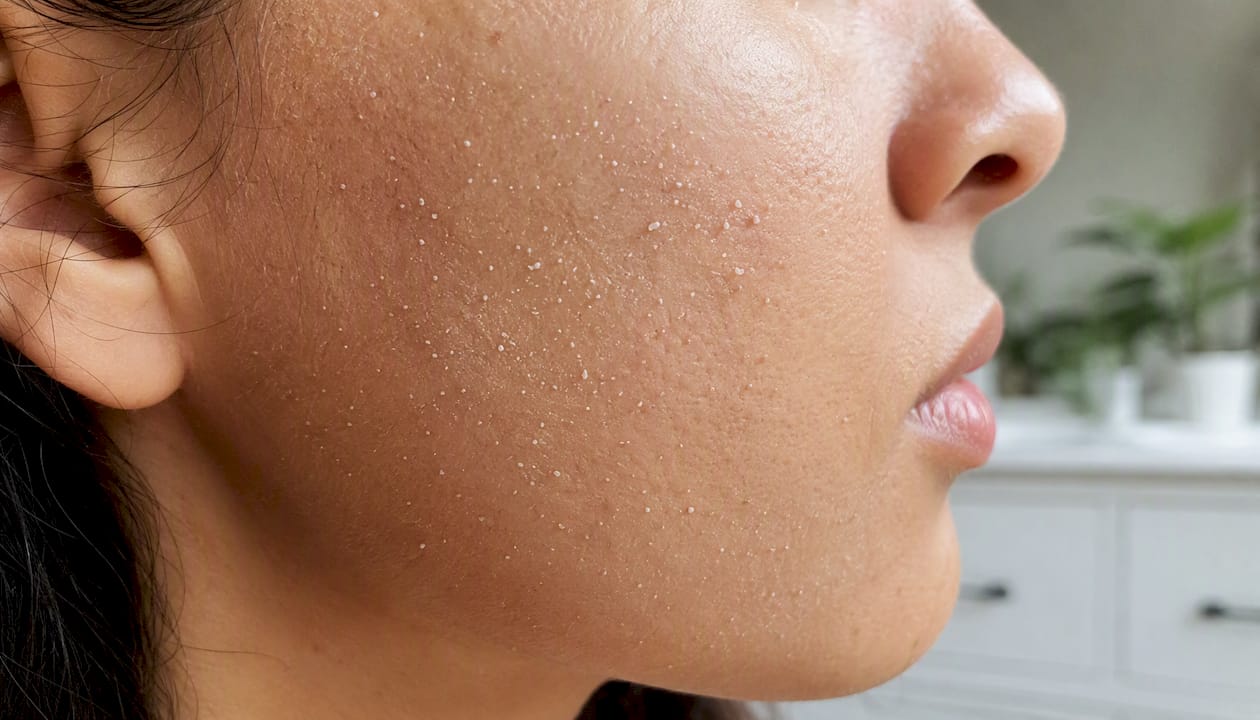
Morning residue or sticky feeling: You used too much product. Rinse with a gentle cleanser in the morning and cut the amount in half the next time. Give the mask 10–15 minutes to sink in before lying down.
Breakouts or new irritation: Stop use immediately. Check the ingredient list for heavy occlusives (petrolatum, mineral oil) that can clog pores, and check whether you layered it over a high-strength active. Patch-test the product separately before trying again. If breakouts persist or worsen, see a dermatologist.
When to stop and get professional help: Severe swelling, blistering, or persistent inflammation that doesn’t calm down within 48 hours after stopping use warrants a dermatologist visit. These reactions are uncommon with gentle hydrating formulas but can occur with sensitized or compromised skin.
Pro Tip: If you’re switching moisturizers and adding a sleeping mask at the same time, introduce one product at a time. That way, if something irritates your skin, you’ll know exactly which product caused it.
Why hydrogel overnight masks work differently from creams
A hydrogel mask uses a water-based gel matrix that adheres closely to the skin’s surface. That contact increases the time active ingredients stay in direct proximity to the skin, which is the main functional difference from a standard cream.
The practical benefits:
- Cooling sensation on application, which can reduce the appearance of puffiness.
- Reduced pillow transfer in many formulas, because the gel structure holds ingredients against the skin rather than letting them migrate.
- Immediate plumping effect from the humectants drawing water into the upper skin layers overnight.
- Visible absorption cue in some formulas. Vervexofficial’s hydrogel overnight masks turn transparent as they absorb, so you can see when the formula has penetrated rather than guessing.
Vervexofficial reports that 98% of users experience superior hydration, with the formula targeting hydration, firmness, and pore appearance. The hypoallergenic formulation makes it a practical option for sensitive skin, though patch-testing still applies.
Hydrogel masks carry the same safety rules as cream masks. Patch-test before full-face overnight use, and avoid overnight wear if the formula contains unlisted strong actives.
How to store your sleeping mask
Storage affects both how long a mask stays effective and how safe it is to use.
Keep jar and tube masks away from direct sunlight and heat. A bathroom shelf away from the shower steam is better than the counter directly next to it. Heat degrades certain actives, particularly peptides and vitamin C derivatives, faster than room temperature storage would.
Always close the lid tightly after use. Exposure to air oxidizes some ingredients and introduces contaminants. Use a clean spatula every time you open a jar mask. Fingers carry oils and bacteria that accelerate product breakdown and can introduce contamination into the formula.
Check the PAO symbol (the open-jar icon with a number) on the packaging. That number tells you how many months the product stays effective after opening. Most sleeping masks are 6–12 months after opening. If the texture changes, the color shifts, or the smell turns off, discard it regardless of the date.
Refrigerating a gel or hydrogel mask is optional but extends shelf life and adds a cooling effect on application. It’s not required, just a preference.
Gel, cream, and sheet sleeping masks: what’s different
The format of a sleeping mask changes how it feels, how it absorbs, and which skin types it suits best.
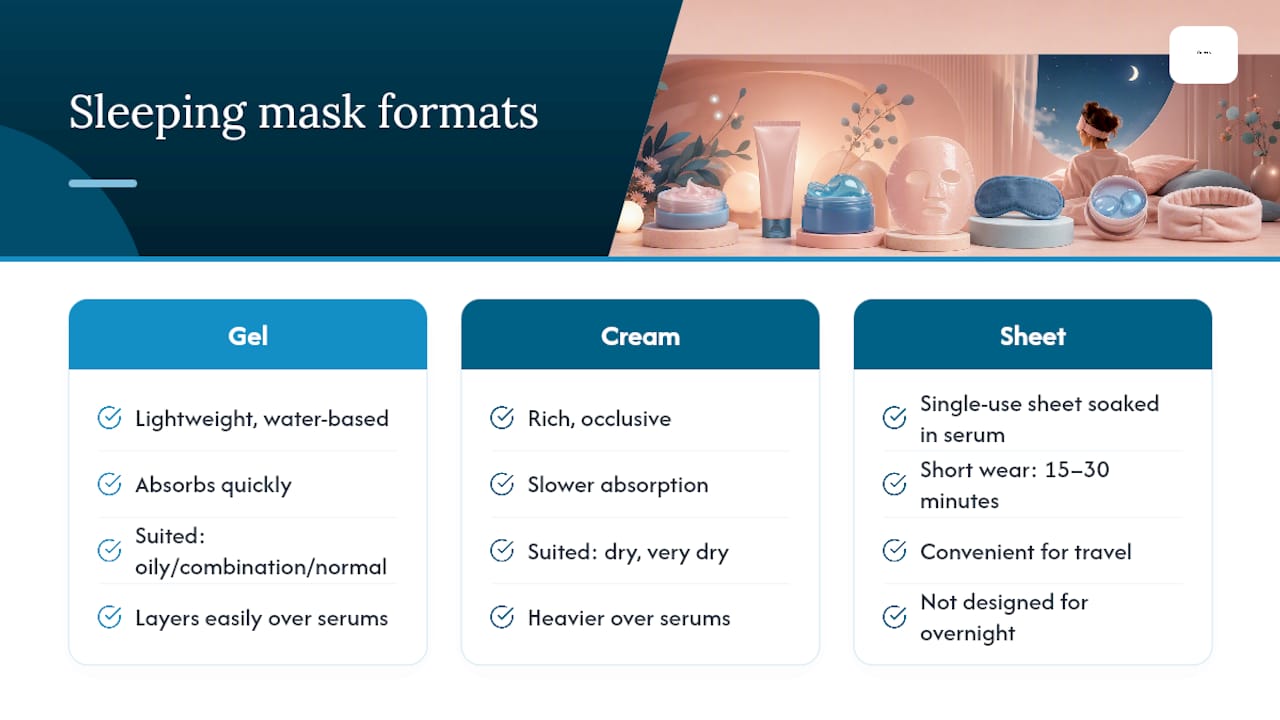
Gel sleeping masks are lightweight, water-based, and absorb quickly. They suit oily, combination, and normal skin well. The texture layers easily over serums without feeling heavy. Hydrogel masks fall into this category and add the benefit of a structured matrix that holds ingredients against the skin longer.
Cream sleeping masks are richer and more occlusive. They work best for dry and very dry skin that needs a heavier barrier overnight. The trade-off is more potential for pillow transfer and a higher risk of congestion for oily or acne-prone skin.
Sheet sleeping masks are single-use sheets soaked in serum. They’re convenient for travel and deliver a concentrated dose of actives in 15–30 minutes. Most sheet masks are not designed for overnight wear. Check the label. Leaving a sheet mask on too long can actually pull moisture back out of the skin as the sheet dries.
For layering guidance on how these formats fit into a full routine, Soneda Skincare’s step-by-step layering guide covers texture sequencing in detail.
How to choose a sleeping mask for your skin concern
The right sleeping mask depends on what you’re trying to fix, not just your skin type.
Dryness and dehydration: Look for hyaluronic acid, glycerin, and ceramides. These ingredients pull water into the skin and lock it there. A gel or cream formula both work; choose based on how heavy you want the texture.
Aging and loss of firmness: Peptides and collagen-supporting ingredients are the ones to look for. Hydrogel formats tend to deliver these well because of the extended contact time. Overnight hydration alone won’t reverse deep wrinkles, but consistent use reduces the tight, crepey feeling that makes fine lines look more pronounced.
Acne-prone skin: Avoid heavy occlusives. Look for niacinamide (helps regulate oil and calm redness) and centella asiatica (supports the skin barrier without clogging pores). Lightweight gel formulas are the safer choice here.
Dullness and uneven tone: Niacinamide, vitamin C derivatives, and mild exfoliating actives can help. If the formula contains exfoliating acids, confirm it’s labeled for overnight use and start with rinse-off application first.
Sensitivity and redness: Fragrance-free, minimal-ingredient formulas with centella asiatica, aloe, or oat extract are the most reliable. Vervexofficial’s hypoallergenic mask line is formulated with sensitive skin in mind.
How to layer sleeping masks with other overnight treatments
Layering order matters most when you’re using actives like retinol, AHAs, or prescription treatments alongside a sleeping mask.
The general rule: apply actives first, let them absorb, then seal with the sleeping mask. The sleeping mask goes last, always.
With retinol or prescription retinoids: Apply retinol after your serum step and before moisturizer. Let it absorb for 2–3 minutes. Then apply moisturizer, then the sleeping mask. If your skin is new to retinol or you’re using a high-strength prescription version, use the sleeping mask on alternate nights rather than stacking both every night. Vinmec’s guidance on layering active treatments recommends spacing high-potency actives to reduce cumulative irritation.
With spot treatments: Apply spot treatments directly to blemishes after your serum and before moisturizer. Let them dry completely. Then apply moisturizer and the sleeping mask over the top. Avoid applying the sleeping mask directly on top of a benzoyl peroxide spot treatment, as the occlusion can increase irritation.
With exfoliating acids (AHAs/BHAs): Use exfoliating acids on nights when you’re not using a heavy sleeping mask, or choose a sleeping mask with no active acids of its own. Layering two exfoliating products overnight is the fastest route to irritation. For a detailed look at safe sequencing with professional-grade treatments, this layering guide covers the logic clearly.
With vitamin C serums: Vitamin C is generally fine to layer under a sleeping mask. Apply the serum, wait for it to absorb, then continue with moisturizer and mask as usual.
What a sleeping mask actually delivers overnight
Overnight hydration is real, but it has limits worth understanding clearly.
What you can expect after a good night with a sleeping mask: skin that feels plumper and less tight in the morning, reduced flaking, and a more comfortable baseline throughout the day. These are the results of the humectants and occlusives doing their job while your skin’s repair processes run overnight.
What a sleeping mask won’t do: reverse deep wrinkles after one use, permanently shrink pores, or replace a consistent skincare routine. The plumping effect from hyaluronic acid is partly temporary. Pores look smaller when skin is well-hydrated because the surrounding tissue is fuller, but the pore size itself doesn’t change.
The honest way to measure whether a sleeping mask is working for you is to track how your skin feels over 2–4 weeks, not how it looks after one night. Watch for reduced morning tightness, fewer dry patches during the day, and a more even texture. Those are the real signals of consistent hydration.
Regular moderate use beats sporadic heavy use every time. Three nights a week for a month will show you more than using the mask every night for one week and then stopping.
Vervexofficial hydrogel overnight masks
If you want a sleeping mask that shows you it’s working, Vervexofficial’s hydrogel overnight masks are worth trying. The formula turns transparent as it absorbs, so you can see the product penetrating rather than sitting on the surface. That visual cue is genuinely useful, especially when you’re learning how much product to use.

The masks are designed to deliver hydration, support firmer-feeling skin, and reduce the appearance of pores overnight. The hypoallergenic formulation makes them a practical option for sensitive skin. They fit into the routine exactly as described in this guide: apply as the final layer after moisturizer, leave on overnight, and rinse in the morning.
Patch-test before your first full-face overnight use, the same way you would with any new product. Start with the Biodance Bio-Collagen Real Deep Mask pack to try the hydrogel format at a reasonable commitment level, or browse the full Vervexofficial mask range to find the variant that fits your skin concern.
Sources
- Sleeping with a face mask: what’s healthy, what’s not, side effects
- Do Sleeping Masks Work? Overnight Masks Explained
- Is It Safe to Apply a Sleeping Mask Every Night? | Vinmec
- How To Wear Sleeping Mask: Comfort Tips For Better Sleep - SleepBehind