
Pack six things: cleanser, hydrator, moisturizer, sunscreen, one treatment, and a rescue item. Every container that holds liquid, gel, or cream must be 3.4 ounces (100 ml) or smaller and fit inside one clear, quart-size bag, per TSA guidance. Skip the full routine mid-flight. Cleanse and moisturize before boarding, keep a mist and lip balm on hand in the air, and save your active treatments for after landing.
TL;DR:
- Ensure all liquids, gels, and creams in your travel kit are in containers of 3.4 ounces (100 ml) or smaller and fit within one clear quart-size bag for TSA screening.
- Use a six-function capsule, including cleanse, hydrate, seal, protect, treat, and rescue, to cover nearly all skincare needs without excess or leakage risks.
- Decant products carefully, leaving space for air expansion, cleaning threads, and double-bagging runny liquids to prevent leaks during altitude changes.
- Adjust your skincare quantities based on trip duration, with minimal essentials for short trips and multi-purpose, larger sizes for long-term or backpacking travel.
- Prioritize skincare routines before boarding and after arrival, focusing on cleansing, moisturizing, and sun protection, while keeping hydration mists and lip balm accessible.
Table of Contents
- Building your travel skincare packing capsule
- How does airport security screen skincare liquids?
- How do you decant skincare without leaks?
- How much skincare should you pack for each trip length?
- What’s the best skincare routine for flights?
- What’s the best way to organize a travel skincare pouch?
- How should climate change your skincare packing list?
- How does an overnight hydrogel mask fit a travel capsule?
- A few honest notes from years of packing this wrong
- Add an overnight hydration boost to your travel kit
- Where to verify the rules and dig deeper
- Sources
Building your travel skincare packing capsule
A six-function capsule covers nearly every trip without forcing you to guess what to leave behind. Instead of asking “which products do I love,” ask “which function does this fill.” Cleanse, hydrate, seal, protect, treat, rescue. If a product doesn’t fit one of those six jobs, it doesn’t make the bag.
Here’s what each slot actually does for you on the road:
- Cleanse: removes grime, sunscreen, and recycled cabin air residue. A solid bar or sheet cleanser skips liquid limits entirely.
- Hydrate: a mist or lightweight essence that fights the dry air planes and hotel HVAC systems both produce.
- Seal: your moisturizer, locking in whatever hydration you just applied. Pick a small travel-size mini or a balm that does double duty as an occlusive.
- Protect: sunscreen, non-negotiable, covered in detail below.
- Treat: exactly one active, whether that’s a retinol alternative, a vitamin C serum, or a spot gel. One is plenty while your skin is adjusting to new water, air, and stress levels.
- Rescue: lip balm, a hydrocolloid patch, or a single-use calming mask for whatever goes wrong.
For carry-on, keep cleanse, hydrate, protect, and rescue within reach since you’ll want them before landing or during a long layover. Treat and heavier seal products can ride in checked luggage if you’re bringing full-size bottles.
Minimalists can collapse cleanse and seal into one multi-balm. Product-heavy travelers can swap the single treatment slot for a rotating two-product mini set, but resist going beyond that. Every extra item is another thing that can leak, get flagged, or just sit unused in your bag.
How does airport security screen skincare liquids?
The TSA’s 3-1-1 rule is simple on paper: each liquid, gel, aerosol, cream, or paste container must hold 3.4 ounces (100 ml) or less, and all of them together must fit in a single quart-size, clear, resealable bag, according to TSA’s own checklist. What trips people up is a detail most packing guides skip: screening officers check the container’s printed volume, not how much product is actually left inside. A nearly empty 4-ounce bottle still gets pulled, even if there’s a teaspoon of moisturizer sloshing around inside.
A few practical habits keep you moving through the line:
- Buy or decant into containers under 3.4 ounces, even if you’re only carrying a small amount of product.
- Keep prescription creams or medicated ointments in their original, labeled packaging, since officers may ask to see it.
- Place your liquids bag on top of your carry-on or in an easy-access pocket so you’re not digging through folded clothes at the bin.
- If you’re connecting through a foreign airport, check that country’s rules before you fly. Most follow similar limits, but some regions differ on aerosol restrictions or bag size.
None of this is about hiding anything. It’s about making the officer’s job fast, which makes your line move fast.
How do you decant skincare without leaks?
Cabin pressure changes are the real enemy here, not turbulence. As altitude increases, trapped air inside a bottle expands and pushes liquid toward any weak seal. A pump that seemed snug at home can drip steadily by cruising altitude.
Follow this sequence when you decant:
- Fill travel bottles no more than two-thirds full, leaving room for that air expansion.
- Wipe the threads clean before closing, since even a trace of product breaks the seal.
- Place a small square of cling film under the cap, then screw it down over the film.
- Lock pump dispensers if they have a locking ring, or tape the pump head down if they don’t.
- Double-bag anything thin or runny, like toners or oils, inside a small zip pouch before it goes into your main quart bag.
Recommended containers vary by product. Airless pumps work best for serums and anything oxygen-sensitive. Small silicone bottles handle thicker lotions without cracking. Rigid mini jars suit balms and thick creams that won’t shift or leak under pressure.
Skip decanting altogether for light or air-sensitive actives, like certain vitamin C serums or retinoid formulas that degrade once exposed to a wider air gap. Buy the travel-size retail version instead, or use single-dose pods where available. Glass bottles need a buffer, too. Wrap them in a sock or slide them into a padded pouch pocket rather than letting them knock against a phone charger.
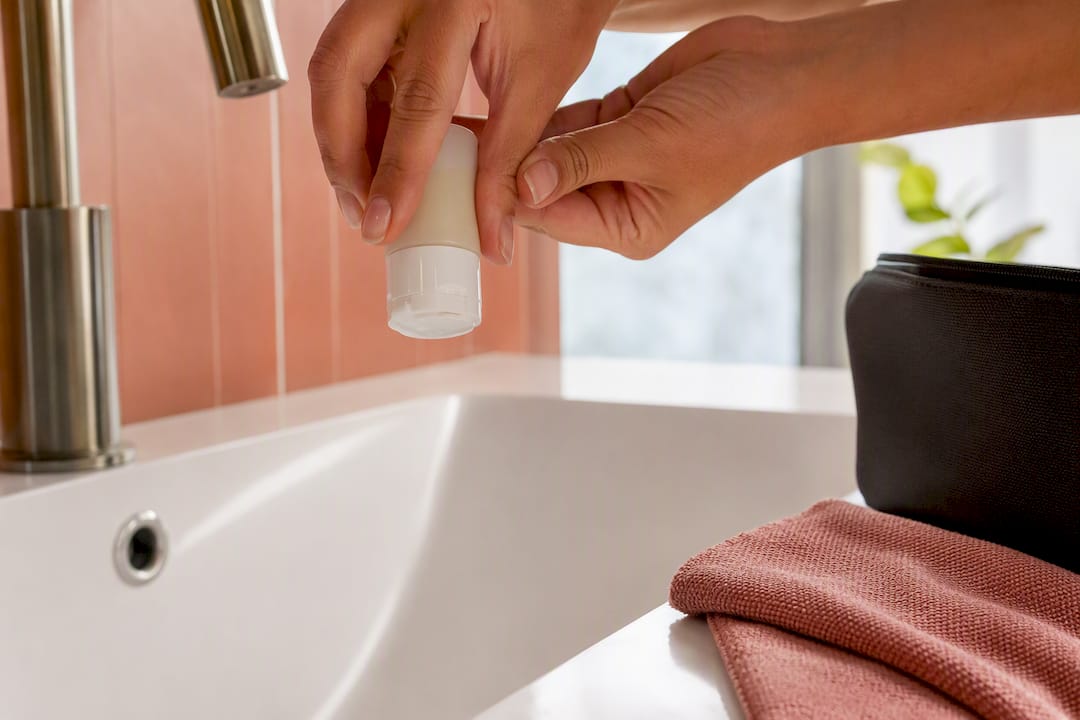
Pro Tip: Test any decanted bottle by turning it upside down over a sink for thirty seconds before you pack it. If it leaks in your bathroom, it will leak at 35,000 feet.
How much skincare should you pack for each trip length?
Trip duration should drive quantity, not habit. Packing the same kit for a redeye and a two-week trip means either running out or hauling dead weight.
- Overnight: one cleanser wipe or mini bar, a hydrating mist, moisturizer, SPF, and a lip balm. That’s it, all in your personal item.
- Weekend (2 to 3 nights): add a hydrating serum and one extra rescue item, like a hydrocolloid patch, in case a breakout shows up at the worst time.
- One week or longer: scale up your SPF size and consider a richer night cream, packed in checked luggage rather than your quart bag. Buying travel-size versions at your destination is often easier than hauling full bottles.
- Long-term travel or backpacking: prioritize multi-use products. A balm that works as lip care, cuticle repair, and spot treatment beats three single-purpose items every time. Experienced long-haul travelers consistently favor weight savings over variety.
The math is straightforward: more nights means more exposure to new water, climate, and stress on your skin, but it doesn’t mean more products. It means slightly larger sizes of the same six slots.
What’s the best skincare routine for flights?
Do your real routine on the ground, not in your seat. Travel editors consistently recommend simplifying whatever happens between takeoff and landing, saving cleansing and actives for before boarding and after you’re off the plane.
Before boarding: cleanse quickly, then apply moisturizer and SPF if you’re catching a daytime flight where light exposure through the window matters.
During the flight: a hydrating mist every few hours, lip balm reapplied often, and hand cream since cabin air dries hands faster than most people expect. Skip anything new. This isn’t the moment to test a fresh retinol.
After landing: cleanse again to remove recycled air residue, apply a barrier-repair moisturizer, and use a targeted spot treatment only if something has actually flared up.
- Keep a hydrocolloid patch in your bag for sudden breakouts, especially useful after a long-haul flight when stress and dehydration show up on your chin overnight.
- A single-use sheet mask works well for a hygiene reset in an airport bathroom before a connecting flight.
- Skip anything that requires rinsing mid-flight. Lavatories aren’t built for skincare routines.
What’s the best way to organize a travel skincare pouch?
Your quart-size clear bag holds the liquids TSA checks. Everything else needs its own logic. A semi-rigid pouch protects anything fragile, glass, or prone to crushing, while a small inner zip bag isolates oils or anything thick enough to smear if it opens.
- Keep flight essentials (mist, balm, hand cream) in a top-access pocket of your personal item, not buried under a laptop.
- Arrange your quart bag with the largest containers on the bottom so a screening officer can see everything at a glance without you unpacking it.
- Label decanted bottles with a strip of tape, since three unmarked white bottles look identical after a week of travel.
- If something does leak, a plastic produce bag or a dedicated zip pouch around the offending item keeps it away from clothing and electronics until you can deal with it properly.
How should climate change your skincare packing list?
Destination climate matters more than most people plan for, and packing the same kit for Reykjavik and Bangkok is a mistake you’ll feel by day two.
- Dry or cold climates: pack a richer moisturizer, an occlusive balm for wind exposure, and extra lip care since cold air cracks lips fast.
- Hot or humid climates: switch to lightweight, water-based hydrators, and lean on powder or solid formats that won’t slide off in the heat. A mineral SPF holds up better under sweat than some chemical formulas.
- The first three to four days anywhere new: prioritize barrier repair over anything else, and hold off on introducing strong actives while your skin adjusts to new water and air. Editors and skincare practitioners agree this transition window is when reactions are most likely.
- Every single trip, regardless of climate: sunscreen stays mandatory. It’s the one slot in your capsule that never gets cut.
How does an overnight hydrogel mask fit a travel capsule?
An overnight hydrogel mask solves a problem the rest of your capsule can’t: it does its work while you sleep, so you skip a round of daytime reapplication entirely. Vervexofficial’s hydrogel masks turn transparent as they absorb, which gives you a visible way to confirm the product actually penetrated rather than guessing.
- Travel fit: compact, single-use packaging that doesn’t count against your liquids limit the way a bottle of serum does.
- Timing: apply on arrival night to recover from cabin dehydration, or during a long flight if you have a lie-flat seat and the hours to spare.
- Safety notes: the formulas are hypoallergenic, which matters after a day of recycled air and unfamiliar water. Skip use on broken or irritated skin, and store masks away from direct heat, since hotel windowsills and car dashboards run hotter than you’d expect.
One overnight mask can replace a separate hydrating serum and part of your seal step, which frees up a slot in your capsule for something else entirely.
A few honest notes from years of packing this wrong
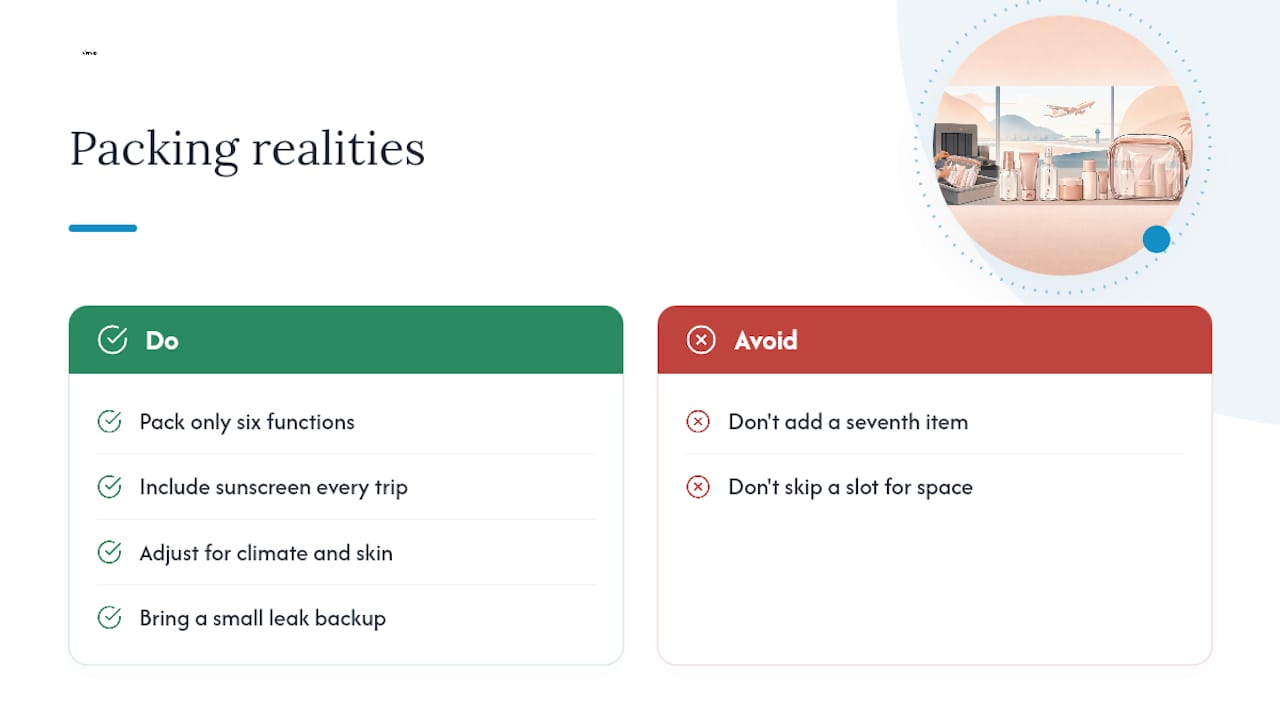
Every travel skincare list I’ve read (including some we’ve written) makes packing sound tidier than it is. Bottles still leak. Cabin air still wins some battles. What actually changed my own packing wasn’t buying more travel-size products, it was cutting down to the six functions and refusing to add a seventh unless something broke.
Sunscreen is the one item I’ve never regretted packing and never once regretted using. The capsule method isn’t a rulebook. Adjust it for your climate, your skin, your trip length. Just don’t skip a slot because you ran out of room in your bag.
— Vervex
Add an overnight hydration boost to your travel kit
Your capsule already covers cleanse, hydrate, seal, protect, treat, and rescue. An overnight hydrogel mask fills the gap none of those six slots quite reach: deep, passive hydration while you sleep, with zero extra daytime steps. Vervexofficial’s hydrogel masks turn transparent as they absorb, so you get a visible check that the formula worked, not just a hope that it did.
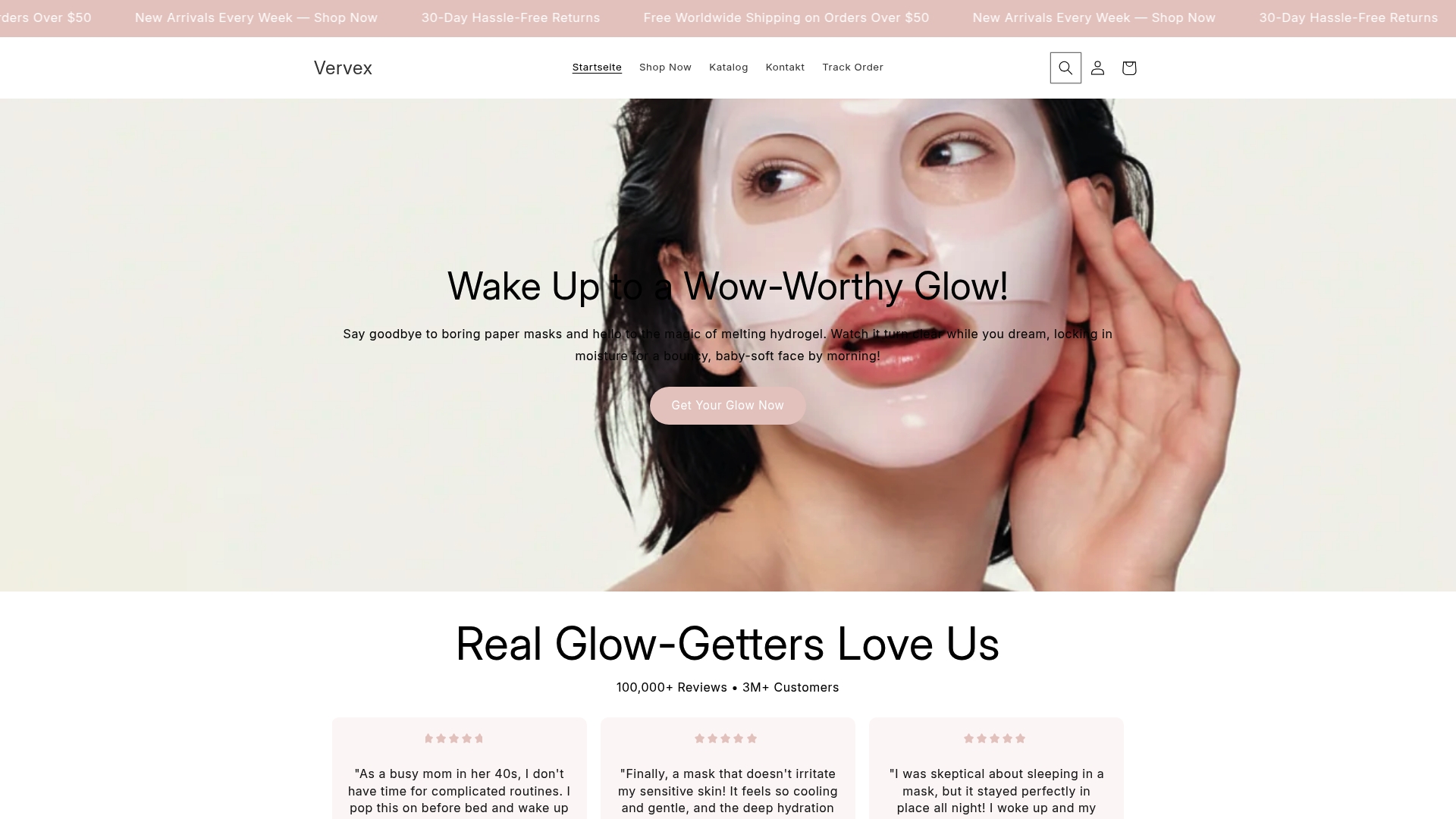
The masks are hypoallergenic and packaged flat, so they slide into a checked bag or a carry-on side pocket without eating into your liquids allowance. Use one on arrival night after a long flight, or mid-flight if you’ve got a lie-flat seat and the hours to spare. Either way, you wake up with visibly firmer, more hydrated skin instead of the tight, dull look cabin air tends to leave behind. Check availability and pack sizes on the product page before your next trip.
Where to verify the rules and dig deeper
Confirm liquid limits directly through TSA’s travel checklist before every trip, since rules occasionally shift. For more on leak-proofing technique, see the TSA-friendly minis guide, and for long-term travel scaling, the minimalist backpacker’s kit breakdown is worth a read.
Sources
- Tsa
- Travel Skincare Kit: What to Pack + TSA Liquids
- Minimalist Backpacker’s Skincare Kit: Lessons From 60+ Countries
- How to Pack Skincare for Travel: Expert Tips by Climate