
Sleeping masks work through four ingredient jobs: humectants pull water into skin, emollients and occlusives seal it in, barrier lipids repair the skin’s outer layer overnight, and targeted actives handle brightening or firming. If you have sensitive or dry skin, look for lightweight humectants (like hyaluronic acid and glycerin) paired with skin-identical lipids (ceramides, squalane), and skip anything listing plain “fragrance” or several essential oils. Always patch-test a leave-on overnight product before applying it to your whole face.
TL;DR:
- Look for sleeping masks with high concentrations of humectants and skin-identical lipids at the top of the ingredient list for effective hydration and barrier support.
- Avoid formulas with fragrance or essential oils listed early on, especially if you have sensitive or reactive skin.
- Recognize that ingredients like sodium hyaluronate, squalane, ceramides, and niacinamide are common and effective in targeted skin repair within these masks.
- Consider hydrogel formats that visibly change as the product absorbs, offering proof of ingredient uptake and suitability for sensitive skin.
- Patch-test new sleeping masks, particularly those with preservatives like phenoxyethanol, and avoid layering active ingredients over retinoids or acids on the same night.
Table of Contents
- What Are the Main Ingredient Categories in a Sleeping Mask?
- Which Active Ingredients Show Up Most in Sleeping Masks?
- Does Texture Change How Well a Sleeping Mask Works?
- How Do You Read an Ingredient List on a Sleeping Mask?
- How Do You Patch-Test a Sleeping Mask Safely?
- When Should You Use a Sleeping Mask in Your Routine?
- Preservatives Commonly Used in Sleeping Masks and Their Roles
- Common Fragrance Ingredients and Potential Irritants in Sleeping Masks
- Our Take: Why Ingredient Transparency Matters More Than Marketing Language
- Try a Hydrogel Sleeping Mask Built on Ingredients You Can Verify
- Sources
What Are the Main Ingredient Categories in a Sleeping Mask?
A sleeping mask isn’t one thing doing one job. It’s usually four or five ingredient categories working in sequence, each with a specific task on your face while you sleep.
Humectants come first. These are the water magnets: hyaluronic acid, glycerin, and trehalose. Hyaluronic acid can hold up to a thousand times its weight in water, but the molecular weight matters. Larger HA molecules sit on the surface and plump the top layer, while smaller, hydrolyzed versions can move slightly deeper and hydrate through more layers of skin. Glycerin is cheaper and blunter but reliably effective. Trehalose, a sugar-based humectant, has a reputation for stabilizing skin cells under stress, which makes it a common addition in masks marketed for sensitive skin.
Emollients and occlusives come next, and this is where texture and greasiness get decided. Squalane, dimethicone, and various plant oils all trap moisture at the skin’s surface, but they don’t do it the same way. Squalane is lightweight and mimics the skin’s own sebum, so it absorbs fast without heaviness. Dimethicone forms more of a physical film. Heavier plant oils, like some shea or coconut derivatives, sit on top longer and can feel greasy by morning, especially on combination or acne-prone skin.
Barrier lipids are the repair crew. Ceramides and cholesterol are naturally present in the outer skin layer, and depleted levels are linked to dryness, flaking, and increased sensitivity. Skin loses significantly more water overnight than during the day, with some estimates as high as 93% more, which is the whole rationale for putting barrier lipids to work while you sleep instead of during the day.
Actives and additives round out the formula. Niacinamide, peptides, and antioxidants handle brightening, firmness, and free-radical defense. Preservatives and fragrance are functional necessities with real tradeoffs: preservatives keep the product safe to use for months, but certain classes are more likely to trigger sensitivity than others.
Here’s how these categories typically show up on an ingredient label, roughly in order of concentration:
- Humectants: sodium hyaluronate, glycerin, trehalose, butylene glycol
- Emollients/occlusives: squalane, dimethicone, various plant-derived oils
- Barrier lipids: ceramide NP, ceramide AP, cholesterol
- Actives: niacinamide, peptides, botanical antioxidant extracts
- Additives: preservatives (phenoxyethanol, ethylhexylglycerin), fragrance, chelating agents
A well-built sleeping mask usually leads with humectants and lipids near the top of the list, with actives and fragrance appearing further down in smaller amounts. If fragrance or an essential oil blend shows up in the first ten ingredients, that’s worth a second look before you commit to nightly use.
Which Active Ingredients Show Up Most in Sleeping Masks?
Once you know the categories, the next step is recognizing specific ingredients by name, because “hyaluronic acid” on a label can mean three different things depending on the exact form used.
The hyaluronic acid family isn’t one ingredient
Sodium hyaluronate is the most common form because it’s smaller and penetrates more readily than raw hyaluronic acid. Hydrolyzed hyaluronic acid is broken down even further, designed to reach slightly deeper skin layers. Crosslinked HA, sometimes seen in gel-based or hydrogel products, forms a mesh that holds water at the surface longer, which is part of why hydrogel textures feel so saturating. Some commercial masks combine two or three HA weights in one formula, marketed as a “multi-molecular” or layered hyaluronic complex, specifically to hydrate at more than one depth at once. Product listings for masks like LANEIGE’s Water Sleeping Mask show this pattern clearly, combining sodium hyaluronate with other humectants and barrier-supporting ingredients in a single INCI list.
Squalane earns its popularity
Squalane is a saturated, stable version of squalene, a lipid your skin already produces. That’s why it’s often preferred over heavier plant oils: it mimics something your skin recognizes, so it absorbs without the greasy film you get from thicker occlusives. It’s also less likely to clog pores than coconut oil or cocoa butter derivatives, which makes it a safer default for acne-prone or combination skin that still needs overnight hydration.
Niacinamide has a sweet spot
Niacinamide typically appears in sleeping masks at concentrations associated with visible improvements in tone evenness and mild oil regulation without much irritation risk. Above that range, some people report flushing or stinging, particularly if the mask is layered over other active ingredients like vitamin C or exfoliating acids. If you’re using a retinoid or an AHA/BHA serum earlier in your routine, stacking a niacinamide-heavy sleeping mask on top can occasionally cause redness, so it’s worth introducing one active at a time.
Pro Tip: If you’re not sure whether your skin will tolerate niacinamide alongside your current routine, use the sleeping mask on a night you skip acids or retinoids first, then observe your skin the next morning before combining them.
Ceramides are the ones to look for by name
Not all “ceramide” claims are equal. Look for specific INCI names: ceramide NP, ceramide AP, and ceramide EOP are the most studied and most commonly used in barrier-focused formulas. A mask that just says “ceramide complex” without naming the type isn’t necessarily weaker, but named ceramides give you more confidence about what you’re actually getting.
Peptides and collagen claims need a reality check
Peptides are chains of amino acids marketed to signal collagen production, and some sleeping masks lean hard on “bio-collagen” or “real deep” language to suggest overnight firming. Realistically, peptides applied topically overnight can support skin’s surface condition and hydration, but a single overnight application isn’t going to replace the collagen your skin loses with age. Consistent use over weeks, not one night, is where peptide-based masks tend to show a difference.
Botanical extracts carry a tradeoff
Green tea, centella asiatica, and licorice root extracts are common antioxidant additions, valued for calming and free-radical defense. The tradeoff is that “botanical extract” and “essential oil” aren’t the same thing, but they often appear together, and essential oils are far more likely to cause irritation on compromised or sensitive skin. An extract used for its antioxidant property is generally lower-risk than a fragranced essential oil blend added purely for scent.
Does Texture Change How Well a Sleeping Mask Works?
Yes, and it’s one of the more overlooked parts of choosing a sleeping mask. The same active ingredients can perform differently depending on whether they’re delivered in a hydrogel, a gel, a cream, or a balm.
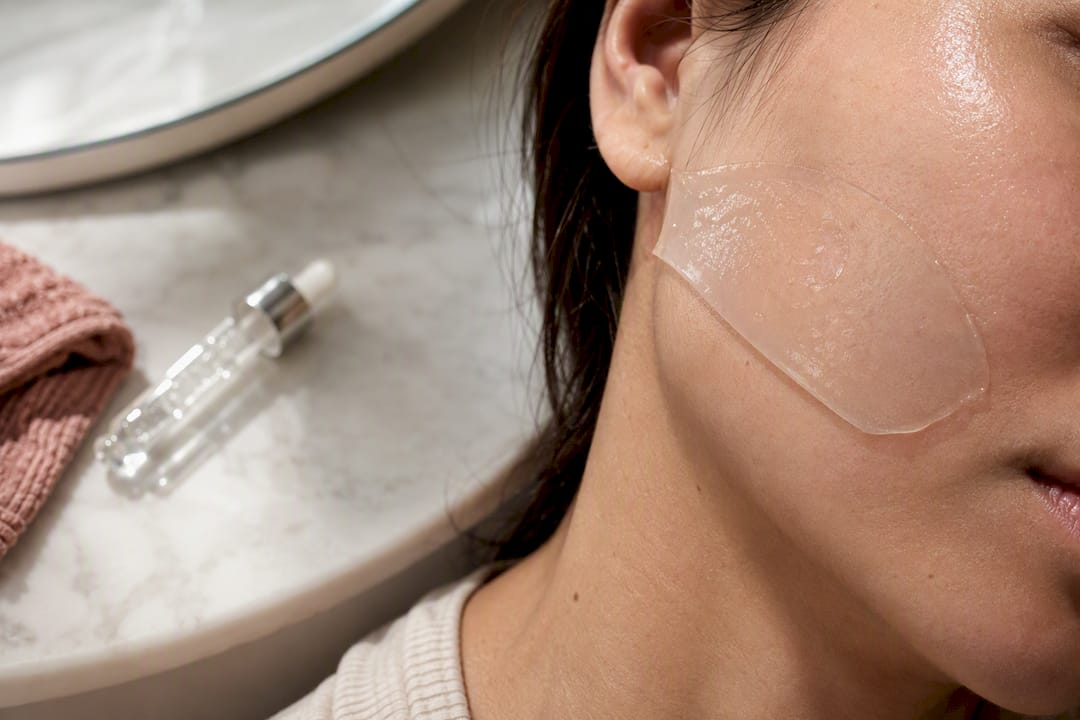
Hydrogel formats are water-based and typically feel cool on contact, with minimal residue and a fast absorbing feel. Because hydrogels are largely water and humectant-based, you can often watch the texture change as it absorbs. Hydrogel masks are built around this idea directly: the hydrogel turns transparent as it’s absorbed, giving you a visible way to check that the product is actually being taken up rather than just sitting on the surface. That kind of visual feedback is rare in gel or cream formats, where absorption is harder to judge by eye.
Gels and creams sit in the middle. Gels lean more toward hydration with light occlusion, while creams shift the balance toward heavier emollients, which suits very dry or flaky skin better than a hydrogel alone might.
Balms and sleeping packs deliver the heaviest occlusion, often using thicker waxes or butters. That heavier finish is great for extremely dry patches, but it raises comedogenicity risk, especially if the formula relies on ingredients like certain waxes or coconut derivatives that are more likely to clog pores on oily or acne-prone skin.
In general, the stickier or tackier a mask feels going on, the more likely it leans on heavier emollients rather than lightweight humectants. A mask that disappears fast and leaves little tack usually skews toward water-based ingredients up front.
How Do You Read an Ingredient List on a Sleeping Mask?
INCI lists look intimidating, but decoding one takes less time than you’d think if you know what to scan for.
- Check the first eight to ten ingredients. These make up most of the formula by weight. Water, then a humectant (glycerin, butylene glycol, or sodium hyaluronate), then an emollient, is a typical gentle pattern.
- Identify the functional role of each name. Ask whether an ingredient is a humectant, emollient, preservative, or active, rather than getting stuck on chemical-sounding names you don’t recognize.
- Flag unfamiliar proprietary names. Brand-specific complex names (like a “hyaluronic night blend”) often bundle several known ingredients under a marketing label. It’s worth a quick search if you can’t tell what’s inside.
- Scan for red flags near the top of the list. “Fragrance” or “parfum” without further detail, multiple listed essential oils, denatured alcohol high on the list, and heavy waxes are the usual suspects for irritation or clogging risk.
- Cross-check against your known sensitivities. If you’ve reacted to a specific preservative or botanical extract before, search the list for it by name rather than assuming a “natural” or “clean” label means it’s absent.
Ingredient-decode resources, like Incidecoder’s breakdown of a commercial water sleeping mask, are useful models for this kind of line-by-line review, sorting ingredients into highlighted actives versus supporting players.
Pro Tip: Keep a running note on your phone of any ingredient that’s caused a reaction in the past. Cross-referencing a new product’s INCI list against that note takes thirty seconds and saves you a week of irritated skin.
How Do You Patch-Test a Sleeping Mask Safely?
Preservatives are non-negotiable in any leave-on overnight product, since they prevent bacterial growth in a jar that gets opened repeatedly. Phenoxyethanol combined with ethylhexylglycerin is one of the more commonly used and generally well-tolerated preservative systems in sleeping masks. Formaldehyde-releasing preservatives and certain isothiazolinones tend to show up more often in sensitivity complaints, so they’re worth checking for if you have reactive skin.
Patch testing isn’t optional for an overnight leave-on product, given how long it stays in contact with your skin.
- Apply a small amount to the inside of your forearm or behind your ear, not your full face.
- Leave it on for 24 hours without washing, since some reactions develop slowly rather than immediately.
- Watch for redness, itching, or bumps, and stop use immediately if any appear.
- If your skin shows only mild, short-lived redness, you can try a small area of your face next; if you see swelling, blistering, or spreading irritation, discontinue and consult a dermatologist.
Comedogenic risk is rarely about one single ingredient. It’s usually the whole formula, and how heavy oils, waxes, and silicones interact together, that determines whether a product clogs pores. Acne-prone skin generally does better with lighter, squalane-based hydrogels, while very dry skin can typically tolerate the heavier lipid load in a cream or balm without the same breakout risk.
When Should You Use a Sleeping Mask in Your Routine?
Sleeping masks go on last, after serums and moisturizer, but before anything heavier like a thick balm. The general order is cleanser, serum, moisturizer, then the sleeping mask sealing everything in overnight, a sequence most sleeping mask product pages recommend directly.
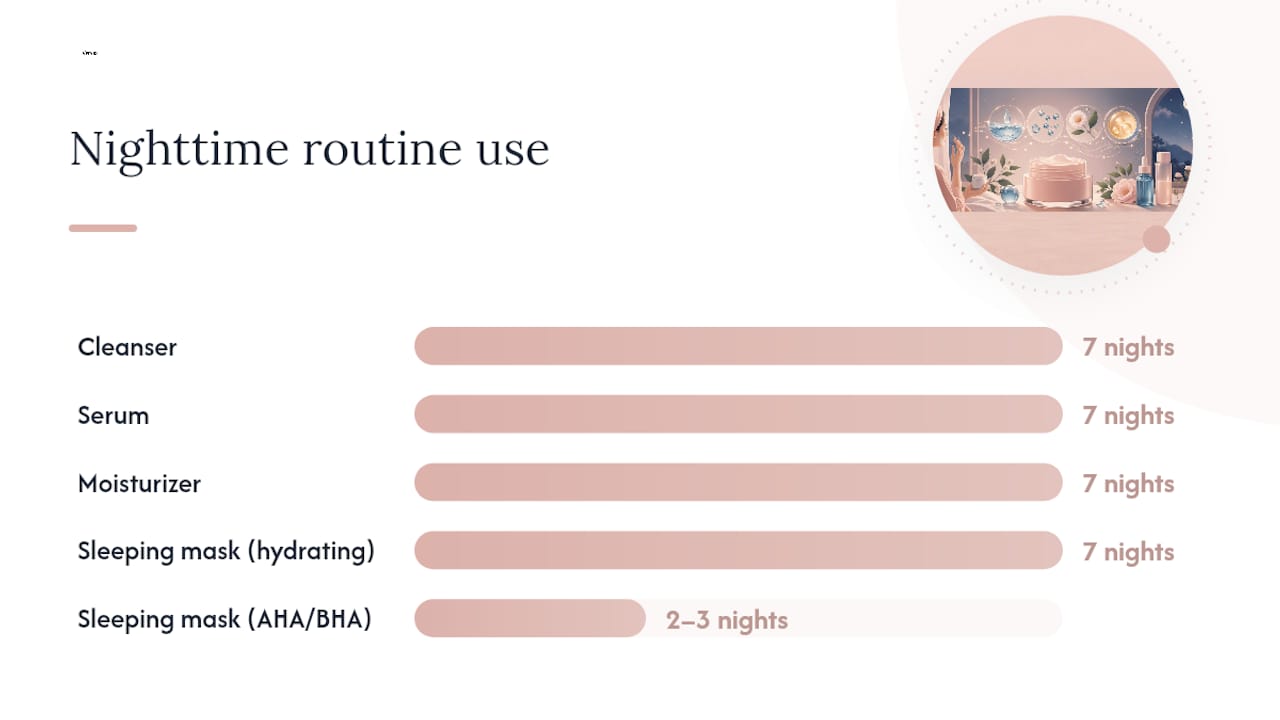
Hydrating sleeping masks are generally fine for nightly use. Masks built around stronger actives, like AHA or BHA exfoliating ingredients, are better used two to three nights a week rather than every night, since daily exfoliation can compromise the same barrier you’re trying to support.
If you’re using retinoids, apply your retinoid first on nights you use it, then skip the sleeping mask that night or use a purely hydrating one with no additional actives layered on top.
Traveling is where people most often overuse sleeping masks, applying them nightly to combat dry cabin air without realizing their skin barrier is already stressed. New environments call for the same rules as a new product: patch test before nightly use, especially if you’re trying an unfamiliar brand while away from home.
- Do apply after serum and moisturizer, on clean skin.
- Do patch-test any new formula, even while traveling.
- Don’t layer a strong-active sleeping mask over retinoid nights.
- Don’t assume “natural” ingredients mean lower irritation risk.
Preservatives Commonly Used in Sleeping Masks and Their Roles
Every sleeping mask needs a preservative system, because a jar or tube that gets opened and closed repeatedly, often with fingers, is an easy target for bacterial and mold growth. Without one, a hydrating formula loaded with water and humectants would spoil within weeks.
Phenoxyethanol is one of the most widely used preservatives in this category, frequently paired with ethylhexylglycerin, which boosts its effectiveness and allows for a lower overall concentration. This pairing has a reputation for being relatively gentle, which is part of why it shows up often in formulas marketed toward sensitive skin.
Other common preservative approaches include parabens (methylparaben, propylparaben), still used in some formulas despite ongoing consumer wariness, and organic acids like sodium benzoate or potassium sorbate, often used in combination rather than alone.
Formaldehyde-releasing preservatives, such as DMDM hydantoin, are less common in premium sleeping masks but still appear in some drugstore formulas. These are more frequently linked to sensitivity complaints and are worth avoiding if you have a known reactive skin history.
No preservative system is inherently “bad.” The relevant question is concentration and your own history of sensitivity, not whether a preservative is present at all. A completely unpreserved leave-on product left in a bathroom for months is a bigger risk than a well-preserved one used correctly.
Common Fragrance Ingredients and Potential Irritants in Sleeping Masks
Fragrance is the single most common cause of cosmetic sensitivity complaints, and sleeping masks carry extra risk simply because they stay on your skin for six to eight hours instead of being rinsed off in minutes.
“Fragrance” or “parfum” as a single catch-all term on an ingredient list can legally represent a mix of dozens of individual compounds, none of which have to be disclosed by name. That opacity is exactly why dermatologists often flag it as a starting point for troubleshooting reactions.
Essential oils are a related but distinct concern. Lavender, citrus oils (like bergamot or lemon), and tea tree oil are common in “natural” sleeping mask formulas and are also among the more frequent triggers for contact irritation, particularly on skin that’s already compromased by dryness or barrier damage. Multiple essential oils stacked in one formula compound that risk further.
Linalool and limonene, natural components of many essential oils, are increasingly listed separately on ingredient labels in some markets precisely because of their sensitization potential. Seeing them named specifically, rather than buried inside “fragrance,” is actually a small transparency win, even though their presence still warrants caution for reactive skin.
If you have a history of fragrance sensitivity, the safest approach is choosing a sleeping mask labeled fragrance-free, not just “unscented,” since unscented products can still contain masking fragrance compounds to neutralize raw material smells.
Our Take: Why Ingredient Transparency Matters More Than Marketing Language
Most sleeping mask marketing leans on words like “deep hydration” or “overnight repair” without ever pointing you to the ingredient list that actually determines whether either claim is true. Some hydrogel masks are built around a different idea: letting you see the evidence. The hydrogel format turns visibly transparent as it absorbs, so you’re not just trusting a claim on a box, you’re watching the product get taken up by your skin in real time.
We still recommend you check the full INCI list on the product page and patch-test before your first full-face use, no matter how sensitive-friendly a formula is designed to be. No ingredient list guarantees your skin will respond exactly like someone else’s.
If you’re a busy professional, a frequent traveler, or someone with sensitive skin who’s tired of guessing what’s actually in your overnight routine, a hydrogel-based sleeping mask built around lightweight humectants and skin-identical lipids, like our biodance mask, is worth a closer look. Skincare formulated around visible proof and ingredient clarity holds up better than one built on vague promises.
— Vervex
Try a Hydrogel Sleeping Mask Built on Ingredients You Can Verify
A cream mask asks you to trust that it’s working. A hydrogel mask lets you watch it happen: as the Biodance Bio-Collagen Real Deep Mask absorbs overnight, the hydrogel turns transparent, so you get a visible signal that the hydrating and barrier-supporting ingredients are actually being taken up rather than sitting on the surface until morning.

Some pack-of-4 formats are intended for hydration and barrier support, using a hypoallergenic hydrogel base designed with sensitive skin in mind. Before your first use, read the full ingredient list on the product page and patch-test on your forearm for 24 hours, the same protocol worth following for any new leave-on product. If you want to explore the full lineup, including firming and brightening variants, browse the biodance mask collection and pick the formula that matches what your skin needs tonight.
Sources
This article draws on commercial INCI listings and ingredient-decode resources for real-world examples of sleeping mask formulation, including LANEIGE’s Water Sleeping Mask ingredient list and its line-by-line breakdown on Incidecoder. Overnight hydration claims reference Kiehl’s product research on nighttime water loss. For readers interested in barrier-repair routines beyond sleeping masks, the K-Beauty Barrier Repair Guide covers layering ceramides and niacinamide in more depth.