
A simple, effective nighttime routine comes down to three steps: cleanse, treat, moisturize. That’s it. The whole thing takes a few minutes if you’re keeping it basic, or longer with extras like double-cleansing or a mask.
Here’s the fast version you can start tonight:
- Cleanse. Remove makeup and sunscreen with an oil or micellar water first if you wore either, then follow with a gentle water-based cleanser.
- Treat. Apply your serum or treatment product (retinoid, acid, or hydrating serum) to clean, dry skin.
- Moisturize. Seal everything in with a moisturizer suited to your skin type.
Cleveland Clinic dermatologists point to this exact three-step structure as sufficient for most people. You don’t need ten products to get results. Add exfoliation 2 to 3 times a week, and a weekly mask if you want, but the core routine works on its own. One safety note before you touch anything else: introduce new actives slowly, and never layer an exfoliant and a retinoid on the same night. That combination is the single most common cause of beginner irritation.
Key Takeaways
A beginner nighttime routine built on cleanse, treat, and moisturize, applied consistently most nights, produces better skin than any complicated ten-step routine used sporadically.
| Point | Details |
|---|---|
| Follow the core order | Cleanse, then treat, then moisturize, since actives need direct skin contact before sealing. |
| Limit exfoliation | Exfoliate 2 to 3 times weekly and never combine it with retinoids the same night. |
| Introduce actives slowly | Start new treatments 1 to 2 nights weekly for several weeks before increasing frequency. |
| Time it right | Apply treatments 20 to 30 minutes before bed to avoid pillow transfer. |
| Add a sealing boost | A Vervexofficial hydrogel mask works well 1 to 3 times weekly for extra hydration without heavy residue. |
Table of Contents
- How Do You Build a Nightly Skincare Routine Step by Step?
- Which Optional Steps Are Worth Adding to Your Routine?
- How Do You Choose Products for Your Skin Type?
- How Do You Introduce New Actives Without Irritating Your Skin?
- Why Are Hydrogel Overnight Masks a Good Fit for Beginners?
- What Beginners Should Actually Prioritize at Night
- Try Vervex Hydrogel Masks for Simple, Visible Overnight Hydration
- Sources
How Do You Build a Nightly Skincare Routine Step by Step?
Order matters more than most beginners realize. Skin absorbs treatment ingredients best when they touch bare, clean skin directly, and moisturizer at the end locks that work in rather than blocking it. Get the sequence wrong and you’re paying for products that never reach the layers of skin they’re meant to affect.
Start with the right cleanse
If you wore makeup, sunscreen, or just sat through a sweaty day, a single cleanse usually isn’t enough. Double-cleansing means an oil-based or micellar water pass first to dissolve makeup and SPF, followed by a gentle water-based cleanser to clean the skin itself. Skip the first step on days you wore nothing but moisturizer. A single gentle cleanse is fine then.
Match your cleanser to your skin type:
- Dry or sensitive skin. Look for cream or milk cleansers with ceramides or hyaluronic acid, and avoid anything that leaves skin feeling tight afterward.
- Acne-prone or oily skin. A cleanser with salicylic acid helps clear pores without over-drying, though daily use isn’t necessary for everyone.
- Combination or normal skin. A basic gel or foaming cleanser without added fragrance is usually enough.
Apply your treatment before anything else touches the skin
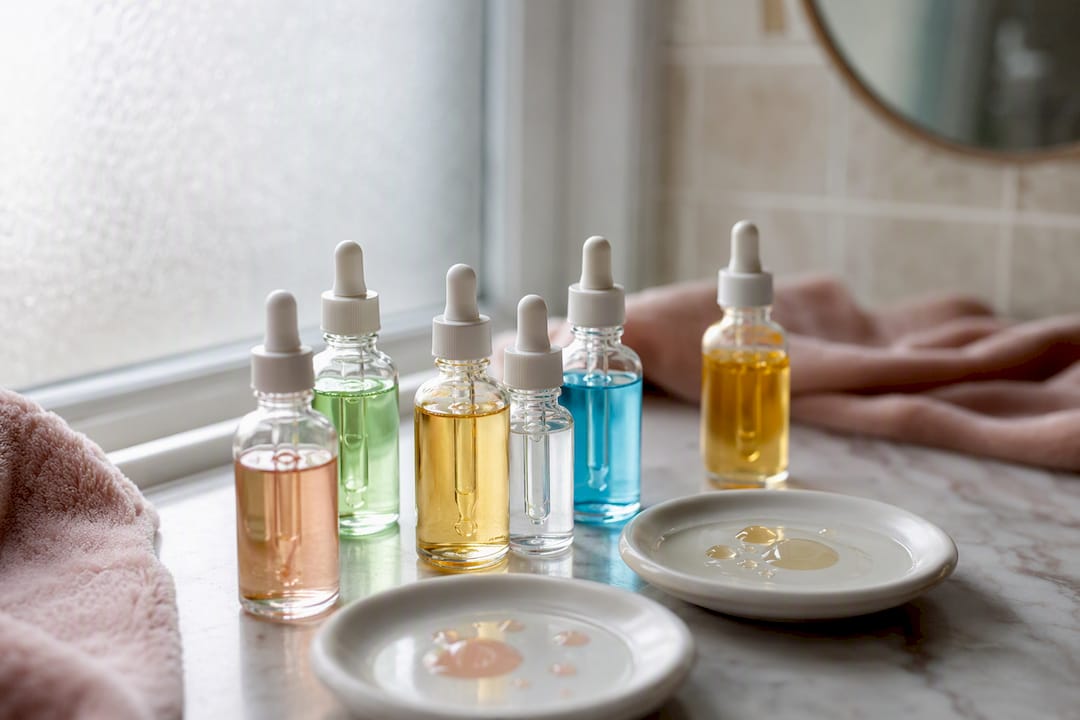
Treatment products, sometimes called serums, are where the real work happens. This category covers retinoids, alpha and beta hydroxy acids, peptides, growth-factor formulas, and plain hydration-focused serums like hyaluronic acid. Dermatologists at Doctor Rogers Skin Care recommend applying treatment right after cleansing and before moisturizer, because actives need direct contact with skin to work. Layer moisturizer on first and you’ve built a barrier the active can’t cross.
Which treatment you reach for depends on your goal. Retinoids support cell turnover and are best for texture, fine lines, and acne. Acids like glycolic or lactic acid brighten and smooth. Hydrating serums simply add water-binding ingredients and suit almost everyone, including total beginners not ready for anything stronger.
Finish with a moisturizer built for your skin
Moisturizer closes the routine by sealing in the treatment underneath and reinforcing the skin barrier overnight. Three ingredient categories matter here:
- Humectants like hyaluronic acid draw water into the skin.
- Ceramides rebuild the lipid barrier that keeps moisture from escaping.
- Occlusives such as petrolatum or shea butter physically block water loss, useful for very dry skin or as a final overnight layer.
Choose a non-comedogenic label if you’re acne-prone, since some heavy creams clog pores. This is also where an overnight mask or occlusive step fits, layered after moisturizer on nights you want extra sealing power.
Which Optional Steps Are Worth Adding to Your Routine?
Not every step belongs in every routine, and beginners often add too much too fast. Here’s what’s actually optional, and how often to use each one.
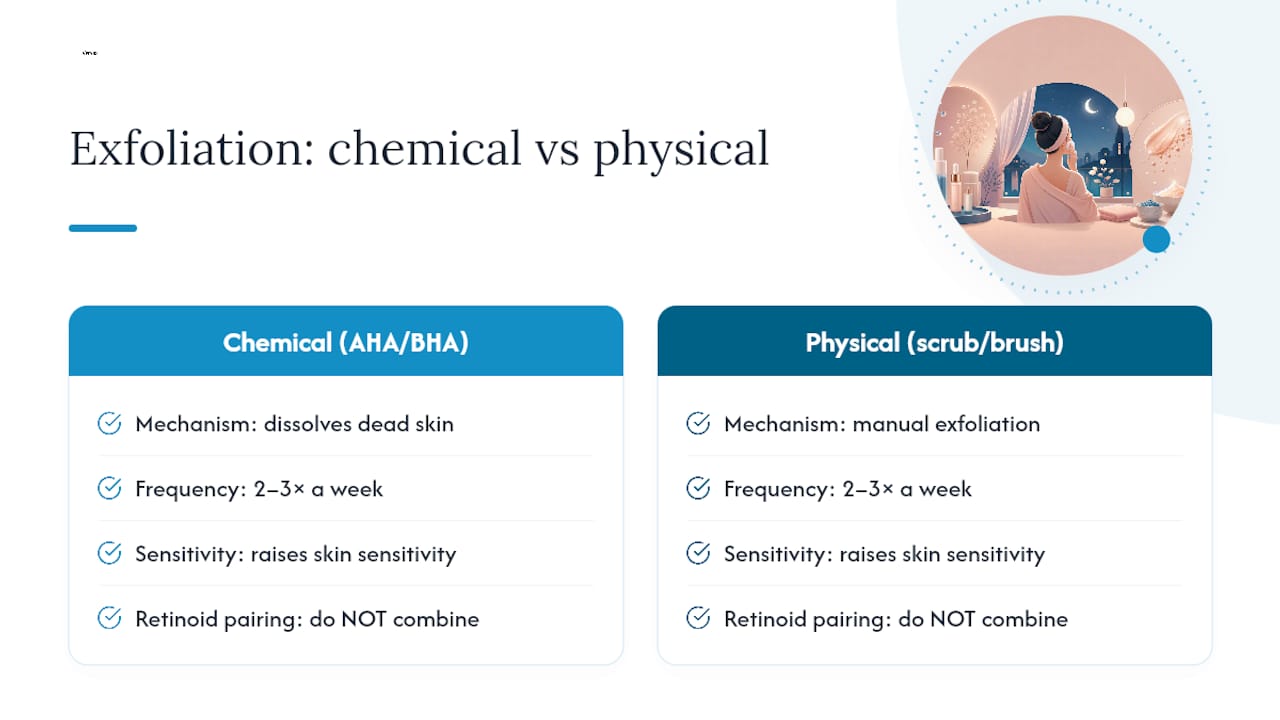
Exfoliation comes in two forms: chemical (AHA/BHA acids that dissolve dead skin) and physical (scrubs or brushes that manually slough it off). The American Academy of Dermatology recommends limiting exfoliation to 2 to 3 times a week, and never pairing it with a retinoid on the same night. Both increase skin sensitivity, and stacking them is a fast route to redness and peeling.
Toner or essence is optional. Some help hydrate or prep skin before serum, but skip anything alcohol-based if your skin runs dry or sensitive. It often does more harm than good on already-compromised skin.
Eye cream only matters if you’re targeting a specific concern like puffiness or fine lines. Use a formula labeled safe for the eye area, since regular face products can irritate that thinner skin.
Face oils and occlusives help lock in hydration for dry skin, but they can worsen breakouts on oily or acne-prone skin by trapping oil against clogged pores. This is where hydrogel overnight masks offer a middle ground: they seal in hydration without the heavy, greasy residue of traditional oils or balms.

Pro Tip: If you’re not sure whether your skin can handle a face oil, test it as an overnight mask instead first. A hydrogel format seals hydration without clogging pores the way a heavy oil might.
How Do You Choose Products for Your Skin Type?
Pick products in this order: identify your skin type, name one goal, then choose formulas around that goal instead of buying everything at once.
Start with skin type. Dry skin feels tight and flaky; oily skin shines by midday; combination skin is oily in the T-zone and dry elsewhere; sensitive skin reacts to fragrance or new products with redness; mature skin shows reduced elasticity and fine lines. Pick one concern to address first, whether that’s hydration, acne, or texture. Trying to fix five things at once is how beginners end up with irritated skin and no idea which product caused it.
Ingredient labels tell you a lot before you even try a product:
- Helpful ingredients: ceramides, hyaluronic acid, niacinamide, glycerin.
- Caution flags: added fragrance, high concentrations of alcohol, and formulas that combine multiple strong actives (retinol plus acids plus vitamin C) in one product.
If retinoids sound too aggressive for your skin, bakuchiol is a plant-derived alternative with a gentler profile, and peptide serums offer supportive benefits without the peeling. Both are reasonable starting points for sensitive beginners who want results without the adjustment period.
How Do You Introduce New Actives Without Irritating Your Skin?
Start any new active at 1 to 2 nights per week for the first 2 to 4 weeks, then increase frequency gradually as your skin adjusts. This is the ramp-up dermatologists recommend, and it’s the single biggest factor separating beginners who succeed with actives from those who quit after one bad reaction.
- Patch test first. Apply a small amount to your inner arm or behind your ear, and wait 24 to 48 hours to check for redness or stinging before using it on your face.
- Start slow. Use the new active once or twice weekly, always at night.
- Watch for irritation. Stinging, flaking, or redness means pause immediately and switch to a barrier-repair routine with ceramide-rich moisturizer until skin calms down.
- Reintroduce gradually. Once skin normalizes, go back to once a week before building up further.
You’ll see “rules” online like the 4-2-4 method, which cycles actives in structured blocks. These frameworks can help beginners pace themselves, but they have real limits since everyone’s skin tolerates actives differently, and a rigid schedule doesn’t account for that. If you want prescription-strength retinoids, talk to a dermatologist first rather than guessing your way there.
Pro Tip: If irritation hits, resist the urge to add more products to “fix” it. Strip back to cleanser and a plain moisturizer for a few nights and let your skin barrier recover on its own.
When to Apply Products Before Bed
Apply your treatment products about 20 to 30 minutes before you actually lie down. That gap gives serums time to absorb instead of transferring onto your pillowcase, which wastes product and can reduce how well it works.
- Pick three core steps and commit to them 5 or more nights a week.
- A simple routine you actually follow beats an elaborate one you abandon after a week.
- Consistency, not complexity, is what produces visible change over time.
Why Are Hydrogel Overnight Masks a Good Fit for Beginners?
Hydrogel masks work differently than a cream or serum. The gel material delivers hydration and active ingredients gradually through the night, and as it absorbs, it turns transparent, letting you actually see the nutrient penetration happening rather than guessing whether the product worked.
That visible feedback is useful for someone new to skincare who has no idea what “working” is supposed to look like. Vervexofficial’s hydrogel formulas are hypoallergenic and built for hydration, elasticity support, and pore size reduction, with reported user satisfaction around 98% for hydration among their reviewer base.
A mask that turns clear as it’s absorbed gives beginners something concrete to check: not a promise, but a visible sign the product is doing its job overnight.
Working one into a beginner routine is straightforward:
- Use after your treatment step, in place of or alongside your regular moisturizer.
- Reach for it 1 to 3 times a week rather than nightly, since it’s a boost, not a replacement for daily basics.
- Skip it on nights you’ve just introduced a new active, since your skin needs to settle before adding another layer.
The Biodance Bio-Collagen mask pack is a common starting point for beginners who want the sealing benefit without committing to a full skincare cabinet.
Beginner Mistakes That Undo Good Habits
Most skincare setbacks trace back to a handful of repeat mistakes:
- Over-exfoliating. Fix: cap it at 2 to 3 times a week, no exceptions.
- Stacking actives. Fix: one new active at a time, spaced on different nights.
- Skipping moisturizer. Fix: even oily skin needs it, just choose a lighter gel formula.
- Collecting single-ingredient serums. Fix: pick one goal and one product, not five.
- Switching products too fast. Fix: give a new product 4 to 6 weeks before judging it.
See a dermatologist if you notice persistent stinging that doesn’t fade, a spreading rash, or swelling. Those aren’t normal adjustment symptoms, and pushing through them risks real skin barrier damage.
What Beginners Should Actually Prioritize at Night
The conventional advice on this topic loves complexity: ten-step routines, five serums layered by molecular weight, a cabinet that looks like a chemistry set. That advice fails most beginners, not because the science is wrong, but because nobody sticks with a routine they can’t sustain on a Tuesday night at 11 p.m. after a long day.
What the evidence actually supports is dull by comparison: three steps, done consistently, beat eight steps done twice a week. The order matters more than the product count. Introducing actives slowly matters more than which active you pick first. And the biggest gap between what beginners expect and what actually works is patience. Skin improvement runs on weeks, not days.
If there’s one place we’d push back on standard advice, it’s the obsession with “routine building” as an identity rather than a habit. A hydrogel mask a few nights a week, layered after a basic three-step routine, does more for a beginner’s consistency than another serum they’ll abandon in a month. Start simple. Add slowly. Watch how your skin actually responds before adding the next thing.
— Vervex
Try Vervex Hydrogel Masks for Simple, Visible Overnight Hydration
Building a beginner routine means choosing fewer products that actually do their job, not stacking more that you can’t keep track of. Vervexofficial’s hydrogel masks fit that goal directly: instead of guessing whether a heavy night cream is absorbing, the mask turns transparent as it’s absorbed, giving you visible confirmation while you sleep.

That’s a real advantage over traditional creams and occlusive balms, which leave you guessing and often leave residue on your pillow by morning. Vervex formulas are hypoallergenic and designed for sensitive skin, with variants for firming, soothing, and brightening depending on your goal. For a beginner still learning what their skin needs, that visible feedback loop removes a lot of the trial-and-error frustration that usually comes with starting a new routine.
If you’re ready to add a sealing, hydration-focused step to your nightly cleanse-treat-moisturize routine, check out the Biodance Bio-Collagen Real Deep Mask pack and start with one or two nights a week to see how your skin responds.
Sources
- What products do I actually need for a simple everyday skin care routine — Cleveland Clinic
- Safely exfoliate at home — AAD
- Dermatologist-recommended nighttime skincare routine — Doctor Rogers Skin Care
- Is the 4-2-4 rule effective for acne-prone skin? — Earth & Ether Clinic