
Cleanse gently the moment you land, mist your face to add moisture back, layer a hyaluronic acid serum, and seal it with a barrier cream or overnight mask before you sleep. Treat puffy eyes separately with a cooling patch. Drink water on the plane and mist your skin every hour or two while flying. A travel-friendly hydrogel overnight mask, like the ones Vervexofficial makes, is a solid way to close out that routine before bed.
TL;DR:
- Using a hydrating mist before applying hyaluronic acid serum significantly increases absorption and hydration retention after long flights.
- Avoid aggressive exfoliants and retinoids for 24 to 72 hours post-flight to prevent further barrier damage and skin sensitivity.
- Applying a hydrogel overnight mask creates sustained hydration, which is especially effective after long-haul flights and crossing multiple time zones.
- Hydration routines should be tailored to flight length and time zones, with extended recovery steps for flights over six hours or international trips.
- Incorporating barrier-supporting ingredients and soothing agents reduces dehydration, inflammation, and puffiness caused by cabin dry air and travel stress.
Table of Contents
- What Is Jet Lag Skincare, and Why Does Flying Wreck Your Skin?
- Your 10-Minute Post-Flight Recovery Routine
- What to Do Before and During Your Flight
- The First 24 to 72 Hours After You Land
- The Ingredients That Actually Undo Jet Lag Skin
- Actives to Skip and How Long to Wait
- Why Hydrogel Masks Work for Travel Recovery
- Adjusting Your Routine for Flight Length and Time Zones
- Blue Light, Pollution, and Your Skin While Traveling
- Sensitive and Acne-Prone Skin While Traveling
- A Frequent Flyer’s Real-World Skincare Checklist
- Travel-Ready Hydrogel Masks for Faster Recovery
- Sources
What Is Jet Lag Skincare, and Why Does Flying Wreck Your Skin?
“Jet lag skincare” describes the routine travelers use to counter what airplane cabins do to skin: dehydration, dullness, and puffiness triggered by low humidity and disrupted circulation. Dermatologists sometimes call this “post-flight skin recovery” or “travel skin barrier repair,” but the mechanism is the same regardless of what you name it. Cabin air sits at roughly 10 to 20 percent humidity, drier than most deserts, and that dryness pulls water straight out of your skin through a process called transepidermal water loss, or TEWL. One study found skin can lose up to 30 percent of its moisture after just four hours in the air.
That number matters because it tells you the damage starts fast. A short domestic hop already stresses your skin barrier. A transatlantic or transpacific flight compounds it for eight, twelve, or sixteen hours straight, on top of cabin pressure changes and recycled air that carries almost no ambient moisture to replace what you lose. The result is skin that looks flat, feels tight, and shows every fine line more sharply than usual. That’s the entire premise behind targeted skincare for travel: get ahead of the water loss instead of trying to undo it after the fact.
Your 10-Minute Post-Flight Recovery Routine
Once you’re off the plane, or even in the taxi from the airport, this five-step sequence rebuilds hydration in the order your skin can actually use it.
- Cleanse gently. Skip anything foaming or stripping. A cream or gel cleanser removes recycled cabin air residue, sunscreen, and grime without pulling out more moisture your skin just spent hours losing.
- Mist first. Spritz your face with a hydrating toner or facial mist before applying anything else. Damp skin absorbs serums far better than dry skin, and this single step changes how effective everything after it will be.
- Apply a humectant serum. Press a hyaluronic acid serum into that damp skin immediately. Humectants pull moisture from the air and hold it in the skin, but only work well when there’s already water present to grab onto, which is exactly what the mist provided.
- Seal it in. A barrier moisturizer or a lightweight facial oil locks the humectant layer in place. Without this step, the water you just added evaporates within minutes, especially in dry airport terminals or hotel rooms with cranked-up air conditioning.
- Treat the eyes. Puffiness under the eyes comes from fluid retention and reduced circulation during long periods seated. Cooling gel patches help, and a light massage along the orbital bone, moving from the inner corner outward, encourages that fluid to drain.
This order isn’t arbitrary. Skipping the mist step and going straight to serum is the most common mistake travelers make, and it cuts the effectiveness of everything that follows. The entire sequence takes ten to twenty minutes and works whether you’re doing it in an airport bathroom or back in your own bedroom.
What to Do Before and During Your Flight
The best post-flight skin care actually starts before you board. Waiting until you land to address dehydration means you’re always playing catch-up against hours of moisture loss you can’t fully reverse.
Before boarding: apply a humectant to slightly damp skin, then seal it with a richer moisturizer or balm than you’d normally wear during the day. Skin dermatologist and facialist Joanna Czech recommends starting hydration before you even get to the gate, treating the flight itself as the dehydrating event it is rather than reacting once you feel tight and dry somewhere over the ocean.
During the flight, a few habits make a real difference:
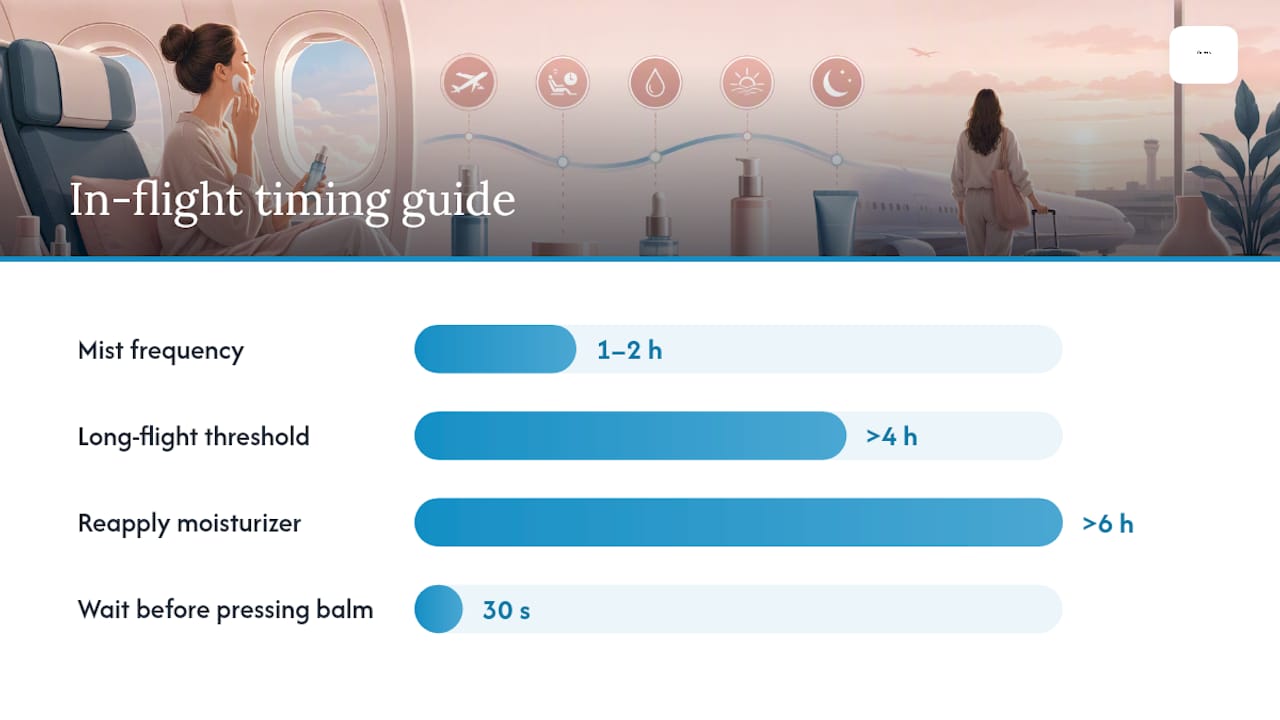
- Mist your face every one to two hours, especially on flights longer than four hours.
- Reapply a lightweight moisturizer or facial oil on any flight over six hours, since a single application in the morning won’t survive a full day in cabin air.
- Skip alcohol and go easy on caffeine. Both are diuretics that pull water from your system at the exact moment cabin air is already pulling it from your skin.
- Drink water on a steady schedule rather than a few large gulps. Czech’s advice centers on consistent water intake throughout the flight, not catching up right before landing.
Pro Tip: Buy a travel-size mist with a fine spray nozzle, not a mist bottle sold for hair. Facial mists atomize finer and won’t leave you wiping runoff off your chin in a middle seat.
For carry-on logistics, stick to minis under 3.4 ounces (TSA’s liquid limit) and favor multitasking formats: a hydrating mist doubles as a setting spray, and a barrier balm works over makeup without disturbing it. If you’re wearing makeup and need to reapply moisture mid-flight, mist first, let it sit for thirty seconds, then press (never rub) a balm into the areas that feel tightest, usually the cheeks and under the eyes. Applying humectant serums to already-damp skin and sealing them with a cream or oil is one of the most reliable ways to improve hydration retention in low-moisture environments, and a plane cabin is about as low-moisture as environments get outside of an actual desert.
The First 24 to 72 Hours After You Land
Your skin doesn’t recover the moment you walk off the plane. The 72 hours after landing are when barrier repair actually happens, and how you treat that window determines whether you look refreshed by day two or still puffy and dull.
In the first hour, repeat the cleanse, mist, humectant, seal sequence from your quick routine, even if you already did it at the airport. A second pass once you’re in your hotel room or home, away from recycled air, gives your skin a cleaner environment to actually hold onto that hydration.
That night is when a hydrogel overnight mask earns its place. These masks work differently than a daytime moisturizer: they create sustained contact between concentrated hydrating ingredients and your skin for six to eight hours of sleep, rather than a few minutes of absorption before the product dries down. If you flew long-haul or crossed multiple time zones, this is the single most effective step you can add to a jet lag beauty routine, precisely because it does its work while you’re unconscious and can’t sabotage it by touching your face or applying something else on top.
For the following two to three days, hold off on anything aggressive:
- Skip chemical exfoliants (AHAs, BHAs) and retinoids.
- Avoid professional treatments like peels, microneedling, or laser sessions.
- Stick to calming, barrier-supporting products instead of introducing anything new.
This lines up with what clinical travel-skincare guidance consistently recommends: antioxidant protection before you fly, barrier support during, and a conservative, minimal approach for the days right after landing, rather than reaching for something “corrective” the moment you notice dullness.
Pro Tip: Keep a jade roller or a metal spoon (yes, really) in the freezer of wherever you’re staying. A few minutes of cold pressure along the cheekbones and under the eyes constricts blood vessels and visibly reduces puffiness within minutes, no product required.
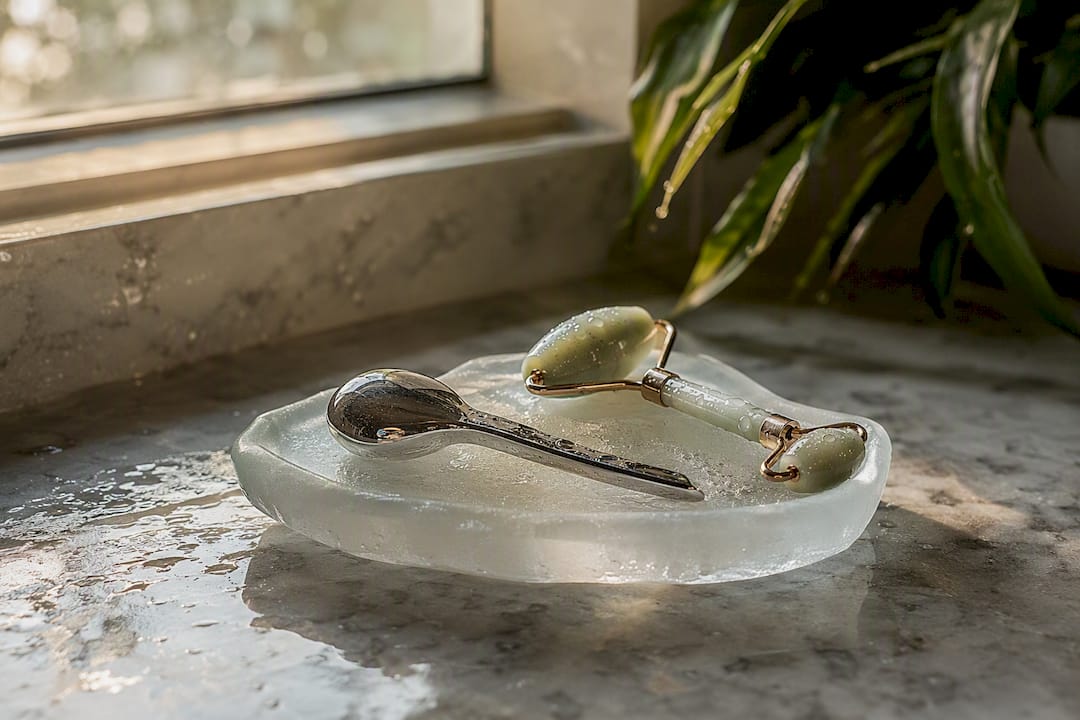
If puffiness is the main complaint rather than dryness, lymphatic drainage matters as much as hydration does. Practitioners point out that a combination of controlled hypoxia (lower oxygen levels in cabin air) and lymphatic stagnation from sitting still for hours is what causes the swollen, dull look after a flight, and that pairing hydration with gentle massage or gua sha speeds up how quickly that visible puffiness resolves. A five-minute gua sha session, moving from the center of the face outward and down toward the collarbone, is low-effort and genuinely effective as a next step after your evening mask.
The Ingredients That Actually Undo Jet Lag Skin
Not every hydrating ingredient does the same job, and knowing the difference saves you from buying five products that all compete for the same task.
Humectants like hyaluronic acid and glycerin pull water into the skin’s surface layers. They only work well applied to damp skin, since they need moisture nearby to attract; used on bone-dry skin, they can occasionally pull moisture from deeper layers instead, which defeats the purpose. Pairing a humectant serum with a sealant afterward is standard practice for a reason.
Barrier lipids are what actually reduce TEWL rather than just adding water. Ceramides, fatty acids, and squalane rebuild the outer skin layer that low cabin humidity strips away, and they’re the ingredients that make the hydration from your humectant step stick around instead of evaporating within the hour.
Soothing agents matter more on travel days than most people realize. Centella asiatica, panthenol, and bisabolol calm the low-grade inflammation and reactivity that comes from cabin air, changes in water and food, and general travel stress. If your skin tends to flush or sting after flying, these are worth adding regardless of your usual routine.
Texture matters as much as ingredient list. A quick breakdown of when to reach for what:
- Mists and serums for in-flight top-ups, since they layer fast and don’t disturb makeup.
- Creams and balms for sealing in the daytime, especially right after landing when you need something substantial but still need to function.
- Hydrogel overnight masks for the deepest recovery, worn while you sleep when you have zero competing tasks and eight hours of uninterrupted contact time.
Actives to Skip and How Long to Wait
The instinct after a rough flight is to reach for something strong. That instinct is almost always the wrong call.
Skip these for at least 24 to 72 hours after flying, depending on how reactive your skin normally is:
- Strong AHAs and BHAs (glycolic acid, salicylic acid at treatment strength)
- Retinoids, including prescription tretinoin and over-the-counter retinol
- Professional peels, microneedling, or any in-office resurfacing procedure
Flying already thins and weakens the skin barrier through moisture loss and low cabin pressure. Layering an exfoliating acid or retinoid on top doesn’t accelerate recovery, it compounds the damage, often leading to redness, flaking, or breakouts that show up a day or two later and get blamed on “bad skin” rather than bad timing. The 72-hour window before and after a flight is when skin is at its most vulnerable, and it’s also when it responds best to being left alone and simply supported.
If your skin runs sensitive, lean toward the longer end of that window; 72 hours rather than 24. Resume your normal active-ingredient routine only once your skin feels back to its baseline texture, not tight, not flaky, and not reactive to your regular moisturizer.
Pro Tip: If you have a big event within 48 hours of landing, do not test a new product beforehand hoping it’ll “fix” travel skin fast. Stick to what you know works. Post-flight skin is the worst possible time to find out you’re sensitive to something new.
Why Hydrogel Masks Work for Travel Recovery
Hydrogel masks solve a specific problem that other formats don’t: sustained delivery. A serum absorbs in minutes and then you’re relying on whatever you layered over it to keep that moisture locked in. A hydrogel mask stays in continuous contact with your skin for hours, delivering hydration steadily rather than in one quick dose. That extended contact matters most exactly when your skin needs it most, which is the night after a long flight when sustained occlusion can help counteract the effects of controlled hypoxia on skin cells during sleep.
Vervexofficial built its entire product line around this format. Its hydrogel masks turn transparent as they’re absorbed, which means you can actually see the nutrient penetration happening rather than guessing whether a product “did anything” overnight. That visible feedback is unusual in skincare, where most people never really know if a serum worked or just sat on the surface.
Over 100,000 customers have left reviews on Vervexofficial’s hydrogel masks, and the brand reports that 98% of users experience noticeably improved hydration. The formulas are hypoallergenic, which matters for anyone whose skin gets reactive from recycled cabin air, hotel water, or general travel stress.
Practically speaking, reach for a hydrogel mask specifically after long-haul flights or overnight travel, when you have a full sleep cycle to let it work. For a short daytime flight or a quick regional hop, a lighter moisturizer during the day and your usual nighttime routine is enough; save the hydrogel mask for when your skin has actually taken a real hit and you have the hours to let it recover properly.
Adjusting Your Routine for Flight Length and Time Zones
A two-hour flight and a fourteen-hour one don’t call for the same skincare plan. Match the effort to the actual damage.
For flights under four hours, a mist and a lightweight moisturizer before and after is usually enough. TEWL is real but limited, and your skin recovers within a normal daily routine.
For anything over six hours, treat it like the mini dehydration event it is: pre-flight barrier prep, mid-flight reapplication every couple of hours, and a full recovery routine on arrival, including an overnight hydrogel mask that night.
Time zone shifts add a separate layer of stress beyond humidity. Crossing five or more time zones disrupts your circadian rhythm, and skin cell turnover and repair are tied to that rhythm. That’s part of why skin looks visibly duller after a long-haul international flight compared to a long domestic one covering similar hours in the air. If you’re crossing into a new time zone, try to sync your skincare routine to the destination’s nighttime as soon as possible, even if your body clock hasn’t caught up yet. Applying your overnight mask at the destination’s actual bedtime, rather than whenever you happen to feel tired, helps your skin get back on a normal repair schedule faster.
Blue Light, Pollution, and Your Skin While Traveling
Cabin air isn’t the only stressor working against your skin at 35,000 feet. Airplane windows let through significant UV and blue light exposure, especially on daytime flights, and most travelers skip sunscreen entirely once they’re airborne, assuming a metal fuselage protects them the way walls do.
It largely doesn’t. Sunscreen on the plane isn’t optional if you’re seated near a window during daylight hours; apply a broad-spectrum SPF as part of your pre-flight routine and reapply if the flight runs long. Blue light from your phone or laptop screen during the flight adds a smaller but real layer of oxidative stress on top of UV exposure, particularly if you’re working or streaming for hours straight.
Air pollution becomes the bigger issue once you land, especially if you’re headed into a dense city. Airport terminals, taxi exhaust, and urban air all deposit particulate matter on unprotected skin, which can clog pores and trigger the same low-grade inflammation that dry cabin air already started. A double cleanse that evening, not just a quick rinse, matters more after a travel day through polluted areas than it does on a normal day at home.
Antioxidant serums (vitamin C, ferulic acid) worn under sunscreen during the day help neutralize some of this oxidative load before it does visible damage. That’s one more reason clinical guidance for travel skincare consistently pairs antioxidant protection with barrier support rather than treating hydration as the only variable worth managing.
Sensitive and Acne-Prone Skin While Traveling
Travel stress hits sensitive and acne-prone skin harder than average skin, and jet lag itself plays a direct role. Disrupted sleep raises cortisol, and elevated cortisol is a well-documented trigger for both increased oil production and inflammatory breakouts. Combine that with a new pillow, different water, recycled cabin air, and irregular meals, and it’s no surprise many people break out two or three days into a trip, even when their skin behaves normally at home.
For sensitive skin, prioritize soothing over hydrating alone during travel. Centella asiatica, panthenol, and oat extract calm reactivity faster than a plain humectant will, and they lower the odds that cabin dryness turns into visible redness or a rash. Fragrance-free, minimal-ingredient formulas matter more on the road than usual, since your skin has less bandwidth to tolerate anything mildly irritating while it’s also dealing with dehydration.
For acne-prone skin, resist the urge to over-cleanse or add a stronger acne treatment mid-trip. That instinct almost always backfires, stripping the barrier further and triggering more oil production as compensation. Stick to your normal, gentle routine, keep hands off your face during the flight (easier said than done, but worth the reminder), and change pillowcases if you’re staying somewhere for more than a couple of nights. Breakouts that show up right after flying are frequently linked to the same lymphatic stagnation and hypoxia that cause puffiness, not to anything you did wrong skincare-wise, so treat the swelling and dehydration rather than panicking and adding harsh spot treatments.
A Frequent Flyer’s Real-World Skincare Checklist
The routine only works if you actually have the products with you, and most people figure this out somewhere over the Atlantic, mid-flight, with nothing but a dry face and regret. Pack five things every time: a travel-size facial mist, a hyaluronic acid serum in a leak-proof bottle, a barrier cream or balm, cooling eye patches, and a small hydrogel mask you can use the first night at your destination.
A few seat and habit choices matter more than people expect. Aisle seats make it easier to get up and move, which helps circulation and reduces the puffiness that comes from sitting still for hours. Set a water reminder every hour rather than trying to remember on your own, and stop drinking alcohol at least two hours before landing so your body has time to rebalance before you’re dealing with luggage and customs lines.
One combination that consistently works: a two-minute lymphatic massage along the jaw and under the eyes, followed by an overnight hydrogel mask that night. Puffiness that looked stubborn at the airport is usually gone by the next morning. It’s not complicated, it’s just rarely done in the right order.
— Vervex
Travel-Ready Hydrogel Masks for Faster Recovery
Vervexofficial makes overnight hydrogel masks built for exactly this situation: skin that needs deep, sustained hydration in a single application, with no elaborate routine required. The masks turn transparent as they absorb, so you can watch the hydration actually work while you sleep instead of wondering if it did anything.

For a full trip, the Biodance Bio-Collagen Real Deep Mask pack of four covers multiple nights, useful if you’re traveling for a week or doing back-to-back flights. If you just want to try the format before your next trip, the single biodance mask is the lower-commitment option. Every formula is hypoallergenic, which matters when you’re already dealing with reactive, travel-stressed skin and don’t want to add a new irritant to the mix.
Check the Vervexofficial product lineup before your next trip and add a mask to your carry-on. Your skin will thank you somewhere around hour six of the flight.
Sources
- Cabin humidity and physiological effects — PubMed
- Joanna Czech’s Skincare Survival Guide For Frequent Flyers — Forbes (2025-06-06)
- Airplane travel skincare guide — Doctor Rogers Skin Care
- In-flight skincare: how to protect and hydrate your skin — The INKEY List
- Why you always break out after a flight and how to stop jet lag skin — Ziva Wellness MD (2026-04-06)