
Skin brightening without acids works through a combination of niacinamide, stable vitamin C derivatives, alpha arbutin, licorice extracts, peptides, and antioxidants, layered into a consistent routine and paired with daily sunscreen. Gentle exfoliation alternatives like enzymatic masks fill in where AHAs and BHAs would normally sit. Results build gradually, typically over several weeks, and sunscreen is the one non-negotiable step in the entire process.
TL;DR:
- Non-acid brightening routines rely on ingredients like niacinamide, stable vitamin C derivatives, alpha arbutin, and antioxidants, paired with daily sunscreen for effective results.
- Combining multiple natural tyrosinase inhibitors in a well-structured routine can match the performance of prescription treatments like hydroquinone within 12 weeks.
- Gentle exfoliation with enzymatic masks and proper layering of ingredients enhance absorption without damaging the skin barrier, often matching acid-based routines in speed.
- Consistent use of broad-spectrum SPF and barrier repair ingredients like ceramides and niacinamide are as crucial as actives for lasting brightening effects.
- Introducing new actives gradually and patch testing can prevent reactions, while patience is essential for visible results from acid-free routines.
Table of Contents
- Brightening vs. Bleaching: What You’re Actually Trying to Do
- The Non-Acid Ingredients That Actually Do Something
- Building an Acid-Free Routine That Actually Works
- Sunscreen and Barrier Repair Do More Than Any Single Ingredient
- What the Research Actually Shows
- Why Gentle Doesn’t Mean Ineffective
- Where Vervex Biodance Fits an Acid-Free Routine
- Sources
Brightening vs. Bleaching: What You’re Actually Trying to Do
Brightening means evening out skin tone, fading dark spots, and helping skin reflect light more evenly. It does not mean permanently lightening your natural skin color, which is what bleaching agents attempt to do, often unsafely. The FDA has issued repeated warnings about over-the-counter skin-lightening products that use unregulated ingredients, some of which cause rashes, thinning skin, or worse. That distinction matters when you’re shopping for anything labeled “whitening” or “lightening” instead of “brightening.”
People land on acid-free routines for a few specific reasons. Sensitive skin that reacts to glycolic or salicylic acid is the most common one. Pregnancy and breastfeeding rule out certain acids and retinoids entirely, pushing people toward gentler alternatives. A damaged moisture barrier from over-exfoliating in the past is another frequent trigger, and so is a history of post-inflammatory hyperpigmentation (PIH), where any irritation leaves a dark mark behind.
Here’s the part most routines skip: brightening is slow by nature. Melanin production and skin cell turnover both take weeks to shift, and dermatologist guidance consistently points to an 8 to 12 week window before you see measurable change. Anyone promising visible results in a week is selling you something. Once you do see improvement, ongoing maintenance keeps it there. Skip the routine for a month and dullness creeps back.
The Non-Acid Ingredients That Actually Do Something
Not every “brightening” ingredient on a label earns its place. These are the ones with real mechanisms behind them.
Niacinamide works by blocking the transfer of melanin from pigment-producing cells to skin cells at the surface. It shows up in concentrations from 2% to 10%, with most formulas landing around 5%. It also strengthens the skin barrier and calms redness, which makes it a rare ingredient that helps almost every skin type, including acne-prone skin that reacts badly to acids.
Stable vitamin C derivatives solve the biggest complaint about vitamin C: irritation. L-ascorbic acid is unstable and can sting sensitive skin. Esters like tetrahexyldecyl ascorbate and ascorbyl tetraisopalmitate deliver the same antioxidant brightening effect with a much gentler feel on the skin, and they hold up better in formulas over time.
Alpha arbutin and kojic acid derivatives both inhibit tyrosinase, the enzyme that triggers melanin production. Alpha arbutin is the gentler of the two and rarely causes irritation at typical retail concentrations. Kojic derivatives are effective but worth patch testing first, since some people find them more reactive than arbutin.
Tranexamic acid deserves a note here because its name confuses people. Despite “acid” in the name, it does not exfoliate like an AHA or BHA. It works by calming melanocyte activity, particularly the kind triggered by inflammation, which makes it useful for melasma and PIH. Tolerability tends to be excellent, and it’s one of the few actives dermatologists reach for in acid-averse patients.
Peptides and botanical antioxidants round out the list. Licorice extract, and specifically its active compound glabridin, inhibits tyrosinase similarly to arbutin. Resveratrol fights oxidative stress that accelerates dullness and uneven tone. A newer entrant, α-mangostin, showed dose-dependent melanin reduction in preclinical lab research by suppressing a gene called MITF that drives pigment production. That study was done in lab and ex vivo models, not on live human skin over time, so treat it as a promising lead rather than proof.
A broader review of natural brightening compounds found that flavonoids, terpenoids, and polysaccharides across multiple plant extracts consistently act through tyrosinase inhibition or antioxidant pathways. The catch: the reviewers themselves note that most of this evidence needs more clinical trials before it can be called definitive. That’s not a reason to skip these ingredients. It’s a reason to combine several of them rather than betting everything on one.
For exfoliation, enzymatic options like papain (from papaya) and bromelain (from pineapple) break down surface dead skin cells without the pH-dependent action of an acid. They’re gentler on a compromised barrier and a reasonable substitute for anyone who misses the smoothing effect of a chemical peel but can’t tolerate the sting.
Worth knowing: stack ingredients, not intensity. A review of formulation strategies notes that even polyhydroxy acids, marketed as “gentle,” are still acids at the core. True non-acid alternatives lean on enzymes and smarter delivery systems instead of a lower-strength version of the same chemistry.
Building an Acid-Free Routine That Actually Works
Order matters almost as much as ingredient choice. Here’s a routine built around the actives above.
- Morning cleanse. A gentle, non-foaming cleanser that won’t strip the barrier before you apply anything else.
- Antioxidant vitamin C derivative. Apply tetrahexyldecyl ascorbate or a similar stable ester while skin is still slightly damp.
- Niacinamide or alpha arbutin. Layer either one (or both, since they play well together) after the vitamin C has absorbed.
- Moisturizer. Lock in hydration before sunscreen goes on.
- Broad-spectrum SPF 30 or higher. Non-negotiable, and reapply every two hours if you’re outdoors.
- Evening cleanse. Same gentle cleanser, no exceptions.
- Targeted brightener. Alpha arbutin, tranexamic acid, or a peptide serum, depending on what your morning routine didn’t already cover.
- Moisturizer to close the routine. A slightly richer formula at night helps barrier repair while you sleep.
- Weekly enzymatic mask or gentle manual exfoliation. Once or twice a week, never daily, and always followed by extra moisturizer.
If you want to introduce a low-strength retinoid alongside this routine, start at the lowest concentration available and use it two nights a week, working up slowly. Retinoids aren’t acids, but they can still cause irritation if you rush the timeline.
New ingredients go in one at a time, spaced two to three weeks apart. That spacing is what lets you actually identify what’s working and what’s causing a reaction, instead of guessing after your skin flares up from three new products at once.
Pro Tip: Patch test any new active on the inside of your forearm for 48 hours before putting it on your face. It costs you two days and saves you weeks of recovery if something doesn’t agree with your skin.
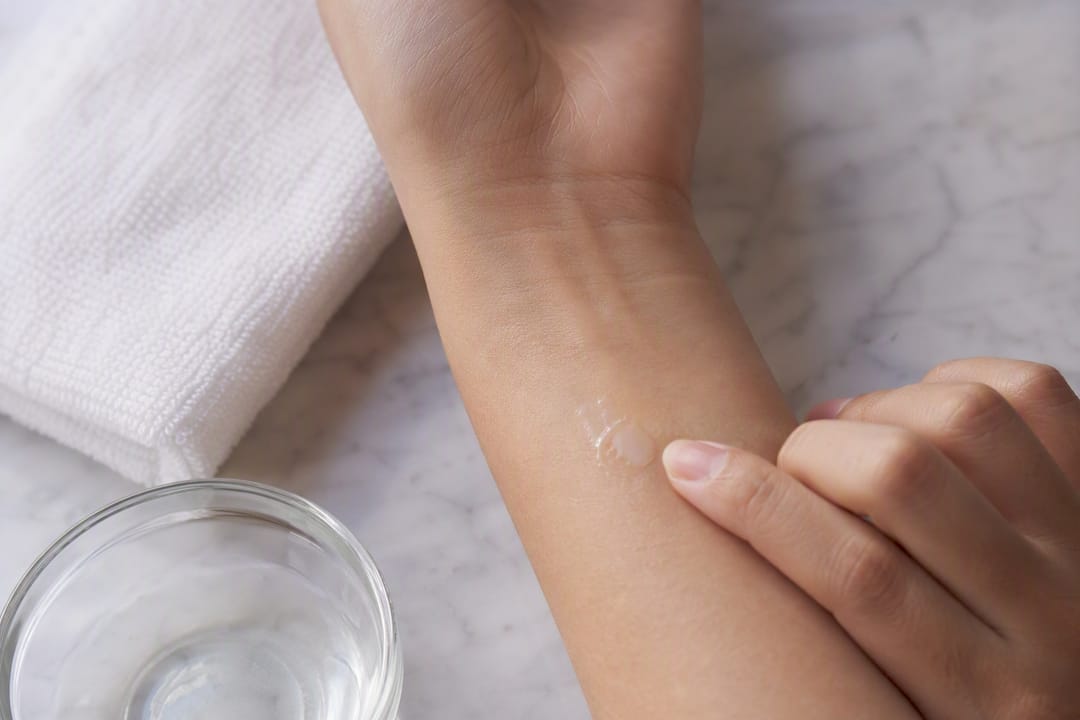
Watch for red flags: persistent stinging, new breakouts, patches of redness that don’t fade within a day, or dark spots that seem to be spreading rather than fading. Any of those warrant a call to a dermatologist rather than pushing through with more products.
Sunscreen and Barrier Repair Do More Than Any Single Ingredient
No brightening active outperforms consistent sunscreen use. Dermatologist commentary is blunt on this point: sun protection and barrier repair are described as the actual foundation of brightening, with actives simply speeding along a process that sunscreen protects in the first place. Every dark spot you’re trying to fade can reform within days of unprotected sun exposure, which makes skipping SPF the fastest way to erase weeks of progress.
A few practical notes for building this into your routine:
- Choose a broad-spectrum sunscreen with a high SPF; a higher SPF provides more protection if you spend real time outdoors.
- Mineral filters (zinc oxide, titanium dioxide) tend to suit sensitive or reactive skin better than chemical filters.
- Fragrance-free formulas cut down on one of the most common causes of contact irritation.
- Reapply every two hours when outdoors, and after swimming or heavy sweating.
Barrier-supporting ingredients matter just as much. Ceramides and glycerin reduce the inflammation that leads to PIH in the first place, and niacinamide does double duty here since it supports both brightening and barrier function. Well-hydrated skin also simply looks brighter. Plump, moisturized skin cells reflect light more evenly than dry, flaky ones, which is part of why hydration alone can make skin look noticeably fresher within days, even before any active ingredient has had time to work.
What the Research Actually Shows
The strongest data point for non-acid brightening comes from a randomized, double-blind, split-face trial. Researchers compared a hydroquinone-free multimodal serum against 4% hydroquinone, long considered the gold standard prescription treatment, over 12 weeks.
The hydroquinone-free serum performed comparably to 4% hydroquinone across the full study group of 113 participants, with at least 89% of participants reporting satisfaction with their results, including within a subgroup dealing specifically with melasma.
That’s a meaningful data point. It suggests multimodal, non-acid formulas can approach the results of a prescription-strength ingredient when several complementary mechanisms are stacked together, rather than relying on one active alone. The broader review of natural tyrosinase inhibitors backs the mechanism side of this: multiple plant-derived compounds interrupt pigment production through different pathways, which is exactly why combining a few of them tends to outperform using just one.
The practical takeaway: a well-built, non-acid, multimodal serum routine is a legitimate strategy, not a consolation prize for people who can’t tolerate acids. Severe or treatment-resistant hyperpigmentation still warrants a dermatologist’s input, since some cases need prescription-strength support that over-the-counter actives can’t match.
Why Gentle Doesn’t Mean Ineffective
Most advice on acid-free brightening treats it as a compromise. It isn’t. The randomized trial data comparing a non-acid serum to prescription hydroquinone is a direct challenge to the idea that harsher always means faster or better.
What gets underestimated is delivery. Two people using the exact same niacinamide concentration can see different results depending on how well that ingredient actually penetrates and stays in contact with skin. This is where overnight formats, occlusive layers, and stable delivery systems earn their place. Improving how long an ingredient sits on skin, and how well it’s absorbed, often matters more than reaching for a stronger version of the same active.
The other overlooked piece is patience. Acid-free routines get dismissed as “too slow,” but the 8 to 12 week timeline for acid routines and non-acid routines is nearly identical. The real difference is what happens to your skin barrier along the way. One approach tends to leave it intact. The other risks damaging it in the process of getting there.
— Vervex
Where Vervex Biodance Fits an Acid-Free Routine
Hydration is a real bottleneck in acid-free brightening, and it’s the exact problem an overnight hydrogel mask is built to solve. The Vervex biodance mask turns transparent as it absorbs, giving you a visible cue that hydration and your applied serum are actually sinking in rather than sitting on the surface. Apply your vitamin C derivative or niacinamide serum first, then layer the mask over it to support penetration while you sleep, when skin repair is already at its most active.
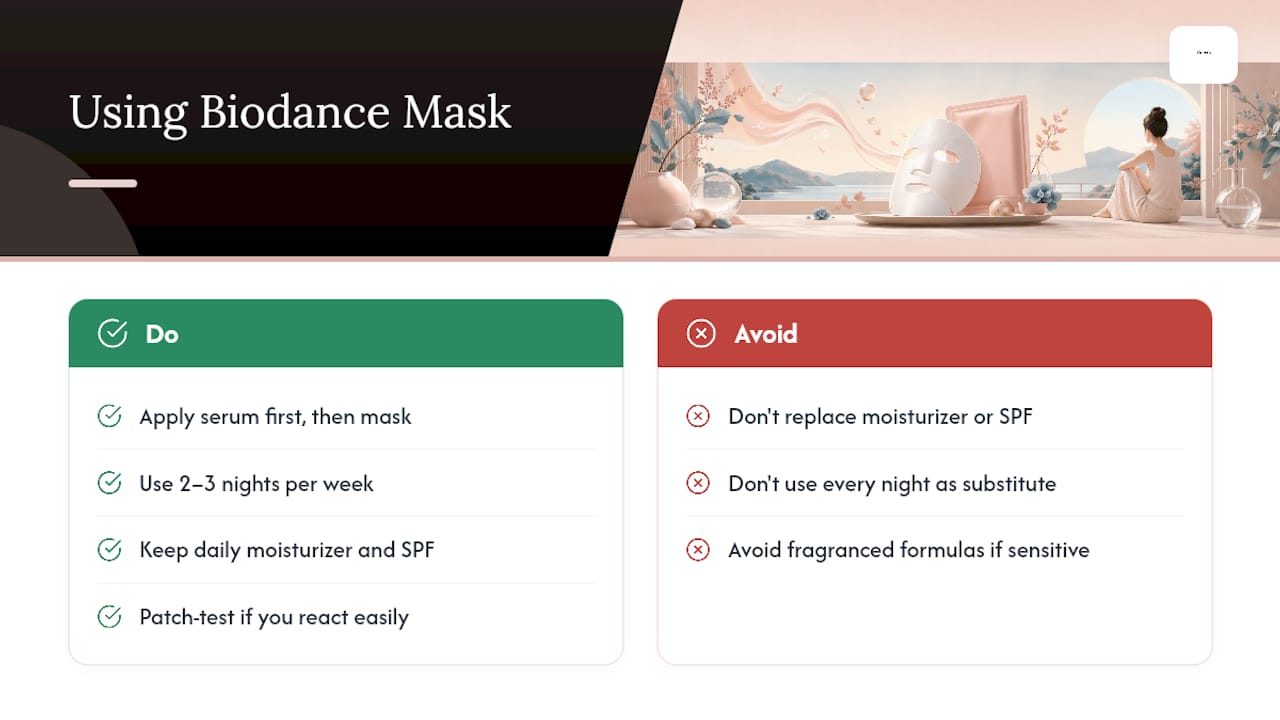
Use it two to three nights a week alongside your regular routine, not as a replacement for daily moisturizer and SPF. Some formulas are hypoallergenic and fragrance-free, which matters if you’ve already ruled out acids because of sensitivity. Patch test first if your skin reacts to new products easily. For a steady supply, the Biodance Bio-Collagen Real Deep Mask four-pack covers close to a month of consistent use, which is exactly the kind of consistency an 8 to 12 week brightening timeline actually requires. If you’re rebuilding a damaged barrier, pair it with the kind of gentle repair routine that avoids reintroducing the irritation you’re trying to move away from. Order one from the Vervex product page and add it to your next skincare night.
Sources
- Randomized, double-blind study comparing HQ-free multimodal serum to 4% hydroquinone
- Review of natural compounds and mechanisms for skin-whitening/anti-melanogenesis
- How to brighten skin on face — dermatologist guidance