
Night cream is your nightly maintenance step. A sleeping mask is an occasional, more intensive treatment layered on top. Most skin does best on a night cream every night, with a sleeping mask added one to three times a week for extra hydration or recovery. A hydrogel option like Vervex fits that second role well when your skin needs a real overnight boost.
TL;DR:
- Night creams should be used every night for consistent barrier and hydration support, while sleeping masks are best reserved for one to three times weekly.
- Hydrating ingredients like ceramides and hyaluronic acid are key for night creams, whereas sleeping masks contain richer, more concentrated actives for occasional intensive treatment.
- Overuse of sleeping masks can lead to congestion or breakouts, especially for oily or acne-prone skin, highlighting the importance of moderation.
- Proper layering involves applying a night cream first, then adding a sleeping mask on mask nights only, avoiding layering over strong actives like retinoids.
- Vervex’s hydrogel masks provide real-time visible hydration absorption and are hypoallergenic, making them suitable for recovery and special treatments.
Table of Contents
- Sleeping Mask vs Night Cream: Why Nighttime Skin Behaves Differently
- Night Cream: What It Does and How to Use It Every Night
- Sleeping Masks: Treatment-Level Care for Occasional Use
- Which Is Better, a Sleeping Mask or a Night Cream, for Your Skin?
- How to Layer a Night Cream and Sleeping Mask Together
- What Sets Vervex’s Hydrogel Mask Apart
- Cost Comparison: Is a Sleeping Mask Worth the Extra Spend?
- Our Take: Stop Treating Sleeping Masks Like a Nightly Habit
- Try an Overnight Hydrogel Mask on Your Next Recovery Night
- Sources
Sleeping Mask vs Night Cream: Why Nighttime Skin Behaves Differently
Skin repairs itself on a different schedule at night than during the day. Cell turnover speeds up, and the barrier enzymes responsible for locking in moisture become more active while you sleep. That’s the biological window both night creams and sleeping masks are built to work inside, just at different intensities.
Hydration matters most in this window because it slows transepidermal water loss, the process by which moisture escapes through the skin’s outer layer overnight. A drier barrier at bedtime means more water lost by morning, which is part of why so many people wake up with tight, dull-looking skin.
There’s a sleep-hygiene angle worth knowing too. Blocking light at night supports melatonin production and appears to improve certain measures of alertness and reaction time the next day, according to the Sleep Foundation. A December 2023 meta-analysis found eye masks were among the more effective tools for improving sleep quality in hospitalized patients, according to research published on PMC.
- Darkness supports melatonin and deeper sleep stages.
- Deeper sleep supports the same repair processes your skincare is trying to reinforce.
- A calm, dark sleep environment and a hydrating nighttime routine work toward the same goal from different angles.
Night Cream: What It Does and How to Use It Every Night
A night cream is built for daily wear. It’s usually a richer version of your daytime moisturizer, formulated without SPF and often with ingredients that would degrade or become photosensitizing in sunlight.
Texture varies by skin type. Lighter lotions absorb fast and suit oily or combination skin, while thicker balms sit on the surface longer and work better for dry or mature skin. Either way, a night cream should absorb within a few minutes and leave skin comfortable, not tacky.
Look for these ingredient categories:
- Ceramides to reinforce the skin’s barrier and reduce moisture loss.
- Hyaluronic acid to draw water into the surface layers.
- Peptides to support collagen signaling over time.
- Gentle retinoids (retinol or bakuchiol) for cell turnover, used a few nights a week if you’re new to them, always with daytime sunscreen since retinoids increase sun sensitivity.
Night creams built around ceramides and hyaluronic acid are specifically formulated for nightly maintenance rather than occasional intensive treatment, which is the core distinction between the two categories.
Apply a pea-sized amount to a clean face after any serums, patting rather than rubbing it in. Skip anything heavily fragranced or loaded with mineral oil and waxes if you’re acne-prone. If a “night cream” still feels wet or filmy after ten minutes, it’s likely behaving more like a treatment mask than a true daily moisturizer, a texture signal worth noticing when you’re comparing product feel.
Pro Tip: If your night cream pills or leaves a tacky film, you’re using too much. A pea-sized amount is enough for the whole face.
Sleeping Masks: Treatment-Level Care for Occasional Use
A sleeping mask is a concentrated, occlusive layer meant to be worn only occasionally, not every night. Textures range from gel and hydrogel to balm, and each behaves differently on skin. Gels feel light and cooling. Balms feel heavier and stay put. Hydrogel masks sit closer to the skin like a second layer and, in some formulas, turn visibly transparent as the skin absorbs the nutrients underneath.
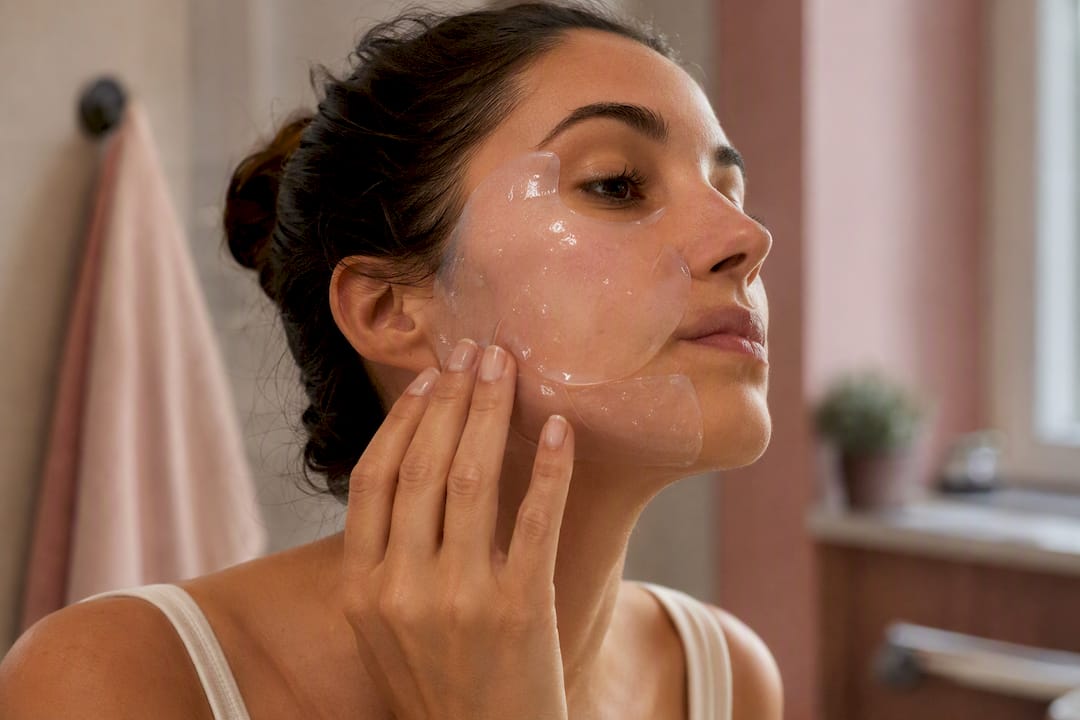
The occlusion is the whole point. By sealing the surface, a sleeping mask slows evaporation and holds active ingredients against skin longer than a lotion would, which is why people notice plumper, dewier skin by morning. Overnight masks are generally formulated as more intensive treatment products than daily creams, meant to deliver a concentrated burst rather than steady upkeep.
Typical ingredients lean richer than a nightly cream: concentrated hyaluronic acid, glycerin, squalane, niacinamide, and sometimes collagen-supporting peptides. Most dermatologists and estheticians recommend using a sleeping mask one to three times a week, not nightly. Overuse can leave oilier skin types congested or cause breakouts in acne-prone skin that doesn’t need the extra occlusion.
Good times to reach for one:
- The night after a long flight, when skin feels dehydrated and flat.
- After a session with strong actives (peels, retinoids) when skin needs comfort, not more intensity.
- Before an event, when you want visibly plumper skin by morning.
Pro Tip: If your skin feels sticky or looks puffy the morning after a mask, you’re using it too often. Cut back to once a week and see if skin balances out.
Worth knowing: solid long-term clinical data on sleeping masks is limited. Most of the documented benefit is short-term: better hydration and a visibly improved morning glow, not permanent structural change to skin.
Which Is Better, a Sleeping Mask or a Night Cream, for Your Skin?
The honest answer depends on skin type and what you’re trying to fix. Here’s how to sort it out.
- Dry skin. Use a rich night cream every night as your baseline, then add a hydrating sleeping mask two to three times a week for extra plumping.
- Oily or combination skin. Stick with a lightweight, non-comedogenic night cream nightly. Reserve a lightweight gel mask for once a week at most, since heavier occlusion can trigger congestion.
- Sensitive skin. Choose fragrance-free formulas in both categories. Patch test any new sleeping mask, since occlusion can intensify a reaction to an ingredient that would otherwise feel mild.
- Acne-prone skin. Favor non-comedogenic night creams with niacinamide or salicylic acid. Use sleeping masks sparingly and only in formulas labeled non-comedogenic.
Match the product to the goal, not just the skin type. Chasing hydration and barrier repair points you toward a nightly ceramide-rich cream. Chasing brightening, plumping, or an AM glow before an event points toward an occasional mask. Recovering from actives or sun exposure points toward a soothing mask on an as-needed basis rather than a fixed schedule.
To introduce a sleeping mask without disrupting your existing routine, add it on one night first, watch how skin responds over 48 hours, then scale up to two or three nights a week if it behaves well. Never swap out your night cream entirely. Estheticians tend to frame it as a supplement, not a replacement, since sleeping masks are meant to add an occasional boost on top of a maintenance routine, not stand in for one.
How to Layer a Night Cream and Sleeping Mask Together
- Cleanse, then apply any serums and let them absorb for a minute or two.
- Apply your night cream in a thin layer and wait about five minutes before adding anything else.
- On mask nights, apply the sleeping mask over the cream as your final step, skipping heavier balms underneath it.
- On non-mask nights, stop after the night cream. That’s a complete routine on its own.
Two simple patterns work well: night cream most nights, with a mask layered on two or three nights a week, or night cream on active nights (retinoids, acids) and mask on recovery nights. If you’re using a retinoid or acid, apply a thin buffer layer before it or skip the mask that night entirely. Occlusion over strong actives can intensify irritation rather than soothe it.
Pro Tip: Never layer a fresh retinoid directly under an occlusive mask. Give the retinoid its own night, then use the mask on nights you skip actives.
What Sets Vervex’s Hydrogel Mask Apart
A hydrogel mask behaves differently on skin than a gel or balm. Vervex’s overnight masks turn visibly transparent as the skin absorbs the formula, giving you a way to see the nutrient penetration happening in real time rather than guessing whether a product has actually sunk in.
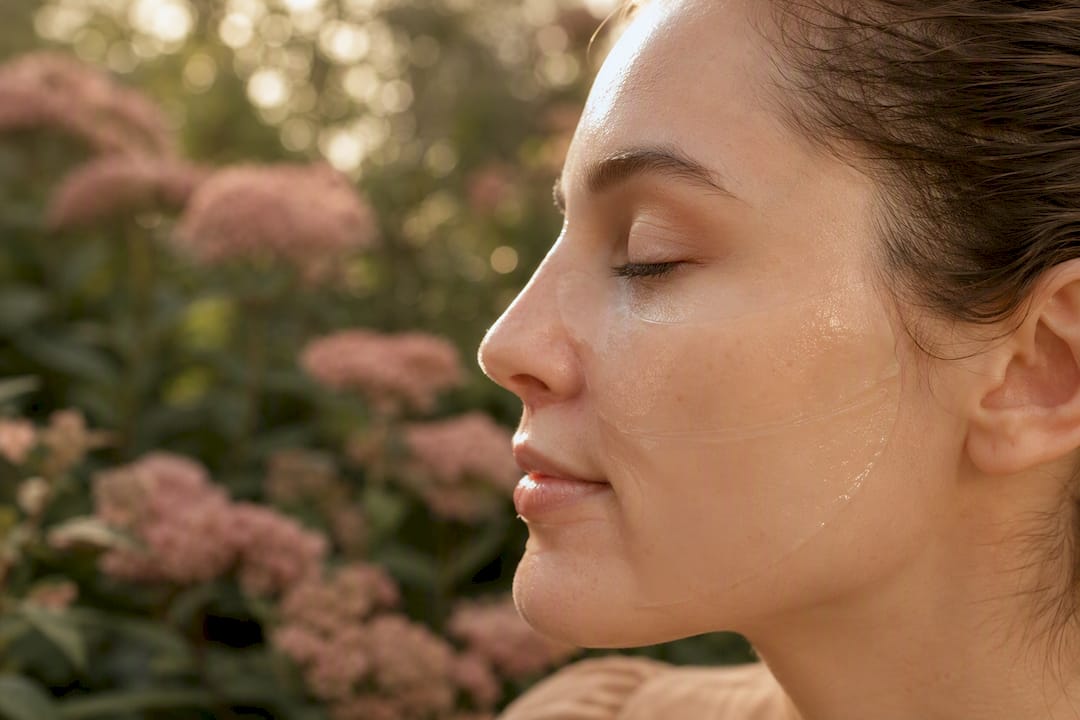
The formulas are hypoallergenic, which matters for anyone whose skin reacts to heavier balm-style masks. Vervex reports that among its more than 100,000 customer reviews, A large majority describe noticeably better hydration after use. That volume of consistent feedback is a meaningful signal for a product category where results are otherwise hard to verify at home, though it reflects customer-reported experience rather than a clinical trial.
Cost Comparison: Is a Sleeping Mask Worth the Extra Spend?
Night creams and sleeping masks sit at different price points because they’re built for different frequencies of use. A daily night cream needs to last through 60 to 90 uses a month, which usually pushes brands toward simpler, more dilute formulas that cost less per ounce. A sleeping mask, used only a handful of times a month, can justify a richer concentration of active ingredients per application without inflating the price you pay over a month of use.
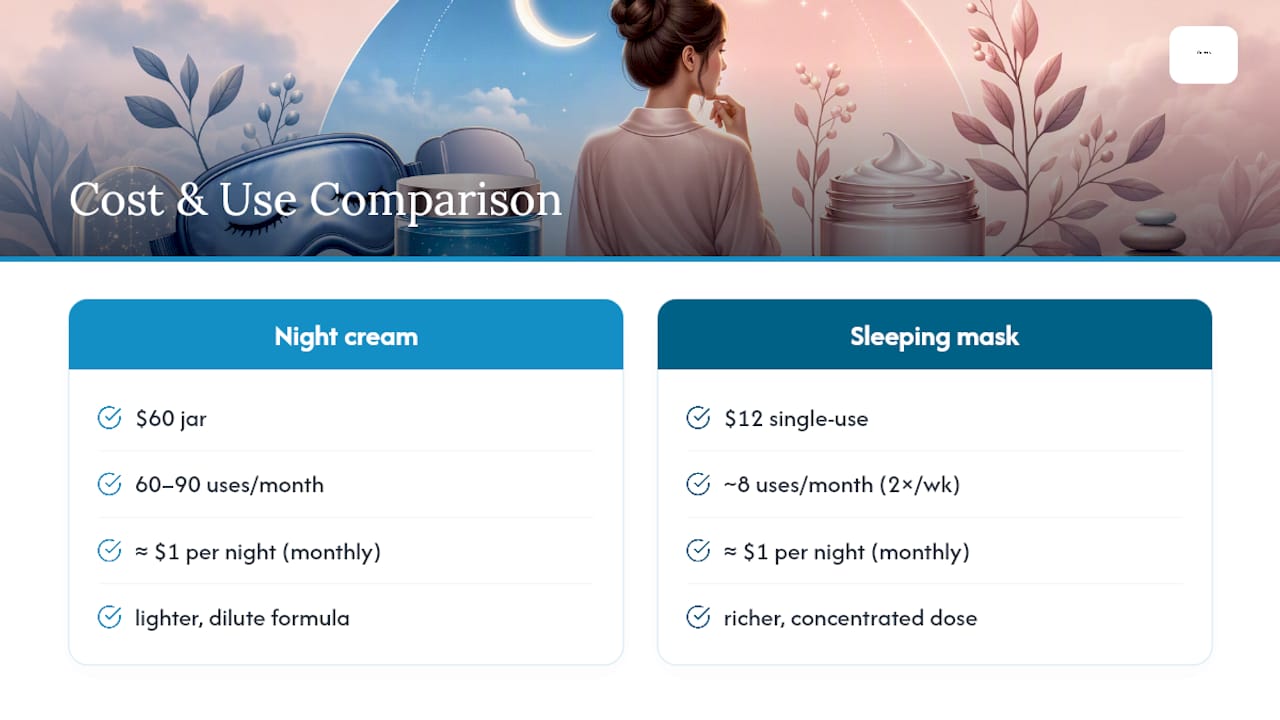
Judge value by cost per use, not sticker price. A $60 night cream used nightly for two months costs roughly $1 a night. A $12 single-use hydrogel mask used twice a week costs about the same per month, but delivers a more concentrated dose on the nights it’s used. Neither is inherently the better deal. It depends on whether your skin needs steady daily upkeep or an occasional spike in intensity.
Bundles change the math in the mask’s favor. Buying a multi-pack of overnight hydrogel masks typically lowers the per-mask cost compared to buying single units, which matters if you’re planning to use one two or three times a week rather than as a rare treat. For most routines, the smartest spend is a modest, reliable night cream as your daily baseline, with a bundle of sleeping masks kept on hand for the weeks your skin actually needs the extra help.
Our Take: Stop Treating Sleeping Masks Like a Nightly Habit
The biggest mistake we see in nighttime routines is treating a sleeping mask like an upgraded night cream instead of what it actually is: an occasional intervention. Skincare marketing blurs this line constantly, and it leads people to over-occlude skin that would do better with a simpler nightly product and a mask reserved for the nights it’s genuinely needed.
The conventional advice to “just find what feels good” undersells how much frequency matters here. A gel or balm mask used nightly can leave oilier skin congested within weeks, while a night cream used only occasionally won’t build the steady barrier support it’s designed for. Consistency belongs with the cream. Intensity belongs with the mask.
If we had to prioritize one thing, it’s this: get the nightly cream right first. Once that baseline is solid, a hydrogel mask like Vervex earns its place on the nights your skin is asking for more, after travel, after strong actives, before an event, rather than as a daily crutch.
— Vervex
Try an Overnight Hydrogel Mask on Your Next Recovery Night
Vervex’s hydrogel overnight masks are built for exactly the nights this article describes: post-travel dehydration, recovery after strong actives, or the morning before an event when you want visibly plumper, dewier skin.

The formula turns transparent as your skin absorbs it, so you can watch the hydration sink in rather than guessing whether it worked. Every mask is hypoallergenic, which makes it a safer starting point if balm-style masks have irritated your skin in the past. For anyone easing into the twice-a-week rhythm this article recommends, the four-pack bundle covers about a month of treatment nights at a lower cost per mask than buying single units. Add it to your next recovery night and see how your skin looks by morning.
Sources
- New sleep mask benefit unlocked: improved brain function — Sleep Foundation
- Meta-analysis of sleep interventions in hospitalized patients — PMC (NCBI)
- The difference between a sleeping mask and night cream — Soko Glam