
Apply a pea-sized amount of the product to a discreet spot, like the inner forearm or jawline, then leave it alone and watch it for 24 to 48 hours. If redness, itching, burning, or swelling shows up at any point, wash it off with lukewarm water and stop. This is a home screening step, not a clinical patch test, but it catches most problem reactions before they reach your face.
TL;DR:
- Always wait 24 to 48 hours after applying a product to a small, clean skin area to monitor for delayed allergic reactions, especially for leave-on products.
- Avoid patch testing on skin that is shaved, sunburned, or already inflamed, and wait several days before testing if your skin is compromised.
- Reactions such as persistent redness, swelling, blistering, or spreading rash require immediate discontinuation and medical evaluation.
- Introduce new products gradually over three weeks, starting with two to three nights per week, to minimize the risk of delayed or cumulative reactions.
- Patch tests do not identify specific ingredients causing reactions and should be part of a cautious skincare routine, particularly for reactive or sensitive skin types.
Table of Contents
- How Do You Do a Sensitive Skin Patch Test at Home?
- Where and How Long Should You Watch the Patch?
- What Reactions Mean You Should Stop Using It?
- When Should You Skip or Delay a Patch Test?
- How Do You Introduce a New Product After a Calm Patch Test?
- Why Vervexofficial Builds Sensitive Skin Into Every Mask
- Why Patch Testing Belongs in Your Regular Routine
- Try a Hypoallergenic Mask Built for Reactive Skin
- Sources
How Do You Do a Sensitive Skin Patch Test at Home?
A patch test is not complicated, but skipping steps is exactly how people miss slow-building reactions. Follow this sequence for any new product, whether it is a serum, a cleanser, or an overnight hydrogel mask.
- Pick clean, undamaged skin. Wash the test area and let it dry fully. Skip spots that are shaved, sunburned, broken, or already irritated.
- Apply a realistic amount. Use what you would actually use on your face. That means a pea-size dab for creams and masks, or a thin swipe for serums. Do not overload the spot.
- Match the contact time to the product type. Leave-on products (moisturizers, serums, overnight masks) need 24 to 48 hours of uninterrupted contact. Rinse-off products (cleansers, exfoliating washes) only need a brief exposure followed by 24 hours of observation after you rinse.
- Account for overnight masks differently. A hydrogel mask left on the skin overnight can transfer onto a pillowcase, so test on a spot that will not rub against fabric while you sleep, or cover it loosely with a bandage if the product instructions allow it.
- Repeat if you are highly reactive. If your skin flares at new products often, apply the test product twice a day on the same spot for three to seven days, extending toward ten days for extra caution. This catches delayed allergic responses that a single 48 hour window can miss.
- Log the date and time. Write down when you applied it and check back on schedule instead of relying on memory.
Pro Tip: Circle the test spot with a washable eyeliner pencil before you apply the product. It is much easier to spot subtle redness against a marked boundary than to guess whether “that looks a little pink” three days later.
Where and How Long Should You Watch the Patch?
The forearm is easy to reach and easy to forget about, which makes it a fine default. But behind the ear or along the jawline mimics facial skin thickness and sensitivity more closely, so it gives a more honest preview of how your face will respond. Hands are a poor stand-in for face products because they are thicker and more callused, so they tend to under-react.
Check the site on a schedule, not just when you happen to remember:
- Immediately after application, for any stinging or burning
- At 24 hours, for early redness or itching
- At 48 hours, the standard cutoff for most leave-on products
- At 72 hours, if you have reactive skin or a history of slow-building rashes
If you accidentally rub or wash the spot mid-test, restart the clock rather than guessing whether the result still counts.
What Reactions Mean You Should Stop Using It?
Some tingling in the first minute is normal, especially with acids or vitamin C. What is not normal: persistent redness that does not fade, itching that intensifies, swelling, blistering, a rash that spreads past the test site, or burning that gets worse instead of better. Irritant reactions tend to show up fast and stay contained to the exact spot. Allergic reactions often show up later (sometimes not until day three or four) and tend to spread beyond where you applied the product.
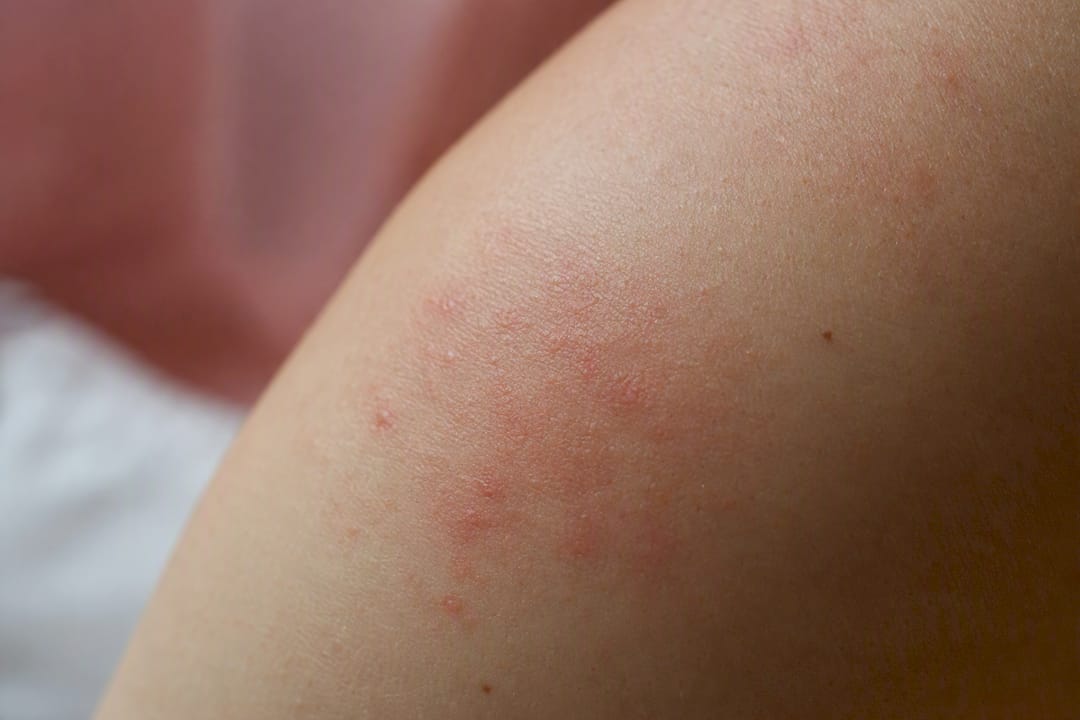
If you see any of these signs, act right away. Wash the area with lukewarm water, apply a cool compress if it is still uncomfortable, and follow with a thin layer of petroleum jelly to support the skin barrier. Stop using the product completely.
Most mild irritation calms down within a day or two of stopping the product. But spreading rash, significant swelling, blistering, or any reaction near the eyes needs a clinician’s evaluation rather than more home care.
Worth knowing: a home patch test tells you whether a product is tolerable. It usually cannot tell you which specific ingredient triggered the reaction — that level of detail typically requires a dermatologist’s formal testing.
When Should You Skip or Delay a Patch Test?
Testing on the wrong skin gives you the wrong answer. Skin that is freshly shaved, sunburned, or already inflamed reacts more easily and can produce a false positive, making a fine product look like a problem. Wait a few days for the area to fully recover before testing.
A few other situations call for extra caution:
- Strong actives (retinoids, AHAs, vitamin C, essential oils) deserve a slower introduction even after a clean test, since a single negative result does not guarantee tolerance with repeated use.
- Eczema, rosacea, or pregnancy warrant a lower threshold for stopping and, for pregnancy specifically, a check with your doctor before trying active ingredients.
- Never test near the eyes or lips directly. Use a nearby area instead and extrapolate cautiously.
- Test one new product at a time. Layering two unknowns makes it impossible to know which one caused a reaction.
If reactions keep recurring across different products, that is a signal to ask a dermatologist about professional allergy patch testing rather than continuing to self-test at home.
How Do You Introduce a New Product After a Calm Patch Test?
A clean patch test earns you a slow rollout, not an all-clear for full-face use on night one.
- Weeks 1 to 2: Apply the product 2 to 3 nights per week, ideally on a small area like the jawline rather than the entire face.
- Week 2 to 3: If skin stays calm, move to every other night.
- Week 3 onward: Shift to nightly use across the full face if that fits your routine.
Hold off on introducing any other new product during this stretch. If a delayed reaction shows up, you want to know exactly what caused it.
Why Vervexofficial Builds Sensitive Skin Into Every Mask
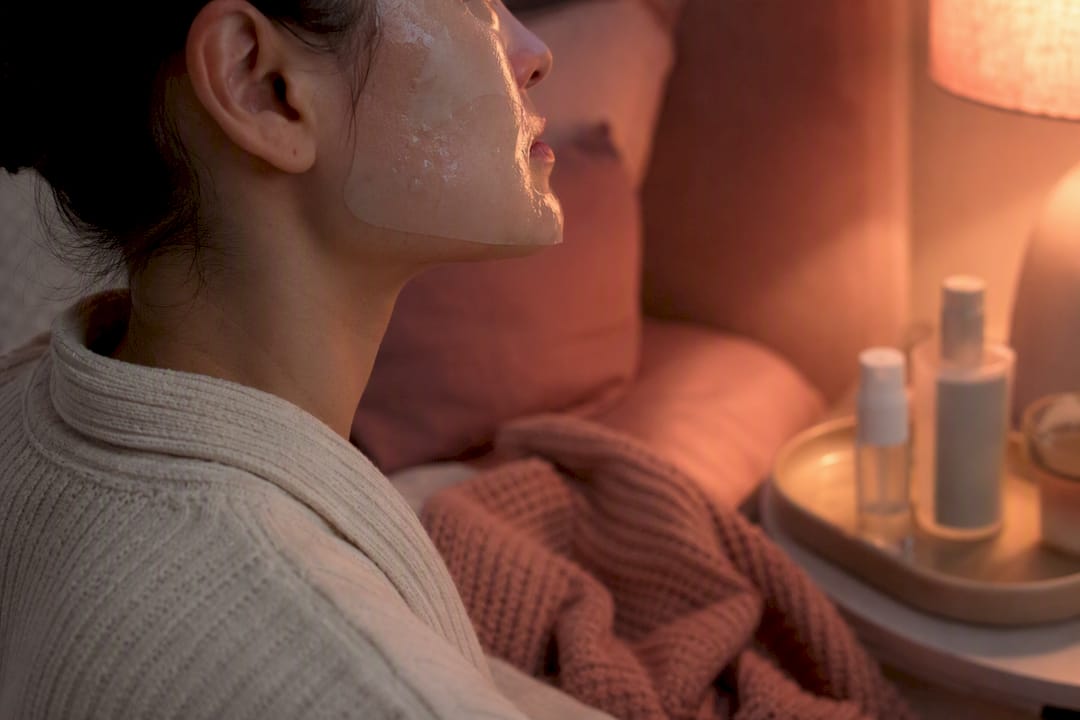
Vervexofficial formulates its hydrogel masks to be hypoallergenic, which is why the brand still recommends a patch test before full-face use, even with a gentle formula. The masks turn transparent as they absorb, so you can watch nutrient penetration happen in real time instead of guessing when the mask is “done.” That visible cue is part of the design, not a marketing trick. None of that replaces your own skin’s response. Patch test every Vervexofficial mask the same way you would test any new product.
Why Patch Testing Belongs in Your Regular Routine
Patch testing stops feeling like a chore once you treat it as part of buying something new, the same way you’d check a return policy. I think the biggest shift happens when a test comes back irritated. Instead of abandoning your whole routine, simplify it back to the basics you already trust, then reintroduce one thing at a time. A calm patch test lowers your risk considerably. It does not erase it, so stay alert during the first few weeks of real use.
— Vervex
Try a Hypoallergenic Mask Built for Reactive Skin
If your skin flares at fragrance, harsh actives, or anything with a long ingredient list, a hydrogel format gives you fewer variables to react to in the first place. The Biodance mask from Vervexofficial is formulated to be hypoallergenic, and its transparent-when-absorbed design lets you see the hydration working overnight instead of wondering if it’s doing anything at all.

For firming or brightening results, the Biodance Bio-Collagen Real Deep Mask 4-pack stretches a full patch-test-and-introduction cycle across four masks, so you are not buying a single-use product to test something that needs a slow rollout. Patch test on your jawline first, watch for 24 to 48 hours, and only move to full-face use once your skin stays calm. Order a mask from Vervexofficial and start the test tonight.
Sources
The American Academy of Dermatology covers timing and repeat testing. Healthline walks through immediate first aid. Everyday Health explains site selection, and Alloi Skin breaks down why simpler formulations tend to lower reaction risk in the first place.
This article is general information, not a substitute for advice from a qualified doctor. Consult a qualified healthcare professional about your own circumstances before acting on anything here.
- How to do a self skin patch test (Healthline)
- How to test skin care products (American Academy of Dermatology - AAD)
- How to do a skin-care patch test (Everyday Health)
- Study on skin barrier and testing considerations (PubMed)