
Fragrance, phthalates, parabens, and formaldehyde-releasing preservatives top the list of mask ingredients to avoid, followed by sulfates, abrasive physical exfoliants, high-strength essential oils, denatured alcohol, PFAS, and heavy metal or nanoparticle contaminants. Each group is tied to irritation, allergic reactions, or contamination risk, and sensitive skin reacts to them fastest. Pick fragrance-free, preservative-safe, hypoallergenic masks. The label-reading tricks and safer swaps below make that easier.
TL;DR:
- Masks containing fragrance, parabens, formaldehyde-releasing preservatives, sulfates, or abrasive exfoliants can cause irritation, allergic reactions, or contamination, especially on sensitive skin.
- Manufacturers often hide chemicals like phthalates and PFAS under vague labels such as “fragrance” or “parfum,” making label reading crucial for safety.
- Avoid stacking multiple strong active ingredients like AHAs, BHAs, or retinol in one routine to prevent skin barrier damage and irritation.
- Look for masks with barrier-supporting ingredients like hyaluronic acid, ceramides, glycerin, and calming agents such as colloidal oatmeal or niacinamide for sensitive skin.
- Always patch test new masks, and check for “free from” claims like fragrance-free, preservative-safe, and hypoallergenic, especially in hydrogel formats that support gentle absorption.
Table of Contents
- Mask Ingredients to Avoid: A Complete List
- Why These Ingredients Actually Damage Skin
- How to Read a Mask Label Without a Chemistry Degree
- Safer Ingredients and Mask Formats for Sensitive Skin
- Using Masks Safely: Patch Tests, Frequency, and Layering
- The Vervex View on Formulation and Sensitive Skin
- A Hypoallergenic Option Built Around What It Leaves Out
- Sources
- FAQ
Mask Ingredients to Avoid: A Complete List
Reading a mask label shouldn’t feel like decoding a chemistry exam, but manufacturers count on you not bothering. Here’s what to flag, why it matters, and how each ingredient hides on packaging.
-
Fragrance and parfum (hidden phthalates). Any label that says “fragrance” or “parfum” can legally conceal dozens of unlisted chemicals, including phthalates used to make scent last longer. The American Academy of Dermatology flags synthetic fragrance as one of the most common triggers of facial allergic reactions. If a mask smells like anything other than nothing, assume it contains an undisclosed mix.
-
Parabens. Look for methylparaben, propylparaben, butylparaben, and isobutylparaben. They’re cheap preservatives with a long history of allergy complaints and are frequently named alongside formaldehyde releasers as additives worth avoiding.
-
Formaldehyde and formaldehyde-releasing preservatives. DMDM hydantoin, imidazolidinyl urea, and quaternium-15 slowly release small amounts of formaldehyde to kill bacteria in the tube. The International Agency for Research on Cancer classifies certain formaldehyde exposures as carcinogenic in specific contexts, which is reason enough to skip masks that use it as a shortcut preservative.
-
Sulfates (SLS, SLES). Sodium lauryl sulfate strips natural oils fast, which is fine in a shampoo you rinse in seconds but harsh in something sitting on your face for 15 minutes or longer.
-
Abrasive physical exfoliants. Crushed walnut shells and apricot kernels create jagged edges under a microscope, and the AAD links them directly to micro-tears in the skin barrier.
-
High-concentration essential oils and menthol. Peppermint, eucalyptus, and citrus oils feel invigorating but rank among the most common sensitizers dermatologists see in reactive skin.
-
Denatured alcohol. Listed as alcohol denat., it evaporates quickly for a “clean” feel but leaves skin drier and more permeable to everything else in the formula.
-
Redundant strong actives. Stacking a high-percentage AHA or BHA mask on top of a retinol routine you already use elsewhere doubles the barrier stress without doubling the benefit.
-
PFAS and fluorinated ingredients. PTFE and any ingredient starting with “perfluoro” are the so-called forever chemicals, more common in packaging and mask fabric than in gel formulas, but worth scanning for on any product claiming water resistance.
One peer-reviewed analysis of 53 mask samples found total concentrations of semi-volatile organic compounds were detected in mask samples, and a large portion of those samples carried estimated cancer risk values above the study’s own acceptable limit. That’s not formula ingredients on a label. That’s manufacturing residue nobody printed anywhere.
Why These Ingredients Actually Damage Skin
Not every reaction works the same way, and that distinction changes how urgently you should react. Irritation happens fast, often within minutes, when a harsh surfactant or abrasive particle physically disrupts the skin barrier. Allergic contact dermatitis is different: your immune system gets sensitized to a specific molecule, like a fragrance compound or a paraben, and reactions can worsen with repeated exposure even if the first few uses seemed fine. Contamination is a third category entirely, involving substances nobody intended to be in the formula at all.
The SVOC study mentioned above detected polycyclic aromatic hydrocarbons, organophosphate flame retardants, and UV filters across mask samples, none of which appear on any ingredient list because they entered through raw materials or manufacturing processes rather than the formula itself.
Dermatologists specifically warn against overlapping active ingredients across a skincare routine, since layering a mask’s actives on top of what you already use elsewhere is one of the most preventable causes of face mask skin problems.
Fragrance and essential oils remain the most commonly cited triggers for allergic rashes in clinical guidance, which is exactly why they sit at the top of every mask ingredients to avoid list dermatologists put together.
How to Read a Mask Label Without a Chemistry Degree
Ingredient lists use technical names on purpose, and marketing terms on packaging fill in the gaps with words that mean far less than they imply.
Watch for these common aliases:
- Fragrance/phthalate cover terms: parfum, fragrance, DEP, DBP
- Parabens: methylparaben, ethylparaben, propylparaben, butylparaben
- Formaldehyde releasers: DMDM hydantoin, imidazolidinyl urea, diazolidinyl urea, quaternium-15
- PFAS markers: PTFE, any prefix reading “perfluoro” or “polyfluoro”
Before buying, run a fast four-point check: no fragrance or parfum listed, no parabens, no formaldehyde releasers, and a preservative system you recognize rather than a mystery blend.
Packaging claims deserve the same skepticism as ingredient names. “Natural” and “clean” carry no regulatory definition, and “preservative-free” on a water-based mask sitting in a jar for months should raise questions rather than confidence, since something has to be preventing bacterial growth.
Pro Tip: Photograph the ingredient list before you buy, then search each unfamiliar name at home. It takes two minutes and catches problems a glossy front label was designed to hide.
Safer Ingredients and Mask Formats for Sensitive Skin
Once you’ve ruled out the ingredients above, look for formulas built around ingredients that support the skin barrier instead of fighting it.
- Hyaluronic acid draws water into the skin without disrupting its surface.
- Ceramides help rebuild the lipid layer that harsh sulfates strip away.
- Glycerin is a reliable, low-irritation humectant with decades of safety data behind it.
- Colloidal oatmeal calms redness and is a go-to for reactive or eczema-prone skin.
- Niacinamide supports the barrier and evens tone without the sting of stronger acids.
- Green tea extract offers antioxidant support with minimal sensitization risk.
Preservatives are where honesty matters most. A multi-use jar mask genuinely needs a preservative system to stay safe over weeks of air exposure, and “preservative-free” on that kind of product is often a red flag rather than a selling point. Single-use formats sidestep the problem differently: less exposed surface area and time mean less preservative load is needed in the first place. Rinse-off clay masks sit between the two, needing moderate preservation but rinsing away before actives linger.
Using Masks Safely: Patch Tests, Frequency, and Layering
A new mask deserves a real test before it touches your whole face.
- Apply a small amount to the inside of your forearm or behind your ear.
- Wait 24 to 48 hours without washing the area.
- Check for redness, itching, or bumps. No reaction means it’s reasonably safe to try on your face.
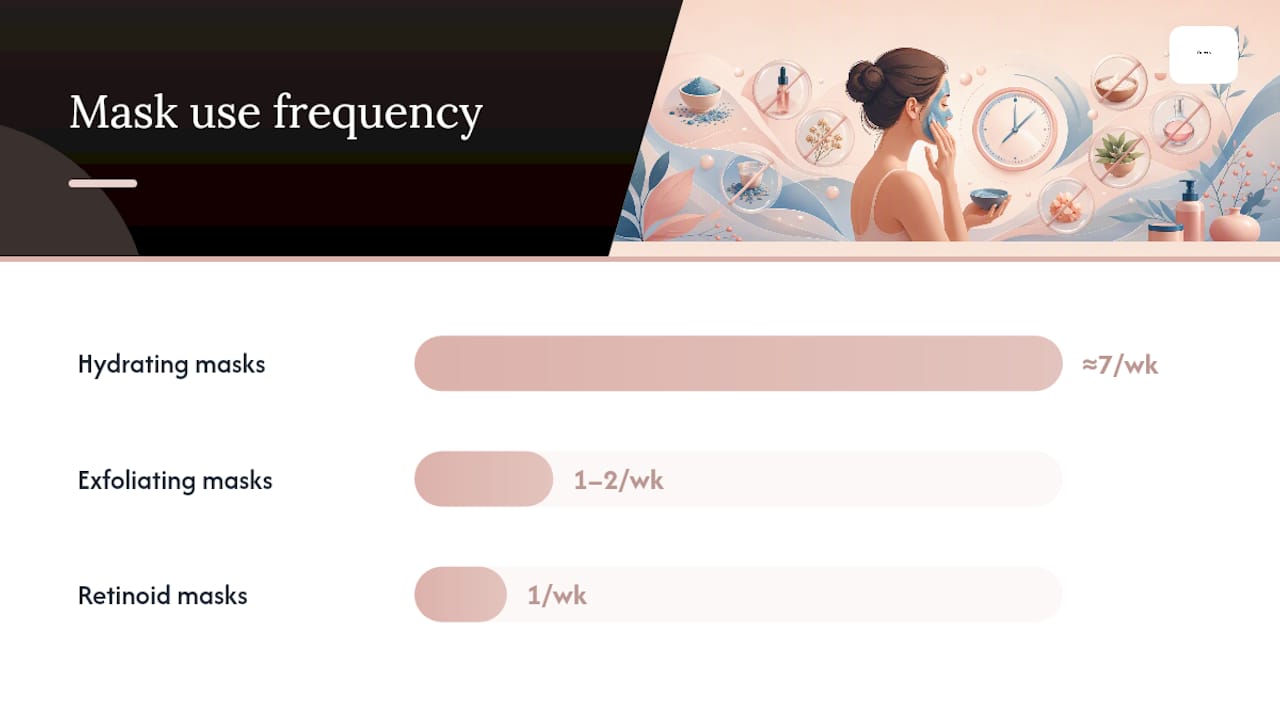
Frequency depends on what the mask does. Hydrating formulas with glycerin or hyaluronic acid tolerate frequent use, even nightly. Exfoliating masks with AHAs or BHAs work best at one to two times weekly. Retinoid-containing masks need even more spacing, often once weekly, with rest days built in between any other active treatment.
Never stack two strong actives in the same routine. If your daily serum already contains retinol or a high-percentage acid, skip a mask that repeats the same ingredient that same week.
Pro Tip: Give your skin one full rest day after any exfoliating or retinoid mask, using only a plain moisturizer, before introducing anything else active.
The Vervex View on Formulation and Sensitive Skin
Some brands’ philosophy starts with subtraction: hypoallergenic formulas built by leaving out fragrance, parabens, formaldehyde releasers, sulfates, and abrasive particles, not by masking them with something else. Hydrogel construction supports that approach in a way sheet or rinse-off formats can’t. There’s no exfoliating grit to cause micro-tears, and the gel’s occlusion delivers hydration without the harsh surfactants some formats lean on. As the material clears while it absorbs overnight, you get a visible signal that ingredients are moving into skin rather than sitting on top of it.
— Vervex
A Hypoallergenic Option Built Around What It Leaves Out
If you’ve read this far, you already know the ingredients worth avoiding. The Vervex biodance mask is formulated without fragrance, parabens, formaldehyde releasers, sulfates, or abrasive exfoliants, and it’s hypoallergenic by design for exactly the skin types this article is written for. The hydrogel format turns clear as it absorbs overnight, giving you a visual indication of absorption instead of guesswork.
For anyone who wants to stock up rather than test one at a time, the Biodance Bio-Collagen Real Deep Mask, four-pack covers about a month of overnight treatments in a single order. Check the product page for current availability and pick the option that fits how often you plan to use it.
Sources
- Do facial masks work, and should I add one to my skin care routine? | American Academy of Dermatology
- Occurrence and health risks of SVOCs in face masks (peer-reviewed, PMC)
- Peer-reviewed article summarizing concerns about parabens, formaldehyde releasers and phthalates
FAQ
What are the top ingredients to avoid in skincare products?
Fragrance/parfum, parabens, formaldehyde-releasing preservatives like DMDM hydantoin, sulfates such as SLS, and phthalates rank as the top ingredients dermatology guidance and peer-reviewed research flag most often.
What are toxic ingredients to avoid in skincare products?
Beyond fragrance and parabens, watch for formaldehyde releasers (imidazolidinyl urea, quaternium-15), PFAS and fluorinated compounds, mineral oil derivatives, and manufacturing contaminants like heavy metals or excess SVOCs that studies have detected in finished products.
What is the healthiest face mask?
The healthiest face mask avoids fragrance, parabens, formaldehyde releasers, sulfates, and abrasive particles while using barrier-supporting ingredients like hyaluronic acid, ceramides, and glycerin. Some hydrogel masks are formulated to meet standards suitable for sensitive skin.
How do I know if a mask contains hidden phthalates?
Phthalates typically hide behind the word “fragrance” or “parfum” on an ingredient list, since that single term can legally cover dozens of undisclosed chemicals. Choosing fragrance-free formulas is the most reliable way to avoid them.
Is it bad to use an exfoliating mask and a retinol product in the same week?
Yes, layering two strong actives increases the risk of barrier damage and irritation. Dermatology guidance recommends spacing exfoliating or retinoid masks apart from other strong actives already in your routine.